

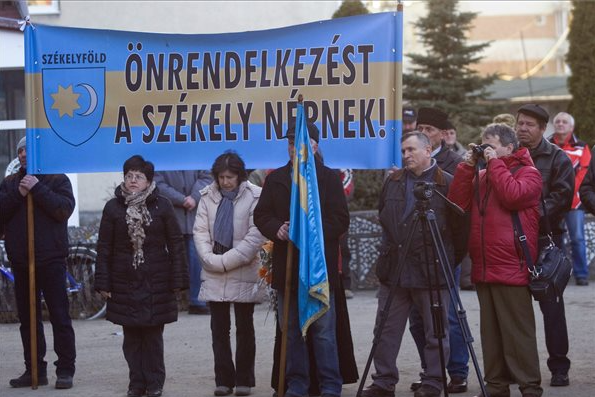
On March 10, 2026, the Székely (Szekler) community in Romania observes Székely Freedom Day (Székely Szabadság Napja), a day of remembrance and cultural affirmation honoring the Székely martyrs executed on March 10, 1854.
The day commemorates the execution of three prominent Székely leaders — János Török, Károly Gál, and Lajos Apor — along with 11 other participants of the 1848–1849 Hungarian Revolution. They were hanged in Târgu Mureș (Marosvásárhely) by the Austrian imperial authorities for their role in the revolution and for defending Székely autonomy and Hungarian national aspirations against Habsburg rule.
The Székelys (Szeklers) are a Hungarian-speaking ethnic group living primarily in the Székely Land (Székelyföld) in eastern Transylvania, Romania. They have a distinct historical identity, strong traditions of self-governance, and a long history of defending their rights and autonomy.
Székely Freedom Day was first commemorated in the early 2000s by Székely civic organizations and has since grown into an important annual event for the Székely community, symbolizing resistance to oppression, the struggle for autonomy, and cultural survival.
Significance in 2026:
- In 2026, the day marks the 172nd anniversary of the execution of the Székely martyrs — a powerful symbol of sacrifice, national consciousness, and the enduring desire for self-determination.
- The observance strengthens Székely identity, promotes cultural preservation, and calls for greater autonomy and recognition of minority rights within Romania.
- It is also a day of reflection on the broader history of Hungarian and Székely struggles for freedom during the 1848–1849 Revolution and under various empires.
Celebrations and Observances:
- Main ceremony in Târgu Mureș: The central event is held at the Monument of the Székely Martyrs (located near the site of the 1854 executions). Local Székely leaders, Hungarian minority politicians, cultural organizations, and thousands of participants gather for wreath-laying, speeches, a moment of silence, and patriotic songs.
- Székely Land events: Similar commemorations take place in other Székely towns and villages such as Sfântu Gheorghe (Sepsiszentgyörgy), Odorheiu Secuiesc (Székelyudvarhely), and Miercurea Ciuc (Csíkszereda). Parades, folk music performances, and cultural programs are common.
- Cultural and educational programs: Schools and cultural centers organize lectures, exhibitions, poetry readings, and performances of traditional Székely folk songs and dances. The day often includes the singing of the Székely anthem.
- Public reflection: Many participants wear traditional Székely folk costumes or black ribbons in mourning. Candles are lit at memorials, and the Székely flag (blue and gold with the sun and moon) is displayed alongside the Hungarian and Romanian flags in some locations.
- Political dimension: Speeches often call for greater autonomy for the Székely Land and recognition of minority rights. The day is both a cultural celebration and a political statement for many in the community.
Székely Freedom Day is not an official public holiday in Romania, but it is widely observed by the Hungarian/Székely minority as a day of remembrance, cultural pride, and political expression.
A common phrase on this day: “Emlékezzünk a hősökre!” (“Let us remember the heroes!”)
On March 10, the Székely people of Romania remember the martyrs of 1854 and reaffirm their cultural identity, historical memory, and aspiration for autonomy and dignity.