

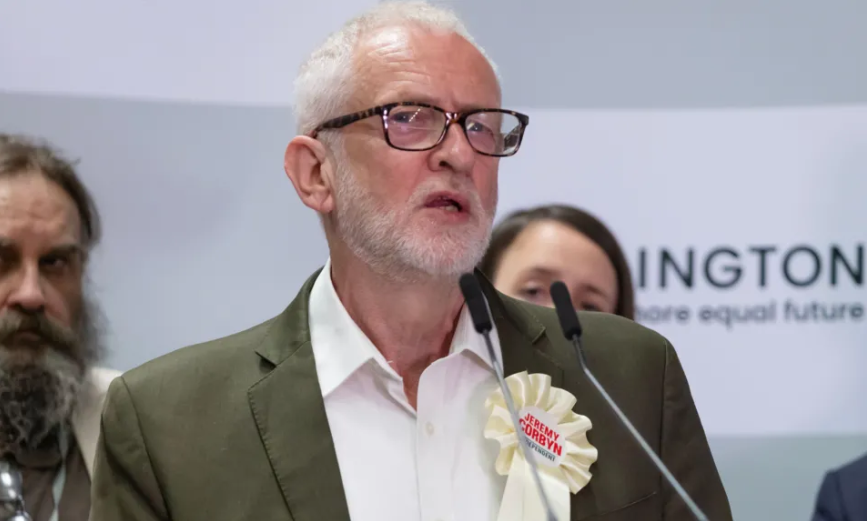
Jeremy Corbyn is a British politician whose career has been shaped by decades of parliamentary service, socialist politics and campaigning on issues of economic equality, peace and human rights. First elected as the Member of Parliament for Islington North in 1983, he spent more than three decades as a Labour backbencher before becoming leader of the Labour Party and Leader of the Opposition in 2015. His political journey has taken him from the margins of Westminster politics to the leadership of one of Britain’s two major political parties, followed by his departure from Labour and the establishment of a new political movement. He continues to represent Islington North in Parliament and, as of November 2026, serves as the parliamentary leader of Your Party.
Born on 26 May 1949 in Chippenham, Wiltshire, Corbyn grew up in a family with an interest in politics and public affairs. His parents were active in political and peace campaigns, and their influence contributed to his early interest in public life. He attended Adams’ Grammar School in Shropshire before briefly studying at the University of North London, then known as North London Polytechnic. He did not complete his degree and instead moved into political and community work. His early career included work as a trade union organiser and involvement in local government, where he developed an interest in workers’ rights, housing, public services and community representation. He joined the Labour Party as a teenager and became involved in its left-wing political networks, building a political identity that remained distinct from the party’s more centrist leaderships.
Corbyn entered Parliament in 1983 after winning the Islington North constituency, a seat he has continued to represent for more than four decades. During his early parliamentary career, he became known for his willingness to challenge Labour leadership positions and vote against his own party when he disagreed with its policies. He opposed British military interventions, nuclear weapons and several foreign policy decisions, while consistently campaigning for Palestinian rights, Irish self-determination, social housing and stronger public services. His parliamentary approach was rooted in constituency work and campaigning outside Westminster rather than holding prominent frontbench positions. He also became associated with the Campaign for Nuclear Disarmament and the wider anti-war movement, eventually serving as chair of the Stop the War Coalition from 2011 to 2015.
His political career entered a new phase in September 2015, when he contested the Labour leadership election following Ed Miliband’s resignation. Initially regarded as an outsider, Corbyn secured substantial support from party members, registered supporters and trade union affiliates, winning the contest with 59.5 per cent of the vote. His victory reflected growing demand within sections of the Labour movement for a more explicitly left-wing political programme. As party leader, he advocated greater public investment, the expansion of public ownership, stronger trade union rights, increased taxation on higher incomes and corporations, and the protection of public services. His leadership also coincided with a major increase in Labour Party membership, bringing a new generation of activists and supporters into the party.
The 2017 general election became a defining moment in Corbyn’s leadership. Labour increased its vote share by approximately ten percentage points and gained 30 parliamentary seats, denying Theresa May’s Conservative Party an overall majority. Although Labour did not form the government, the result represented a significant electoral advance compared with expectations at the beginning of the campaign. Corbyn’s rallies and public appearances attracted large audiences, particularly among younger voters, while his campaign placed economic inequality, public ownership, workers’ rights and investment in public services at the centre of the national debate. However, his leadership also faced persistent internal disagreements over Brexit, party management and allegations of antisemitism within Labour. The party’s handling of those allegations became a major source of political and institutional controversy during his tenure.
The 2019 general election marked a major setback. Labour suffered its worst electoral defeat in terms of parliamentary seats since 1935, losing constituencies across parts of England and Wales that had traditionally supported the party. Brexit, divisions within Labour over its position on leaving the European Union, and the wider political contest with Boris Johnson’s Conservatives all shaped the result. Corbyn subsequently announced that he would not lead Labour into another general election, beginning the process that ended with Keir Starmer’s election as party leader in April 2020. Later that year, following the Equality and Human Rights Commission’s investigation into antisemitism within Labour, Corbyn was suspended from the party after disputing aspects of the report’s findings. Although his membership was subsequently restored, the parliamentary whip was not returned. The dispute marked a decisive break between Corbyn and the party he had joined as a teenager.
In 2024, after Labour’s National Executive Committee blocked him from standing as the party’s candidate in Islington North, Corbyn announced that he would contest the general election as an independent. He won the constituency with 49.2 per cent of the vote, defeating the Labour candidate and securing another term in Parliament. His election demonstrated that his political base in Islington North remained significant even after his separation from Labour. He continued to campaign on issues including the cost of living, public ownership, housing, civil liberties, opposition to military intervention and Palestinian rights. Alongside parliamentary work, he established the Peace and Justice Project, which brings together campaigns and organisations working on social justice, international solidarity and peace.
Corbyn’s next political chapter emerged through the formation of Your Party, a new left-wing political organisation intended to provide an alternative to the established political parties. The initiative developed amid criticism of the Labour government’s direction under Keir Starmer and attracted supporters seeking a stronger emphasis on economic redistribution, public services and anti-war politics. Its formation also exposed disagreements within the emerging movement over leadership, internal democracy and organisational structure, particularly between Corbyn and fellow campaigner Zarah Sultana. Despite those tensions, Corbyn continued to play a central role in building the organisation. The UK Parliament records him as affiliated with Your Party from 10 June 2026 and serving as its parliamentary leader. His political journey therefore continues beyond his years in Labour, with his parliamentary role now connected to an independent political organisation built around the programme he has advocated for much of his career.
Across more than four decades in Parliament, Corbyn has maintained a political identity centred on socialism, economic redistribution, anti-war activism and international solidarity. His career includes a period of electoral expansion for Labour in 2017, a severe defeat in 2019, a prolonged dispute with the party over antisemitism and his subsequent return to Parliament as an independent candidate. His political influence has been debated both within Labour and across British politics, but his ability to mobilise a substantial membership and sustain a parliamentary career outside the party leadership structure remains an important part of his public record. As parliamentary leader of Your Party, he has entered another phase of political activity, seeking to translate decades of campaigning and parliamentary opposition into a separate organisational platform.
Jeremy Corbyn` Quote
“There is no point being in politics if you are not ambitious, not for yourself, but to make your community, your country and our world a better and more just place.”
London School of Economics speech, 17 May 2016.