

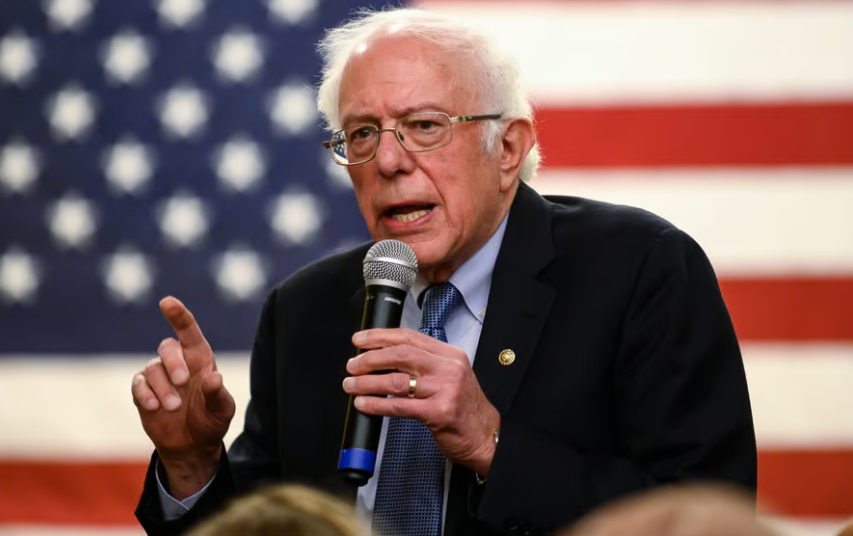
Bernie Sanders has spent decades challenging the boundaries of American political debate, building a career around economic inequality, workers’ rights, universal healthcare and the concentration of wealth and political power. Unlike many prominent American politicians who emerged through established party structures, Sanders developed his influence as an independent politician, drawing support from voters who believed that the country’s economic system favoured wealthy individuals and large corporations over ordinary working people. His political identity has remained closely associated with democratic socialism, a label he has used to advocate a stronger social safety net, greater public investment and a more equitable distribution of economic opportunity. Across a career spanning local government, the United States House of Representatives and the Senate, Sanders has become one of the most recognisable figures in American progressive politics.
Born on 8 September 1941 in Brooklyn, New York, Sanders grew up in a working-class Jewish family. His father, Elias Sanders, had emigrated from Poland, while his mother, Dorothy Glassberg, was born in New York to immigrant parents. His upbringing exposed him to the financial pressures experienced by working families, an experience that later informed his political arguments about wages, housing and economic security. He attended Brooklyn College before transferring to the University of Chicago, where he graduated in political science in 1964. During his university years, Sanders participated in the civil rights movement and became involved in demonstrations against racial segregation. He took part in the 1963 March on Washington for Jobs and Freedom and engaged with student activism against discriminatory housing practices. These experiences helped shape his understanding of political participation as a means of confronting structural inequality rather than simply competing for elected office.
After completing his education, Sanders moved to Vermont, where he worked in various occupations and gradually became involved in local political activism. His first electoral campaigns were unsuccessful, but they established his reputation as an outsider unwilling to accept the dominance of established political organisations. In 1981, Sanders won the Burlington mayoral election by a narrow margin, defeating a Democratic incumbent and beginning a political career that would eventually take him to the national stage. His mayoralty focused on municipal development, public participation, affordable housing and the revitalisation of the city. He served as mayor until 1989, winning re-election several times and building a political base beyond traditional party loyalties. His administration also attracted attention for its approach to urban development and community involvement, demonstrating that an independent candidate could govern a city while maintaining a distinct ideological identity. The Burlington experience became an important foundation for his later argument that public institutions could serve communities more effectively when ordinary residents had a meaningful role in political decision-making.
Sanders entered the United States House of Representatives in 1991 after winning Vermont’s at-large congressional seat in the 1990 election. He served eight consecutive terms until 2007, becoming a prominent independent voice in a Congress dominated by Democrats and Republicans. His legislative priorities included healthcare, labour rights, environmental protection, affordable housing and opposition to trade policies he believed disadvantaged American workers. Although he frequently worked with Democrats, he maintained his independent political identity and developed a reputation for challenging both parties when their policies conflicted with his principles. In 2006, Sanders won election to the United States Senate, taking office in January 2007. His move to the Senate gave him a larger platform from which to pursue his central political objective of addressing the widening gap between wealthy Americans and the working population.
Sanders reached a new level of national prominence through his presidential campaigns in 2016 and 2020. Running for the Democratic Party’s presidential nomination, he challenged the political establishment with a programme centred on universal healthcare, tuition-free public college, a higher federal minimum wage, stronger trade unions and greater taxation of the wealthy. His campaign attracted substantial support among young voters, progressive activists and working-class constituencies, while also bringing democratic socialism into the centre of American electoral debate. In 2016, he mounted a competitive challenge to Hillary Clinton before she secured the nomination. Four years later, he again became a leading contender, initially building considerable momentum before Joe Biden consolidated support among Democratic voters. Sanders did not win either nomination, but his campaigns helped elevate policies that had previously occupied a more marginal position in national politics. They also established him as a major figure in the progressive movement, capable of mobilising a broad network of supporters without abandoning his independent political identity.
His legislative record has also demonstrated that his political approach is not limited to presidential campaigning or public criticism of economic inequality. As chairman of the Senate Committee on Veterans’ Affairs, Sanders helped secure legislation in 2014 to reform veterans’ healthcare, working across party lines to address deficiencies in the system. He later chaired the Senate Budget Committee during the 117th Congress and the Senate Committee on Health, Education, Labor, and Pensions during the 118th Congress. These positions gave him opportunities to influence discussions on federal spending, healthcare, education and labour policy. His work has included efforts to expand access to healthcare, protect Social Security and Medicare, strengthen workers’ rights and increase public investment. His legislative record illustrates the distinction between his broader political platform and the narrower compromises required to pass legislation in a divided Congress. While many of his most ambitious proposals have not become law, his ability to negotiate selected measures has remained an important part of his congressional career.
Economic inequality remains the defining theme of Sanders’s political identity. He has consistently argued that the concentration of wealth among billionaires and large corporations gives a small section of society disproportionate influence over public policy. His proposed responses include higher taxes on wealthy individuals, stronger collective bargaining rights, affordable healthcare, expanded public education and measures to reduce the financial pressures facing working families. Climate change has also become a central part of his agenda, linking environmental policy with employment, infrastructure and the transition to cleaner energy. In 2026, Sanders continued to pursue these priorities through legislative proposals addressing the working week, paid leave, taxation, healthcare and the effects of automation. His September 2026 proposal, developed with Representative Mark Takano, sought to establish a standard 32-hour workweek without reducing pay or benefits. These initiatives reflect his continuing effort to translate long-standing progressive objectives into legislative proposals, even as their prospects depend on congressional support and the broader political climate.
Sanders’s political style combines direct public communication with an emphasis on economic data, working-class concerns and grassroots mobilisation. He frequently presents political disputes through the contrast between the interests of ordinary households and those of wealthy donors, corporate executives and powerful institutions. Supporters regard this approach as a consistent challenge to entrenched economic privilege, while critics question the affordability, practical implementation and economic consequences of some of his proposals. His independent status has allowed him to distinguish himself from the Democratic establishment, although he generally caucuses with Senate Democrats and has sought the Democratic presidential nomination. This position reflects the particular character of his political career: he operates outside formal Democratic Party membership while cooperating with the party when pursuing shared legislative and electoral objectives. His influence therefore cannot be measured solely by the number of bills he has enacted or elections he has won. It also rests on his capacity to shape political debate, mobilise supporters and keep issues such as universal healthcare, corporate power and economic inequality on the national agenda.
In November 2024, Sanders won re-election to a fourth six-year Senate term, securing his continued place in national politics through January 2031. He entered the 119th Congress in January 2025 as an independent senator from Vermont, continuing to caucus with Democrats. His current committee responsibilities include the Senate Committee on Health, Education, Labor, and Pensions, where he serves as ranking member, alongside work on other committees concerned with veterans, finance, the environment and public works. These responsibilities provide him with institutional platforms to scrutinise government policy and advance his priorities, even when he lacks the votes necessary to secure broader legislative change. His re-election also confirmed that his political career remains rooted in Vermont, where he first established himself as a local independent politician before becoming a national figure.
Bernie Sanders’s political journey is defined by the distance he travelled from a little-known independent mayor to one of the most influential voices in the American progressive movement. His career has included electoral defeats, successful campaigns, legislative compromises and two unsuccessful attempts to secure the Democratic presidential nomination. Yet his central concerns have remained remarkably consistent, particularly his focus on economic inequality, healthcare, workers’ rights and the influence of wealth in politics. His lasting significance lies not only in the offices he has held but also in the way he has helped change the terms of American political debate. Whether his proposals can secure wider legislative support remains an open question, but Sanders continues to occupy a distinctive position in American public life, combining an independent political identity with sustained participation in the institutions he has spent decades seeking to reform.
Bernie Sanders` Quote
“Our government belongs to all of us, not just super PACs and wealthy campaign contributors.”
1 March 2016, remarks during his Super Tuesday campaign.