

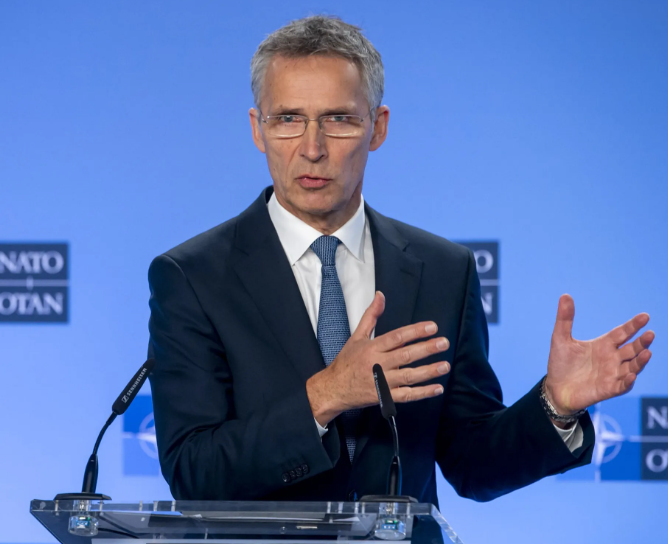
Jens Stoltenberg has established himself as one of the most consequential European political figures in transatlantic security, combining a long career in Norwegian politics with a decade at the centre of the North Atlantic Treaty Organization. Born on 16 March 1959 in Oslo, Norway, he grew up in a family closely connected to public service and international affairs. His father, Thorvald Stoltenberg, was a prominent Norwegian Labour Party politician who served as foreign minister, while his mother, Karin Stoltenberg, worked in government administration. His sister, Camilla Stoltenberg, later became a prominent public health researcher. This background exposed him to political institutions and international affairs from an early age. He studied economics at the University of Oslo and began his professional career as a journalist before entering government service. During his youth, he was involved in left-wing political activism, but his subsequent career developed within Norway’s parliamentary democratic system and the Labour Party. His early experiences helped shape a political outlook centred on social democracy, public institutions and international cooperation. Over time, he moved from domestic political responsibilities to leadership roles that placed him at the centre of European diplomacy and collective defence.
Stoltenberg’s rise through Norwegian politics was marked by successive responsibilities in parliament and government. He was first elected to the Norwegian Parliament, the Storting, in 1993 and subsequently served as Minister of Industry and Energy from 1993 to 1996, followed by a period as Minister of Finance from 1996 to 1997. These positions gave him experience in economic management, industrial policy and public administration. In 2000, he became prime minister for the first time, leading a Labour Party government until 2001. After the party returned to power in the 2005 parliamentary election through a coalition with the Socialist Left Party and the Centre Party, Stoltenberg again became prime minister, serving from 2005 to 2013. His second government dealt with economic policy, welfare provision, energy development and Norway’s international commitments. The 22 July 2011 terrorist attacks, in which 77 people were killed, became one of the most defining events of his premiership. His public response emphasised democratic resilience, openness and the defence of democratic values. Although his government faced criticism over security preparedness, his response to the attacks became a significant part of his public legacy. After the Labour-led coalition lost the 2013 election, Stoltenberg left the premiership, having accumulated extensive experience in national leadership, crisis management and international relations.
Stoltenberg’s appointment as NATO Secretary General on 1 October 2014 marked the most internationally prominent phase of his career. He succeeded Anders Fogh Rasmussen at a time when Russia’s annexation of Crimea had intensified concerns about European security and the future of the transatlantic alliance. During his ten-year tenure, he worked to maintain consensus among NATO’s member states while strengthening collective defence, improving military readiness and encouraging greater defence expenditure. His leadership coincided with the accession of Montenegro in 2017, North Macedonia in 2020, Finland in 2023 and Sweden in 2024, expanding the alliance to 32 members. He also pressed European allies to assume a greater share of the financial and military responsibilities associated with collective defence. The position required him to coordinate discussions among governments with different national interests, political priorities and assessments of security threats. As Secretary General, he chaired major NATO meetings, represented the alliance publicly and helped facilitate consensus among member states. His role did not give him independent authority to dictate NATO policy, since decisions remained the responsibility of the allies, but his diplomatic experience and ability to sustain negotiations made him a central figure in the organisation’s political coordination.
Russia’s full-scale invasion of Ukraine in February 2022 became the defining security crisis of Stoltenberg’s NATO tenure. He consistently supported Ukraine’s right to defend itself and worked to maintain political and practical assistance from NATO members, while distinguishing the alliance’s support for Kyiv from direct NATO participation in the war. His public statements emphasised collective defence, deterrence and the importance of preventing the conflict from spreading into NATO territory. Under his leadership, the alliance reinforced its eastern flank, expanded its forward military presence and strengthened readiness arrangements. He also sought to sustain agreement among member states on assistance to Ukraine despite differences over the scale, timing and risks of military support. His approach involved repeated consultations with allied leaders and efforts to preserve a common position as the conflict evolved. These responsibilities placed him at the centre of some of Europe’s most consequential security discussions since the Cold War. His tenure was extended four times by unanimous agreement among NATO allies, including after Russia’s invasion, reflecting the member governments’ decision to retain continuity in the alliance’s leadership during a period of heightened uncertainty.
Another important aspect of Stoltenberg’s record is his emphasis on defence investment and the distribution of responsibilities among NATO members. For years, he encouraged allies to increase military expenditure, improve equipment and ensure that national forces could operate together effectively. The alliance’s defence-spending benchmark of 2 per cent of gross domestic product became a recurring feature of his public interventions, particularly as security concerns intensified following Russia’s actions in Europe. He argued that collective defence depended not only on political commitments but also on the military capabilities and resources that member governments were prepared to provide. This emphasis sometimes brought him into difficult discussions with allies whose spending remained below the agreed benchmark, while also placing greater pressure on European governments to strengthen their own defence industries and armed forces. His position required balancing demands for increased military preparedness with the need to preserve political cohesion among countries facing different economic constraints and domestic priorities. By the end of his tenure, defence spending and burden-sharing had become central subjects of NATO’s political agenda, although the implementation of commitments continued to depend on decisions taken by individual member governments
Beyond European security, Stoltenberg’s public career has included sustained engagement with climate policy, international development and multilateral cooperation. Before joining NATO, he served as the United Nations Special Envoy on Climate Change from 2013 to 2014 and participated in international efforts to advance climate financing and prepare the diplomatic ground for the Paris climate agreement. During his earlier political career in Norway, he was also involved in economic and energy policy, while his government concluded a maritime boundary agreement with Russia in 2010 that settled a longstanding dispute in the Barents Sea and Arctic Ocean region. These experiences demonstrate the range of issues he handled before becoming primarily associated with military security and transatlantic relations. They also distinguish his career from that of political figures whose public responsibilities have remained concentrated within a single policy area. His work across economic administration, climate diplomacy and collective defence reflects a professional background spanning domestic government and international institutions.
Stoltenberg’s public leadership style has generally emphasised calm communication, consultation and the preservation of consensus. His position at NATO required him to represent the collective decisions of member governments rather than advance a wholly independent national agenda. He therefore frequently sought common ground between allies while maintaining a clear public message on the organisation’s core commitments. His decade in office demonstrated the demands of leading an alliance in which decisions require agreement among sovereign governments, each with its own political circumstances and strategic concerns. The Russian invasion of Ukraine placed this approach under sustained pressure, particularly when governments differed over military assistance, escalation risks and the long-term relationship between NATO and Moscow. Stoltenberg’s responsibilities involved communicating agreed positions, facilitating political discussions and maintaining the alliance’s institutional unity during prolonged uncertainty. His effectiveness in these areas can be assessed through the decisions reached by member states during his tenure, although those outcomes also depended on national leaders, military institutions and wider developments beyond his personal control.
Following his departure from NATO on 1 October 2024, Stoltenberg returned to Norwegian government service in February 2025 as Minister of Finance under Prime Minister Jonas Gahr Støre. The appointment brought him back to a portfolio he had previously held from 1996 to 1997, giving him responsibility for economic and fiscal policy during a period of domestic political and economic challenges. He had initially been expected to take up the chairmanship of the Munich Security Conference, but agreed to serve his country in government instead. His return illustrated the continuity between his earlier national political career and his later international responsibilities. It also demonstrated that his experience was not confined to defence and diplomacy, as he resumed work in a field central to government budgeting, public finances and economic management. His ministerial role represented a new phase after a decade spent at the head of NATO, bringing his career back to Norway’s domestic political institutions.
Jens Stoltenberg’s career encompasses three distinct phases of public leadership: economic and ministerial administration in Norway, two periods as prime minister, and a decade as NATO Secretary General. Each phase involved different responsibilities, from domestic welfare and fiscal policy to international diplomacy and the coordination of collective defence. His NATO tenure was particularly consequential because it coincided with the deterioration of relations between Russia and the West, Russia’s full-scale invasion of Ukraine and the enlargement of the alliance to include Finland and Sweden. His leadership required sustained negotiation among member governments and the maintenance of consensus during a period of significant security challenges. At the same time, his return to the Norwegian Finance Ministry demonstrated his continued involvement in national public service after years at the international level. His political record is therefore defined not by a single office or event, but by the breadth of his responsibilities across government, diplomacy and multilateral institutions. His career remains an important example of the movement between national political leadership and international institutional responsibility in contemporary European politics.
Jens Stoltenberg` Quote
“So we respect, also, when countries decide to be neutral.”
NATO Secretary General, 14 October 2019