

The Black Sea is becoming an increasingly dangerous extension of the Russia Ukraine war, with attacks on commercial vessels bringing the conflict closer to the territory and strategic interests of NATO members. Romania and Bulgaria are particularly exposed. Both countries sit along a maritime corridor now affected by repeated strikes, while their ports, shipping routes and offshore infrastructure remain essential to regional trade and energy security. The attacks recorded during October have transformed the Black Sea from a theatre of confrontation between Russia and Ukraine into a growing security challenge for the alliance, testing the limits of its response without yet producing a direct military confrontation.
The escalation has been rapid. Following seven strikes on cargo ships near Romania and Bulgaria, NATO announced the deployment of maritime patrol aircraft, radars and drones to reinforce surveillance across the Black Sea. On October 23, another vessel was struck outside Romanian waters. Less than a week later, a Greek container ship was hit by naval drones in Bulgaria’s exclusive economic zone and sank. The incidents demonstrated that commercial shipping remains vulnerable despite the alliance’s decision to strengthen monitoring. They also exposed the difficulty of protecting vessels operating close to a war zone when the systems used to attack them are relatively inexpensive, mobile and difficult to detect in time.
Military assessments have pointed towards Russian involvement. A naval drone seen in footage of the latest strike reportedly resembled a Russian variant, while Romania has accused Moscow of systematic attacks on civilian shipping. Bulgaria has adopted a more cautious position, saying that some incidents appear to benefit Russia without directly attributing every attack to it. Moscow denies targeting Ukraine’s neighbours and maintains that European governments are escalating the conflict by supplying military assistance to Kyiv. The distinction between confirmed evidence and official accusation remains important, particularly when incidents occur close to NATO territory. Nevertheless, the frequency and geographical spread of the attacks have made maritime security an urgent concern for the region.
The attacks also carry a strategic message, whether or not every incident forms part of a coordinated plan. Repeated strikes near NATO members expose the limits of the alliance’s ability to protect commercial traffic without becoming directly involved in the conflict. They force Romania and Bulgaria to seek greater protection while requiring NATO to calculate how far it can respond without widening the war. This is the context behind concerns that Russia may be testing Western red lines. The pressure does not necessarily have to produce an immediate confrontation. It can instead reveal how much disruption the alliance is prepared to tolerate and whether its political commitment to the Black Sea is matched by sufficient military attention.
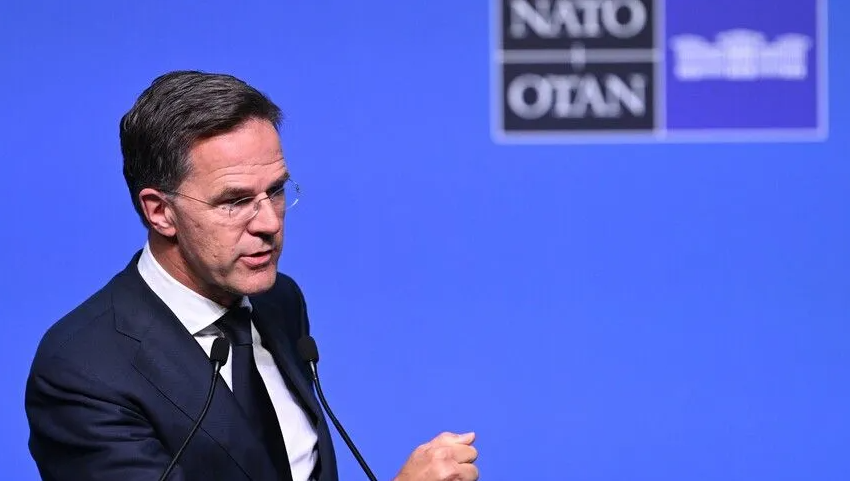
A NATO official has described the alliance’s commitment to defending all its members as ironclad and acknowledged the need for affordable counter drone capabilities. More than $40 billion has been committed to such capabilities over the next five years. The investment reflects a wider change in modern warfare, in which unmanned systems can threaten ships and infrastructure without requiring the attacker to deploy conventional naval forces on a comparable scale. However, the announcement of future spending does not immediately resolve the vulnerabilities facing Romania and Bulgaria. The vessels currently operating in the region require protection through systems that are already available, coordinated and capable of responding within a limited window.
The cost of interception is one of the most difficult aspects of the problem. Expensive missiles used against relatively cheap drones can create an economic advantage for the attacker. Radar networks, electronic warfare, patrol aircraft and shared intelligence can reduce the risk, but their effectiveness depends on detecting a threat early enough to identify its trajectory and determine whether it can be intercepted. The geographical and legal circumstances also matter. A vessel struck in territorial waters presents a different situation from one attacked in an exclusive economic zone, where a coastal state has specific rights but does not exercise the same sovereignty as it does over its territorial sea. These distinctions complicate the response even when the threat is clearly serious.
Romania’s exposure is especially significant because the Black Sea is both a trade route and a strategic energy corridor. The country’s offshore Neptun Deep project is expected to make it the European Union’s largest gas producer in 2027. In August, a naval drone was reported near the project, raising concern about the vulnerability of offshore installations. A direct strike could have consequences extending beyond the immediate damage to infrastructure, but the risk is not limited to such an event. Persistent maritime insecurity can complicate operations, increase insurance costs and affect confidence in long term investment. Romania therefore has reasons to treat the attacks as a threat to its wider economic and energy interests, rather than merely as spillover from the war in Ukraine.
The distribution of NATO’s military attention has become another source of concern in Bucharest. The United States is reassessing its military presence in Europe as it focuses more heavily on strategic competition with China. Washington withdrew approximately 1,000 troops from Romania in 2025. Although this does not amount to a withdrawal from NATO commitments, it has intensified questions about the resources available to protect the alliance’s southeastern flank. NATO has reinforced its enhanced forward presence in the Baltic states and Poland, while Romania has argued that the Black Sea requires comparable attention. The security requirements are not identical. The Baltic region and the Black Sea face different geographical and operational challenges, and the latter requires a stronger maritime dimension to its defence planning.
The scale of the attacks illustrates why the problem cannot be treated as a collection of isolated incidents. According to figures cited by maritime security analysts, 317 merchant and other vessels were hit in the Black Sea and Sea of Azov between May and October, compared with 74 in the preceding six months. The balance also changed during this period. Ukraine carried out more attacks on vessels in the third quarter, while Russian strikes predominated in October. The figures reflect the expansion of maritime operations by both sides, although responsibility for individual incidents must still be established through evidence. For civilian shipping, the consequences are increasingly difficult to avoid, regardless of which side is responsible for a particular strike.
The disruption is particularly damaging to grain exports. Russia shipped only 300,000 metric tons of grain through the Black Sea and Sea of Azov in September, compared with 4.74 million metric tons in the same month last year. Ukraine suspended operations at its Black Sea ports in late July following Russian attacks and redirected shipments towards Danube ports, Romania’s Sulina Canal and alternative routes through the western Black Sea. These alternatives have allowed some exports to continue, but they cannot fully replace the capacity of established ports. Ukrainian port grain exports fell to 810,000 metric tons in September, down from 2.1 million metric tons a year earlier.
For Ukraine, the loss of maritime capacity affects more than the movement of agricultural goods. Grain exports support farmers, generate revenue and connect the country to international markets. When established routes become unavailable, exporters must rely on alternative transport arrangements that may be slower or unable to handle comparable volumes. The consequences extend to importing countries, particularly those that depend on predictable access to grain supplies. Agricultural trade is organised around harvest cycles, storage capacity and delivery schedules. A prolonged disruption can therefore affect production and commercial decisions well beyond the immediate period of fighting. The warning from President Volodymyr Zelenskiy about a possible agricultural crisis reflects the risk that the effects of the maritime conflict could continue after individual attacks have stopped.
The economic pressure is not confined to Ukraine. Russia’s own grain exports through the affected maritime routes have fallen sharply, while the growing danger to merchant vessels has weakened confidence in the Black Sea as a reliable commercial corridor. The two sides may seek to impose costs on each other through attacks on maritime infrastructure and shipping, but the consequences reach companies, seafarers and countries that are not parties to the war. This is one reason the conflict has acquired a wider international significance. A maritime route that serves major exporters cannot remain unstable indefinitely without affecting the interests of governments and markets far beyond the region.
Türkiye occupies a central position in efforts to contain the escalation. As a NATO member bordering the Black Sea, it has a direct interest in preventing the conflict from spreading further across the maritime region. Its control over the passage of warships through the Bosphorus and Dardanelles under the Montreux Convention gives Ankara a distinctive role in regional security. That authority does not extend to controlling all activity across the Black Sea, but it places Türkiye in a position to influence the movement of naval forces through the straits. Ankara has warned both Russia and Ukraine against further attacks on commercial shipping and has pursued a proposal for a limited maritime ceasefire.
The proposal has attracted interest from countries beyond the Black Sea region. Türkiye, Egypt and India have supported efforts to reduce the disruption to shipping, while the United States has indicated growing international interest in a limited ceasefire. Russia has rejected the proposal, arguing that it would give Kyiv a respite. Ukraine has emphasised the consequences of continued attacks, particularly for agricultural exports. The disagreement demonstrates how difficult it is to separate civilian maritime protection from the wider military calculations of the belligerents. Each side weighs a pause against the advantage it believes the other might gain, even as commercial operators and importing countries absorb the consequences of continued insecurity.
A limited maritime ceasefire could provide a practical starting point without requiring an immediate settlement of the territorial and political disputes that have obstructed wider negotiations. Such an arrangement would need to identify the vessels, ports and routes covered by the agreement, establish monitoring procedures and provide a credible mechanism for investigating alleged violations. Without clear terms and verification, a ceasefire would risk becoming another political declaration with little effect on conditions at sea. Its success would depend on whether Moscow and Kyiv consider the protection of commercial shipping preferable to the military advantages they believe continued attacks may offer.
For NATO, the immediate requirement is to improve the protection of its exposed members without allowing the maritime crisis to become a direct alliance Russia confrontation. More patrols and better radar coverage can improve awareness, while affordable counter drone systems can reduce the vulnerability of vessels and infrastructure. Romania, Bulgaria and Türkiye also need effective coordination, particularly when threats move across maritime boundaries or approach sensitive installations. Yet military measures alone cannot restore damaged export capacity or guarantee safe passage for merchant vessels. A political arrangement that reduces attacks remains essential to the wider security of the region.
The Black Sea has consequently become a test of NATO’s ability to translate its security commitments into practical protection. Romania and Bulgaria face an immediate threat to their maritime interests, while Ukraine is struggling to preserve access to export routes that remain vital to its economy. Russia’s rejection of a limited maritime ceasefire leaves the region exposed to further disruption, and the consequences are no longer restricted to the countries directly involved in the war. The alliance must respond with sufficient resolve to deter further pressure, while maintaining the restraint necessary to prevent an incident at sea from escalating into a wider military crisis.
The priority is to prevent the next attack from producing a more dangerous confrontation. That requires credible surveillance, effective defensive capabilities, careful attribution and sustained diplomatic efforts to protect civilian shipping. NATO’s commitment will ultimately be judged by whether Romania and Bulgaria can secure their maritime interests in practice, not simply by the assurances issued from alliance headquarters. The Black Sea is now a frontline of European security, and its continued instability threatens to extend the consequences of the Russia Ukraine war far beyond the battlefield.