

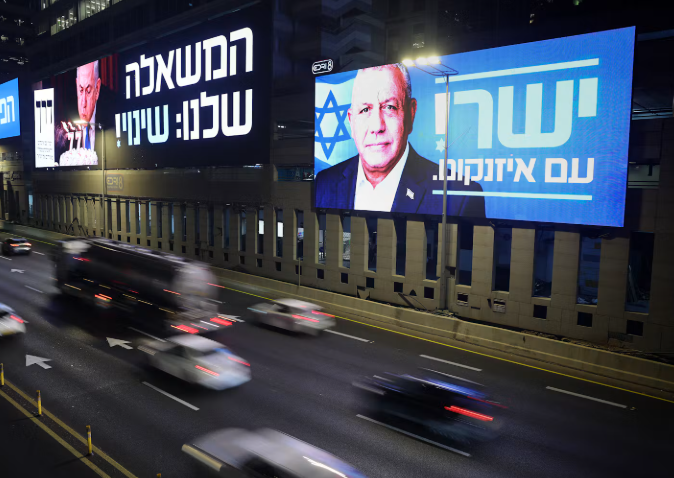
Israel’s parliamentary election on October 27 has placed the country at another political crossroads. The contest was widely viewed as a test of Benjamin Netanyahu’s leadership, particularly after the security failures surrounding the October 7 attacks and the consequences of the subsequent war. Yet beneath the competition for parliamentary seats lies a more consequential question about the direction of Israeli policy. Will a change in government bring a meaningful reassessment of the country’s approach to Gaza, the occupied West Bank and the wider region, or will it largely replace the political leadership while preserving the same strategic assumptions? The election campaign offered limited clarity on this question. Security, Netanyahu’s political record and the future of the governing coalition received considerable attention, while the absence of a credible political path towards peace with the Palestinians remained insufficiently addressed.
The election results have produced a complicated parliamentary landscape. Netanyahu’s bloc secured 53 seats, while the opposition led by Gadi Eisenkot won 48. Arab-led parties obtained 19 seats, leaving neither of the two principal blocs with the 61 seats required to command a majority in the 120-member Knesset. The result has weakened Netanyahu’s position and created an opportunity for the opposition, but it has not automatically established an alternative government. Coalition negotiations will determine whether the opposition can assemble a viable majority and whether Arab parties can play a decisive role in that process. The arithmetic is significant, although the political consequences will depend on the willingness of parties with different priorities to cooperate.
For Netanyahu, the outcome represents a serious challenge after years of political dominance. His leadership has been shaped by a strong emphasis on national security, military deterrence and opposition to concessions that he considers dangerous to Israel. Supporters credit him with experience in managing regional threats and maintaining strategic relationships, particularly with Washington. His critics, however, point to the failures preceding October 7, the conduct and consequences of the Gaza war, the absence of a clear political endgame and the divisions that have repeatedly affected Israeli politics. His political difficulties have also been compounded by his ongoing corruption cases, which have remained an important source of controversy and public distrust. The election has therefore become a judgement on both his record and the broader political direction associated with his leadership.
The opposition has presented itself as an alternative to Netanyahu, but the distinction between changing the prime minister and changing the country’s strategic approach requires closer examination. Criticism of the government’s handling of October 7, its security failures and the conduct of the war does not necessarily amount to a different vision for relations with the Palestinians. Much of the opposition’s criticism has centred on the government’s competence, its failure to achieve a decisive outcome and the absence of a coherent strategy. These are important questions, but they do not establish whether a new administration would reconsider the objectives of the war, the treatment of Palestinians or the political arrangements that could prevent another prolonged confrontation. A change in leadership may improve political management, but it cannot be assumed to produce a different policy unless the underlying assumptions are also reconsidered.
This distinction matters because the consequences of the conflict extend far beyond the immediate military situation. Gaza has suffered extensive destruction, civilian deaths and displacement. Large sections of its infrastructure have been damaged, while access to essential services, medical care, food, clean water and shelter has remained a central humanitarian concern. The scale of the devastation has raised serious questions about the proportionality and long-term consequences of military operations. Israel has maintained that its campaign is directed against Hamas and that its security cannot be compromised by the threat of further attacks. The October 7 massacre and the taking of hostages demonstrated the seriousness of that threat. Israeli civilians have a fundamental right to security, and any future arrangement must address the possibility of renewed attacks. At the same time, the protection of civilians and compliance with international humanitarian law remain obligations that cannot be set aside during military operations.
The next government will inherit these competing realities. It will have to consider how Israel can prevent attacks and protect its population without perpetuating a conflict that produces further civilian suffering and deepens regional hostility. The destruction of Gaza cannot be treated merely as a consequence of military operations, nor can the question of what follows the war be postponed indefinitely. Humanitarian access, the restoration of essential services, the return of displaced people where conditions permit and the reconstruction of civilian infrastructure will require sustained attention. Any arrangement for Gaza’s future will also have to address governance and security. A lasting solution cannot rest solely on military control or on the assumption that the removal of one organisation will automatically create a stable political order.
The situation in the West Bank adds another dimension to the challenge. Settlement expansion, restrictions on Palestinian movement, land disputes and violence involving settlers have continued to undermine the prospects for a negotiated settlement. These developments are not separate from the debate over Gaza. Together, they influence whether Palestinians can envisage a viable political future and whether Israel’s policies are compatible with a negotiated resolution of the conflict. For Israel, continued instability in the West Bank also carries security and diplomatic consequences. A government that seeks to improve the country’s international standing will have to consider how its policies affect the possibility of a contiguous and politically viable Palestinian state. Without such a prospect, the conflict risks remaining an enduring feature of the region rather than a problem that can be resolved through political negotiations.
Israel’s security concerns, meanwhile, cannot be dismissed or reduced to the Palestinian question alone. The country faces a complicated regional environment involving Iran, armed groups and continuing tensions along its borders. The conflict has also affected the security situation in southern Lebanon, where exchanges and military operations have added another layer of uncertainty. Israeli communities near conflict zones have experienced displacement and disruption, while the possibility of renewed escalation remains a concern. The next government will therefore face pressure to maintain credible deterrence and protect its borders. However, the experience of recent years also demonstrates that military superiority does not necessarily produce lasting security. A strategy that does not consider the political conditions sustaining conflict can leave Israel facing repeated confrontations, even after significant military operations.
The question is whether the next administration will draw that distinction into its policy. Security measures are necessary, but they need to form part of a wider strategy that considers the consequences of military action and the political conditions required for stability. The failure to establish a credible post-war framework for Gaza illustrates the limitations of pursuing military objectives without a corresponding political horizon. The same concern applies to the West Bank and southern Lebanon, where unresolved political and security disputes can continue to generate instability. Israel will need to assess how deterrence, diplomacy and political engagement can work together rather than treating them as competing approaches. Such an assessment would not require the country to abandon its security interests. It would require its leadership to recognise that security cannot be sustained indefinitely through force alone.
The electoral performance of Arab-led parties has introduced another important consideration. Their combined 19 seats give them substantial parliamentary influence at a time when neither principal bloc has secured a majority. Ra’am, led by Mansour Abbas, and the Joint List represent different political approaches and do not necessarily share the same position on coalition participation. Their ability to influence government formation will depend on negotiations, political conditions and the willingness of other parties to accept their support. For Arab citizens of Israel, the election is also about representation, equality and the ability to influence decisions that affect their everyday lives. Issues such as public investment, employment, housing, education, local development and personal security remain important concerns. Their parliamentary representation should not be reduced to a tactical question in the contest between Netanyahu and Eisenkot.
The possibility of Arab parties supporting an alternative government has nevertheless exposed the limits of political cooperation in Israel. Some opposition figures may regard their support as necessary to replace Netanyahu, while others may hesitate because of ideological differences and concerns about the political consequences. President Isaac Herzog’s consultations and the process of granting a mandate to form a government will be important in determining the next steps. The party with the strongest prospects of assembling a majority will need to demonstrate that its proposed coalition can function beyond the initial vote of confidence. Even if Arab parties become part of the negotiations, their influence will depend on whether their demands are translated into practical commitments. Their participation could create an opportunity for a broader parliamentary arrangement, but it cannot by itself guarantee a change in Israel’s policies towards Palestinians or the region.
There is also an important distinction between the rights of Arab citizens within Israel and the political rights of Palestinians living under occupation. Equal citizenship, protection from discrimination and meaningful political representation within Israel are matters of democratic responsibility. Palestinian self-determination concerns a different political and national question. These issues should not be conflated, although both are relevant to the future of the region. A democratic framework must ensure that Arab citizens can participate fully in public life, while a political settlement with the Palestinians must address their right to determine their own future. Progress on one cannot substitute for the other. The next government will face scrutiny over how it treats its Arab citizens as well as over the policies it pursues in the occupied territories.
The two-state solution remains a central international framework for addressing the conflict. Based on the 1967 borders, with mutually agreed adjustments and East Jerusalem as the capital of a Palestinian state, it offers a recognised basis for negotiations between two peoples with competing national claims. Its prospects have been weakened by years of mistrust, settlement expansion, violence and political opposition on both sides. Nevertheless, the absence of an agreed alternative does not remove the need for a political horizon. A settlement would have to address Israel’s legitimate security requirements and Palestinian demands for sovereignty, territorial continuity and political independence. It would also require credible guarantees, effective institutions and sustained international engagement. Without a serious effort to establish such conditions, the language of peace will remain detached from the realities on the ground.
The international implications of the election are considerable. Israel’s relationship with the United States remains central to its security and diplomatic position, but continued conflict has also placed pressure on the wider partnership. European governments have their own concerns regarding humanitarian conditions, international law and the future of a negotiated settlement. Arab states have an important role in regional diplomacy, reconstruction and any future political arrangement involving Gaza. Türkiye, including Ankara’s diplomatic position, will remain relevant to discussions concerning the conflict and wider regional stability. These relationships cannot be managed independently of developments on the ground. A government that seeks stronger international cooperation will have to consider how its policies affect the willingness of partners to engage with Israel and support its regional objectives.
The next Israeli administration will therefore face a choice that extends beyond the composition of its coalition. It can continue to approach the conflict primarily through military and security calculations, or it can recognise the need to connect those calculations with a credible political strategy. The latter would require difficult decisions and negotiations, as well as an acknowledgement that neither side can secure a lasting future by indefinitely denying the political aspirations and security concerns of the other. It would also require consistency between Israel’s stated commitment to democratic values and its conduct towards the populations affected by its policies. International partners can encourage this process, but the decisive responsibility will rest with Israel’s political leadership and the choices it makes.
The election has altered the balance of power in the Knesset, but it has not yet answered the most important question raised by the campaign. Netanyahu’s reduced parliamentary strength creates the possibility of a new political arrangement, while Eisenkot and the opposition have an opportunity to demonstrate whether they can offer more than a change of leadership. Arab parties have gained influence, but their role will depend on whether political cooperation can move beyond electoral arithmetic. Whoever forms the next government will inherit the consequences of October 7, the devastation in Gaza, tensions in the West Bank and southern Lebanon, and the continuing challenge of protecting Israel’s security.
Israel needs a government capable of addressing these realities without treating them as disconnected crises. Its citizens have a legitimate expectation of security, responsible leadership and functioning democratic institutions. Arab citizens must be able to exercise their political rights without being treated as outsiders to the national debate. Palestinians, in turn, cannot be left without a credible political future. Ending Gaza’s catastrophe must be an immediate priority, but the larger task is to prevent the conditions that make another catastrophe possible. The election has created an opening for political change. Whether that opening becomes a turning point will depend on whether the next government is prepared to reconsider not only how Israel is governed, but also the policies through which it seeks security and its place in the region.