

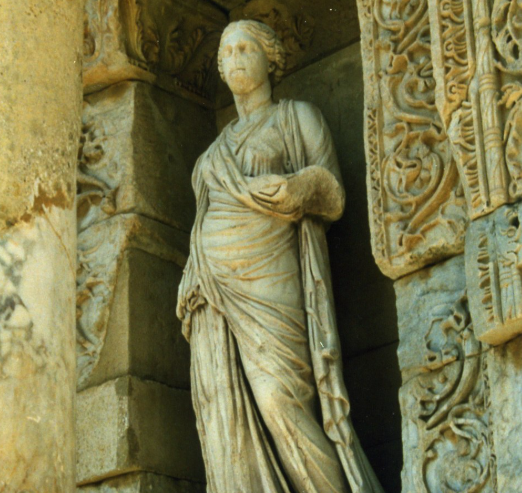
Sophia (Greek: Σοφία, “Wisdom”) is the eternal feminine embodiment of divine wisdom, knowledge, and creative insight. Originally an abstract philosophical concept in Hellenistic thought, she evolved into a powerful goddess-like figure in Gnosticism and a central theological symbol in Eastern Christianity as Hagia Sophia (“Holy Wisdom”). She represents the bridge between the divine and human realms, the soul of the world, and the feminine aspect of God. Revered in philosophy, mysticism, and religion for over 2,500 years, Sophia inspires the pursuit of gnosis (spiritual knowledge), self-understanding, and cosmic harmony.
Early Origins and Rise in Mythology
The concept of Sophia begins in ancient Greek literature and philosophy. In Homer and Pindar, sophia meant practical skill or cleverness (associated with Hephaestus and Athena). By the 6th–5th centuries BC, philosophers elevated it to profound wisdom and insight.
In the Hebrew Bible (Old Testament), Wisdom (Chokhmah in Hebrew) is personified as a woman in the Book of Proverbs (especially chapters 8–9), where she is present at creation, calls humanity to understanding, and stands beside God as a master craftsman. This feminine portrayal was translated into Greek as Sophia in the Septuagint.
In Hellenistic philosophy (Plato, Aristotle, and later Stoics), Sophia became the highest form of wisdom, contrasted with mere knowledge. Plato’s Academy and the idea of philosophia (“love of wisdom”) further enshrined her.
Sophia fully emerged as a mythic divine being in Gnosticism (1st–3rd centuries AD), drawing from Jewish Wisdom literature, Platonism, and mystery traditions. In the Nag Hammadi texts, she is the youngest Aeon (emanation) of the Pleroma (divine fullness), the feminine counterpart to the Monad (the unknowable God).
Mythological Achievements and Cosmic Role
Sophia’s greatest achievement is her role in creation and redemption:
- In biblical and Hellenistic thought, she assists God in forming the universe, delighting in humanity and calling people to truth and justice.
- In Gnostic cosmology, Sophia, desiring to know the unknowable Father alone, emanates without her male syzygy (pair). This act produces the Demiurge (Yaldabaoth), a flawed creator god who fashions the material world — a realm of ignorance and suffering.
- Her “fall” into matter brings the divine spark (pneuma) into humanity. She becomes the anima mundi (world soul), suffering with creation yet working to awaken humanity through gnosis.
- Sophia’s redemption comes through Christ (or the Saviour), who restores her and gathers the scattered light sparks, allowing the soul’s return to the Pleroma.
She is simultaneously the Holy Spirit, the Bride of Christ, and the Divine Feminine principle — the force that awakens consciousness and overcomes illusion.
Building Projects, Temples, and Cultural Patronage
Sophia inspired the grandest architectural achievement of Byzantine civilisation: the Hagia Sophia in Constantinople (Istanbul), dedicated in 537 AD by Emperor Justinian as the “Church of Holy Wisdom.” Its massive dome symbolised the heavens, and for nearly 1,000 years it was the spiritual centre of Eastern Orthodoxy.
Other sanctuaries and symbols include:
- Temples and shrines to divine Wisdom in Hellenistic cities.
- The Library of Alexandria, where philosophers sought Sophia.
- Gnostic communities and mystery schools that preserved her secret teachings.
- Modern revivals: cathedrals, art, and spiritual movements dedicated to the Divine Feminine.
Sophia patronised philosophers, mystics, artists, and seekers of truth. She influenced the Muses, early Christian theology, and later esoteric traditions (Theosophy, Jungian psychology).
Personal Life (Mythological), Appearance, and Habits
Sophia has no mortal husband but exists in eternal syzygy (sacred partnership). In Gnostic myth she is paired with Christ or the Saviour; in Christian tradition she is identified with the Holy Spirit or the feminine face of Christ.
Appearance (in art and iconography): A radiant, majestic woman of ethereal beauty — often winged, crowned, or enthroned. She holds a scroll, book, or lamp (symbolising knowledge), wears flowing robes of blue, gold, or white, and radiates divine light. In Gnostic depictions she appears luminous, sometimes sorrowful (as fallen Sophia) or triumphant (as restored Wisdom). In Byzantine mosaics and icons she is shown as a haloed female figure or symbolised by the Virgin Mary.
Daily “Habits” in Myth: Sophia eternally contemplates the divine, calls humanity to awakening, weaves the fabric of creation, and descends into matter to redeem the lost sparks of light. She delights in teaching, revealing hidden truths, and guiding souls toward gnosis and reunion with the Source.
Personality, Character Traits, Likes, Dislikes, and Hidden Characteristics
Publicly, Sophia is the embodiment of perfect wisdom, compassion, creativity, and order — the nurturing, intuitive feminine face of the divine.
Likes: Truth, self-knowledge, beauty, harmony, learning, justice, and spiritual awakening. She delights in creation, poetry, philosophy, and the return of souls to the divine.
Dislikes: Ignorance (agnoia), hubris, materialism, falsehood, and the Demiurge’s illusion of separation. She opposes forces that trap the divine spark in darkness.
Hidden or Lesser-Known Characteristics:
- Dual Nature (Light and Fall): Radiant wisdom who becomes the suffering world soul; her “error” creates the material cosmos yet ultimately redeems it.
- Feminine Divine Principle: The missing feminine half of God in patriarchal traditions; she is the Holy Spirit, the Shekinah, and the Bride of Christ.
- Anima Mundi (World Soul): Present in every human as the divine spark — the inner voice of intuition and gnosis.
- Mystical and Esoteric Depth: In alchemy, Theosophy, and Jungian psychology she symbolises the integration of the unconscious and the path to wholeness.
- Creative Power: She is the active force of creation, sometimes called the “Mother of All” or the first emanation.
- Redemptive Sufferer: Her fall and exile mirror the human condition; her restoration promises universal salvation.
These hidden traits reveal Sophia as both transcendent wisdom and immanent presence — the divine feminine who risks everything to bring light into darkness.
Challenges, Setbacks, and Later Evolution
Sophia’s primary “setback” is her mythic fall: her passionate desire to know the Father without balance produces the Demiurge and the flawed material world, trapping her light in matter. She suffers exile and fragmentation until the Saviour restores her.
In orthodox Christianity her personification was largely absorbed into Christ or the Holy Spirit, and Gnostic texts were suppressed as heresy. Yet she survived in Eastern Orthodox veneration of Hagia Sophia, in medieval mysticism, and in Renaissance art.
In modern times she has been rediscovered through Nag Hammadi texts, Jungian psychology (as the archetype of the anima), feminist theology, and contemporary Goddess spirituality. Her cult never truly ended — it transformed.
Legacy
Sophia is the eternal archetype of divine feminine wisdom. She gave birth to Western philosophy (“philosophy” literally means “love of Sophia”), shaped Gnostic spirituality, inspired the architectural wonder of Hagia Sophia, and continues to influence psychology, mysticism, and the quest for holistic knowledge.
In an age of information overload, Sophia reminds us that true wisdom is not mere data but gnosis — direct, intuitive, transformative knowing of the divine within. She stands as the bridge between heaven and earth, the soul of the world, and the luminous feminine face of God.
As the ancient texts proclaim: “I, Sophia, was beside Him as a master craftsman… rejoicing in His inhabited world and delighting in the children of humanity.” (Proverbs 8)