

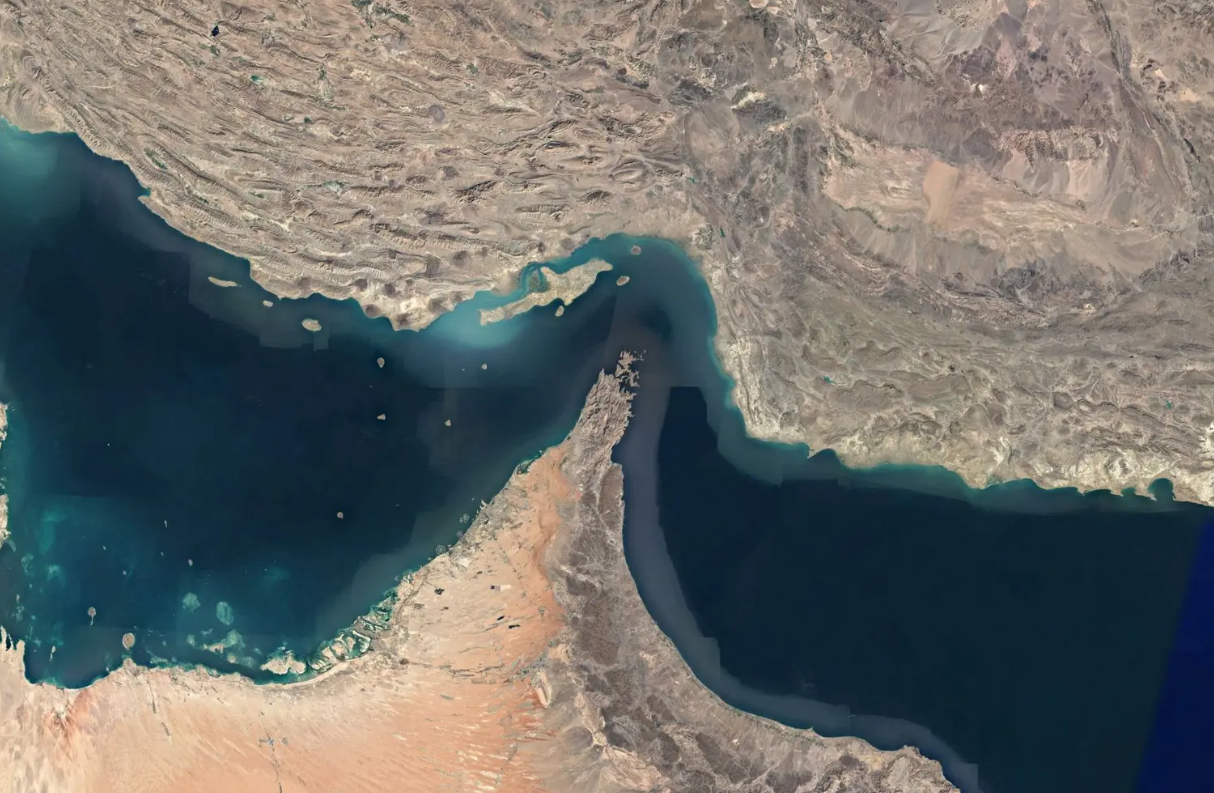
The Strait of Hormuz is no longer just a maritime chokepoint. It has become the centre of a much larger geopolitical confrontation involving Iran, the Gulf monarchies, the United States, Russia, China and the future balance of power in West Asia. What was once viewed as an energy security issue has now evolved into a direct test of international order, regional trust and the credibility of global institutions.
The latest Gulf diplomatic push at the United Nations reveals how seriously GCC states now view Iran’s actions in the Gulf. Bahrain, Saudi Arabia, the UAE and other Gulf states are once again trying to push through a Security Council resolution aimed at protecting freedom of navigation in the Strait of Hormuz and Bab al-Mandeb after Russia and China vetoed an earlier proposal in April. The previous draft had received support from eleven members of the Security Council before Moscow and Beijing blocked it, arguing that the resolution unfairly targeted Iran while ignoring the wider US-Israeli military campaign in the region.
But the situation has evolved rapidly since then. Gulf officials now openly argue that Iran has crossed a strategic red line by weaponising one of the world’s most important waterways. The Strait of Hormuz handles nearly one fifth of global oil flows and a major share of LNG exports. Any disruption there immediately sends shockwaves through global markets, shipping insurance, inflation and energy prices across Asia and Europe.
Iran initially justified its restrictions in Hormuz as part of its confrontation with the United States and Israel after the outbreak of war earlier this year. Tehran argued that it was responding to military pressure and defending its sovereignty. Yet for Gulf capitals, the issue is no longer only about Israel or Washington. It is about trust. GCC officials now openly admit that relations with Tehran have suffered their deepest rupture since the China-mediated Gulf-Iran rapprochement began in 2023.
Dr Abdulaziz Aluwaisheg’s remarks reflect that shift clearly. Gulf states no longer see the Strait issue merely as a temporary crisis linked to negotiations. They increasingly view it as proof that Iran is willing to use regional geography as leverage against its own neighbours. That has fundamentally altered the strategic mood inside the Gulf.
The most serious accusation coming from Gulf officials is not simply about maritime disruption. It is the claim that nearly 85 percent of Iranian missile and drone activity during the conflict targeted Gulf states rather than Israel itself. Whether Tehran disputes those numbers or not, the political damage has already been done. Gulf governments that once invested heavily in restoring diplomatic channels with Iran now believe those understandings were violated under wartime pressure.
This explains why the GCC is simultaneously accelerating collective defence integration while pursuing diplomatic action at the UN. Gulf states are strengthening intelligence coordination, joint air defence planning and the Unified Military Command structure while also trying to build an international legal coalition around maritime security. The crisis has effectively revived the Gulf’s collective security instincts after years of cautious de-escalation.
What makes the situation even more complicated is the position of Russia and China. Both countries maintain strategic partnerships with Iran and have resisted resolutions they believe could legitimise further Western military escalation. China’s UN ambassador recently criticised the latest US-backed Hormuz proposal as unbalanced and politically timed, arguing that diplomacy rather than pressure should dominate the process. Russia has taken a similar position, insisting that Washington and Israel cannot be separated from the origins of the crisis.
At the same time, neither Moscow nor Beijing actually wants prolonged instability in Hormuz. China, in particular, remains deeply dependent on Gulf energy supplies. During President Donald Trump’s recent visit to Beijing, both Trump and Chinese President Xi Jinping reportedly agreed that the Strait of Hormuz must remain open and that disruption of global shipping serves nobody’s long-term interests. American officials have also increasingly tried to pressure Beijing into using its leverage over Tehran to prevent further escalation.
This creates a strange geopolitical contradiction. China and Russia oppose Western-led resolutions against Iran, yet they also oppose any permanent closure or militarisation of Hormuz. Iran itself appears to recognise the growing pressure. The IRGC Navy has gradually begun allowing more vessels to transit under what Tehran calls “legal protocols,” even while continuing to assert sovereign oversight over the waterway.
Still, the damage to regional confidence may outlast the military confrontation itself.
For years, Gulf states tried to reduce tensions with Iran through dialogue, economic openings and Chinese-backed diplomatic channels. Saudi-Iran rapprochement was presented as the beginning of a new regional balance where confrontation would gradually give way to managed coexistence. But the Hormuz crisis exposed how fragile that process still was beneath the surface.
Iran now faces a strategic dilemma. It can continue treating maritime pressure and regional escalation as tools of deterrence against the United States and Israel, but doing so risks permanently alienating Gulf neighbours that Tehran cannot geographically escape from. As Aluwaisheg bluntly stated, geography forces both sides to coexist whether they want to or not.
The Gulf states also face their own difficult balancing act. While they oppose Iranian pressure tactics, they are equally aware that a full-scale war against Iran would devastate the entire region economically and strategically. This explains why Gulf capitals continue supporting negotiations even while simultaneously expanding military coordination and preparing contingency frameworks.
The wider danger is that the Strait of Hormuz is becoming a symbol of the breakdown of global conflict management itself. The UN Security Council remains paralysed by great power rivalry. The United States and its Gulf allies accuse Russia and China of shielding Tehran. Moscow and Beijing accuse Washington of trying to use maritime security as a pretext for escalation. Meanwhile, the region itself remains trapped between economic interdependence and strategic mistrust.
What is unfolding now is not just a crisis over shipping lanes. It is the collapse of assumptions that diplomacy alone could stabilise West Asia without a deeper regional security framework. The Gulf states appear to have concluded that economic integration with Iran cannot survive without hard security guarantees. Iran, meanwhile, appears convinced that regional deterrence requires demonstrating its ability to disrupt global energy flows when under pressure.
That is why the Strait of Hormuz has become more than a waterway. It is now the frontline where competing visions of regional order are colliding.