

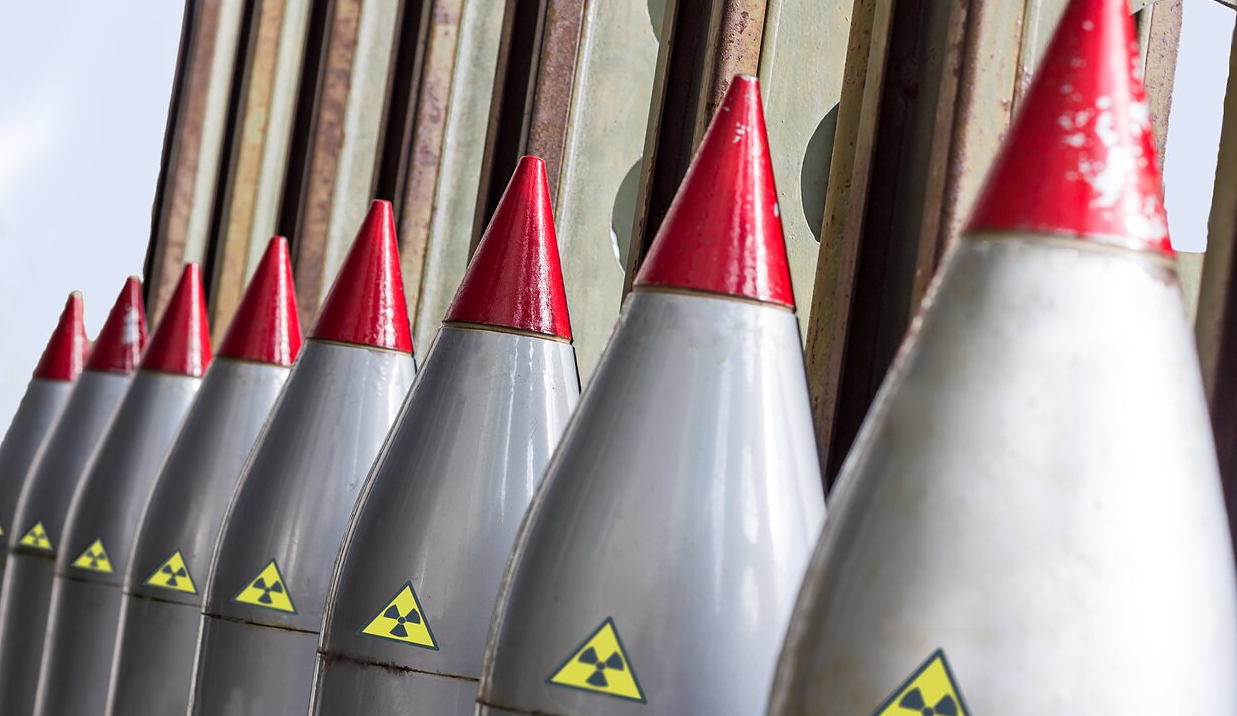
The geopolitical tectonic plates of Europe are shifting with an unprecedented and alarming velocity, bringing the continent closer to a digitized, hyper-militarized state of permanent readiness. In Vilnius, a monumental legislative maneuvers has signaled that the post-Cold War security architecture is officially dead. The formal registration of a constitutional amendment by 50 Lithuanian lawmakers to scrap Article 137 of their national charter represents more than a localized policy shift. It is a fundamental philosophical departure from the pacifist illusions that governed Eastern Europe immediately after the collapse of the Soviet Union. By targeting the clause that prohibits the hosting of weapons of mass destruction and foreign military installations on domestic soil, Lithuania is attempting to bridge a perceived vulnerability in the North Atlantic Treaty Organization framework. Driven by an acute sense of existential vulnerability and catalyzed by escalating regional tensions, this push exposes a profound dilemma at the heart of modern deterrence theory. The core question is whether the introduction of nuclear infrastructure onto the immediate periphery of an adversarial superpower acts as an absolute shield or an irresistible lightning rod.
The rationale driving Lithuanian President Gitanas Nauseda and the near-unanimous coalition of parliamentary leaders is explicitly rooted in the deteriorating regional security landscape. Writing a constitution in the early 1990s reflected an era of optimistic integration, where a newly independent Lithuania sought to define itself through international law, neutrality pledges, and peaceful coexistence. Decades later, the structural realities of European defense have rendered those early provisions functionally obsolete in the eyes of Baltic strategists. Situated precariously between the highly militarized Russian exclave of Kaliningrad and the increasingly aligned military apparatus of Belarus, Lithuania sits directly on the Suwalki Gap, the narrow sixty-five-kilometer land corridor that connects the Baltic states to Poland and the rest of Western Europe. In a high-intensity conventional conflict, this bottleneck could be rapidly choked off, isolating the Baltics from allied reinforcement. For Vilnius, maintaining a self-imposed constitutional ban on nuclear deployments is no longer seen as a virtuous commitment to non-proliferation, but rather as an invitation to aggression. Strategists fear that maintaining a nuclear-free status creates a dangerous asymmetric vulnerability, effectively signaling to Moscow that the Baltic region is a sub-tier zone of Western protection where tactical escalation carries fewer immediate, existential consequences.
The legislative mechanics required to alter the Lithuanian Constitution underscore the gravity of this collective political choice. Repealing or significantly altering a foundational article requires the proposal to be successfully approved twice by a supermajority of at least 94 out of the 141 members of parliament, with a mandatory three-month cooling-off interval between the ballots. This deliberate friction is designed to prevent reactionary governance, yet the sheer speed with which 51 lawmakers registered the bill speaks to a powerful domestic consensus. The political momentum has been heavily reinforced by the legislative precedents of neighboring states. Helsinki recently enacted a sweeping repeal of its own long-standing domestic bans on the importation, manufacture, storage, and transit of atomic weapons. For Vilnius, Finland’s integration into the nuclear infrastructure of the alliance serves as both a roadmap and a warning. Lithuanian leadership fears that if they do not follow suit, their nation will become the sole legal gray zone on the eastern flank. By matching Finland’s legal alignment, Lithuania seeks to present a completely seamless, legally unencumbered defensive front that denies Russia any perceived legal or operational soft spots along the frontier.
The strategic benefits of lifting the ban are anchored firmly in the classic doctrines of extended deterrence and collective alliance cohesion. By removing Article 137, Lithuania completely eliminates any domestic statutory barriers that could prevent it from fully participating in the alliance’s evolving defensive operations. This legal flexibility is essential given the broader shifts within the Western alliance, including recent reports that the United States is actively exploring the expansion of its nuclear sharing arrangements to additional eastern flank states. Concurrently, French President Emmanuel Macron has championed a revised European strategic architecture that envisions partner nations temporarily hosting French strategic air assets. Without this constitutional overhaul, Lithuania would be legally barred from participating in these joint exercises or hosting dual-capable aircraft during critical moments of heightened tension. Stripping away the ban sends an unambiguous signal of political resolve to both allies and adversaries, demonstrating that Vilnius is willing to share the ultimate strategic risks of the alliance. It enhances the credibility of Western deterrence by forcing Russian military planners to operate under the assumption that any conventional cross-border incurrence could trigger an immediate, localized nuclear response from assets deployed directly on the theater’s edge.
However, the strategic arguments in favor of this constitutional repeal are matched by equally profound and destabilizing risks. The most immediate consequence of altering the legal framework is the certainty of a severe, asymmetric escalatory response from Moscow. Russian officials have repeatedly cautioned that the deployment of Western nuclear infrastructure closer to their borders represents a red line that will inevitably trigger direct military countermeasures. Should Lithuania transition from merely altering its constitution to actively hosting dual-capable systems or storage facilities, the country would immediately transform into a primary, pre-emptive target for Russian strategic forces. In a crisis scenario, the temptation for a pre-emptive strike on forward-deployed nuclear infrastructure is exceptionally high, potentially compressing decision-making timelines to a matter of minutes. Furthermore, critics argue that forward-deploying these assets into highly exposed territories like the Baltics creates a destabilizing use-it-or-lose-it dynamic. Because these forward positions are highly vulnerable to conventional overruns or localized strikes, commanders might face intense pressure to utilize tactical options early in a conflict before they are destroyed, dramatically lowering the threshold for global catastrophe.
The economic and domestic political ramifications of this transition also warrant careful examination. While Parliament Speaker Juozas Olekas has attempted to calm regional anxieties by asserting that Lithuania has no active plans to host nuclear weapons during peacetime, the mere legal authorization changes the domestic landscape. Operating even a latent capability or developing the specialized infrastructure necessary to support dual-capable installations requires immense capital. Lithuania is already a leader in defense spending relative to its size, allocating over 5% of its gross domestic product to military modernization, border fortification, and the complex integration of a permanent German combat brigade scheduled for full deployment next year. Diverting further resources toward specialized security protocols, hardened underground storage sites, and advanced air defense umbrellas designed specifically to protect potential nuclear nodes could strain the domestic economy. Politically, while elite consensus across government factions appears robust, the long-term societal impact of living within a designated strategic nuclear target zone could provoke underlying public anxiety, testing the resilience of the domestic population during prolonged periods of geopolitical friction.
On the international stage, Lithuanian authorities have been careful to emphasize that removing the constitutional restriction does not violate their formal commitments under the Treaty on the Non-Proliferation of Nuclear Weapons. Because any potential future deployment would likely mirror existing NATO nuclear-sharing agreements, where ownership and custody of the warheads remain strictly under the control of the providing nuclear-weapon state, Vilnius can technically maintain legal compliance with international non-proliferation treaties. Yet, the diplomatic friction generated by this move extends beyond the immediate relationship with Moscow. It accelerates a broader trend toward the fragmentation of global arms control regimes. As the physical distance between adversarial nuclear capabilities shrinks to a few dozen kilometers along the Baltic frontier, the margins for operational error, miscalculation, and accidental escalation diminish to razor-thin levels. The rhetoric surrounding the conflict has already turned dangerously transactional, with senior defense officials openly acknowledging that strategic exclaves like Kaliningrad would be treated as immediate, non-excluded operational targets if hostilities break out. In such a volatile environment, the total absence of structural communication channels between NATO and Russian commanders compounds the danger of a tactical misunderstanding spinning rapidly out of control.
Ultimately, Lithuania’s move to dismantle its constitutional nuclear ban is a calculated gamble that epitomizes the brutal realities of contemporary statecraft along the European fault line. Faced with a security environment that offers no comfortable choices, Lithuanian leadership has chosen to prioritize absolute deterrence over the historical ideals of regional sanctuary. By aligning its legal framework with the hard power requirements of a continent operating under a permanent wartime mindset, Vilnius is positioning itself as a fully integrated, unyielding component of the Western defensive wall. This strategy may succeed in convincing the Kremlin that the costs of testing the alliance’s resolve are entirely prohibitive. However, by removing the self-imposed legal boundaries that once separated the Baltic state from the global nuclear chessboard, Lithuania is explicitly tying its national survival to the volatile mechanics of global strategic stability. As the constitutional amendment moves toward the parliamentary floor, the nation stands on the threshold of a new era, trading its status as a self-declared nuclear-free zone for a high-stakes seat at the table of ultimate deterrence.