

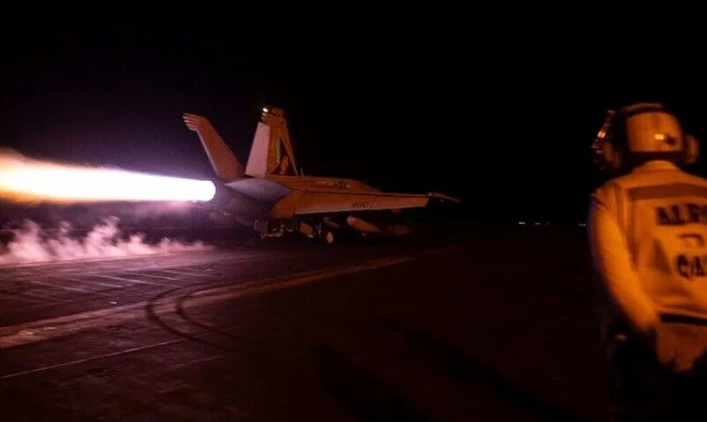
The conceptual battlefield of West Asia has exposed a fundamental mismatch between overwhelming tactical firepower and coherent strategic logic. The collapse of the recent interim memorandum of understanding has plunged the United States and Iran back into active hostilities, exposing the profound limitations of traditional deterrence in a gray zone conflict. Four months into a military campaign that the White House initially suggested would yield a rapid breakthrough, Washington finds itself locked in a costly war of attrition with no clear path to victory and no viable exit strategy. This predicament represents a classic escalation trap, a self reinforcing cycle where a state continues to apply increasing military pain in the hope of forcing a political capitulation, only to find that each round of violence hardens the adversary’s resolve and narrows its own diplomatic options. For President Donald Trump, the current crisis presents a punishing dilemma where further military action yields diminishing returns, while any attempt at de-escalation is politically framed by domestic critics as a fatal display of weakness.
The primary flaw in the American campaign stems from a persistent reliance on faulty strategic logic that systematically overvalues the utility of kinetic force while underestimating an adversary’s capacity for asymmetrical resistance. The administration launched its expanded air and naval strikes under the assumption that a sustained, high intensity bombardment would trigger a rapid collapse within Iran’s central command structure or ignite widespread internal domestic instability. This calculus, heavily influenced by optimistic allied intelligence assessments, failed to appreciate the institutional resilience of the Islamic Revolutionary Guard Corps and its decentralized command architecture. Instead of imploding under the weight of precision strikes, the Iranian leadership rapidly adapted, exploiting deep operational depth and maintaining its core capability to disrupt regional infrastructure. The fundamental lesson of modern conflict theory is that military means must always serve a clearly defined, realistic political outcome, yet Washington has failed to articulate what a viable end state looks like beyond an unrealistic demand for total Iranian submission.
At the center of this trap is the absolute vulnerability of global energy infrastructure, particularly the Strait of Hormuz, which remains Iran’s most potent instrument of asymmetric leverage. The White House mistakenly believed that American naval supremacy could insulate global markets from the shocks of a hot war in the Persian Gulf. The reality on the water has proven far more complicated, as the disruption of a vital maritime choke point does not require a peer level navy. Through the coordinated deployment of low cost loitering munitions, anti ship cruise missiles, and fast attack naval craft, Iran has effectively weaponized the commercial risk environment. A single successful drone strike or the mere perception of an active threat is sufficient to send maritime insurance premiums soaring and panic global energy traders. Consequently, despite spending billions of dollars on regional deployment and interception operations, the United States cannot guarantee the secure, unhindered flow of oil, leaving global markets hostage to a conflict that was supposed to be brief and contained.
This dynamic creates an acute political vulnerability for an administration whose domestic legitimacy is deeply tied to domestic economic performance. The strategic rationale behind the initial ceasefire negotiations was heavily driven by a desire to lower global energy prices and protect the domestic electorate from inflation at the gas pump ahead of critical congressional elections. By collapsing the memorandum of understanding and resorting back to a naval blockade, the administration has placed its own domestic political capital at risk. The longer the war drags on without a definitive conclusion, the more the American public grows weary of an expensive, open ended commitment in West Asia. The president is trapped between the hawkish demands of his political base, which insists on total military victory, and the economic reality that an all out war with Iran could trigger a global recession.
Compounding the problem is a severe structural disconnect within the diplomatic arena. Intelligence reports indicate that previous rounds of backchannel diplomacy, mediated by regional actors like Switzerland, Qatar, and Pakistan, were fundamentally flawed because Washington chose to negotiate primarily with Iran’s civilian officials. In the complex dual structure of the Iranian state, these civilian diplomats lack the authority to command the strategic assets, such as the ballistic missile arrays and the naval forces, that are currently driving the escalation. With the central command architecture further fractured by months of intense conflict, the United States is left in a dangerous position where it cannot find a unified, empowered negotiating partner capable of enforcing a lasting settlement. This diplomatic vacuum ensures that even if both sides desired a tactical pause, there is no reliable mechanism available to operationalize a ceasefire, leaving the battlefield as the only venue for communication.
The broader danger of this escalation trap is its tendency to expand into far more perilous strategic dimensions, most notably the nuclear arena. As conventional options fail to yield a decisive political result, the temptation grows within Washington and Tel Aviv to execute a high profile, pre emptive strike against Iran’s deeply fortified nuclear enrichment facilities. However, defensive analysts warn that such an operation is a strategic illusion that would not solve the crisis. A limited strike cannot erase the technical knowledge possessed by Iranian scientists, nor can it guarantee the complete destruction of centrifuges buried deep within reinforced mountain complexes. Instead, a strike on the nuclear infrastructure would almost certainly eliminate whatever remaining institutional constraints exist within Tehran, forcing the leadership to rapidly finalize a nuclear deterrent as their ultimate security guarantee. What begins as a tactical attempt to eliminate a future threat would instead accelerate the exact worst case scenario the West has spent decades trying to prevent.
Furthermore, the fixation on a kinetic solution in West Asia ignores the shifting global balance of power and the strategic benefits it provides to America’s primary geopolitical competitors. Every carrier strike group tied down in the Persian Gulf or the Red Sea is a critical asset subtracted from the Indo Pacific theater. Every million dollar air defense interceptor fired to protect shipping lanes from asymmetric drone attacks depletes finite national stockpiles, directly weakening the Western deterrent posture against a potential contingency in East Asia. For external superpowers like China, the American entanglement in an open ended Iranian war is a major strategic windfall. It exhausts American resources, fractures Western alliances, and demonstrates the vulnerabilities of U.S. power projection, all while allowing Beijing to expand its economic influence across the global south without firing a single shot.
Escaping an escalation trap requires a level of strategic capacity and diplomatic agility that the current political landscape is ill equipped to provide. It demands a recognition that military leverage is a depreciating asset that must be quickly converted into a realistic diplomatic framework rather than pursued as an end in itself. To break the current stalemate, Washington must move past the rhetoric of maximum pressure and absolute capitulation, designing an off ramp that addresses the core security anxieties of all regional actors. This means leveraging the good offices of international mediators to establish clear, verifiable red lines that restore strategic ambiguity and lower the operational temperature. Until the administration acknowledges that its current hand, no matter how powerful, cannot secure a unilateral victory, the United States will remain firmly caught in a trap of its own making, burning through blood, treasure, and global credibility on a battlefield where the costs of escalation are infinite and the prospects of victory are non existent.