

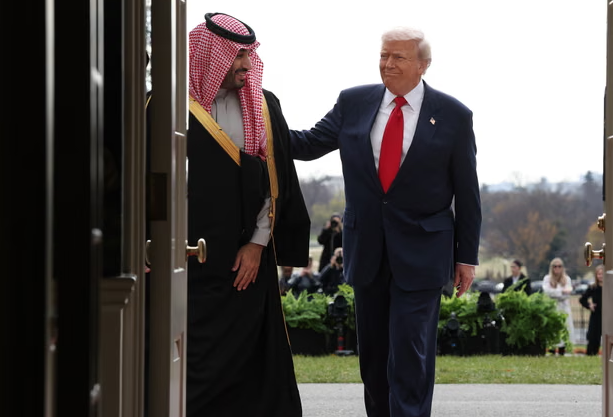
The signing of the Section 123 Civil Nuclear Cooperation Agreement between Washington and Riyadh marks a defining juncture in contemporary West Asian geopolitics. Formally structured to facilitate the transfer of peaceful civilian nuclear technology, reactor infrastructure, and technical expertise, the bilateral accord represents far more than an ambitious green energy initiative. It reflects a fundamental recalibration of the decades-old strategic architecture that has linked the United States and the Kingdom of Saudi Arabia since the mid-twentieth century. As global energy markets transition and regional power dynamics undergo dramatic realignments, both capitals have recognized that the traditional pillars of their relationship, centered almost exclusively on crude oil exports and standard arms sales, are no longer sufficient to secure their mutual interests. Yet, the path to implementation remains fraught with intense geopolitical friction, underlined by nonproliferation debate, fierce opposition from rival foreign powers, and explicit political linkages to broader West Asian diplomatic normalization.
At its core, the Section 123 agreement establishes the legal framework required under the United States Atomic Energy Act for American commercial entities to export nuclear reactors, fuel, and technology. For Saudi Arabia, a nation seeking to diversify its domestic energy grid under the ambitious Vision 2030 roadmap, civil nuclear power offers an essential mechanism to replace domestic crude oil consumption in power generation and water desalination, thereby preserving valuable hydrocarbons for export. For the United States, the commercial prospects are immense, offering American nuclear vendors a multi-billion-dollar entry into a burgeoning regional market. However, the strategic weight of the accord lies in its binding operational longevity. Nuclear infrastructure projects are not brief commercial transactions; they create technical, regulatory, and industrial dependencies that endure for 60 years or more. By binding Riyadh to American reactor designs, safety protocols, and supply chains, Washington effectively anchors the Kingdom within the American strategic orbit for generations to come.
The primary debate surrounding the pact focuses on the sensitive issue of fuel cycle capabilities, specifically local uranium enrichment and spent fuel reprocessing. Historically, Washington maintained what nonproliferation experts termed the Gold Standard in civilian nuclear agreements, exemplified by the 2009 accord with the United Arab Emirates, wherein the partner state explicitly renounced any domestic enrichment or reprocessing activities. Saudi negotiators, however, steadfastly resisted accepting explicit restrictions that would compromise their national sovereignty or leave their energy security entirely dependent on foreign fuel suppliers. The negotiated framework attempts to navigate this impasse through a joint feasibility study to evaluate potential enrichment models on Saudi soil, including an American-managed facility operating under a strict black box model. Under such a system, American personnel would directly control and operate the physical enrichment technology, preventing local technicians from acquiring weapons-usable know-how while satisfying the Kingdom’s requirement for domestic fuel production.
This technical compromise has ignited a passionate debate within the nonproliferation community. Critics contend that allowing any form of enrichment infrastructure inside Saudi Arabia creates a dangerous precedent, eroding the global nonproliferation regime and potentially encouraging other West Asian states, such as Turkey or Egypt, to demand similar concessions in future agreements. Moreover, domestic oversight concerns have intensified due to the absence of the International Atomic Energy Agency’s Additional Protocol within the preliminary text, an oversight tool that grants international inspectors broader authority to investigate undeclared nuclear activities. Proponents of the agreement counter that the alternative to an American deal was never a nuclear-free Saudi Arabia, but rather a Saudi Arabia powered by Russian or Chinese nuclear technology. Had Washington insisted on unyielding restrictions, Riyadh would have eventually turned to foreign competitors who impose far fewer nonproliferation conditions and zero human rights oversight. From a pragmatic strategic standpoint, an agreement containing strict American controls and continuous monitoring is vastly superior to allowing Beijing or Moscow to establish an unmonitored foothold in the Gulf.
Indeed, great power competition forms the immediate backdrop against which this strategic dynamic must be understood. Over the past decade, China has aggressively expanded its diplomatic and economic footprint across the Persian Gulf, culminating in its mediation of the Saudi-Iranian diplomatic thaw and extensive investments in regional infrastructure through the Belt and Road Initiative. Simultaneously, Russia’s state-owned nuclear giant, Rosatom, has actively marketed its reactor technology across the Global South, securing major projects in Egypt and Turkey. A decision by Washington to walk away from civil nuclear cooperation with Riyadh would have effectively conceded the West Asian energy landscape to America’s primary global rivals. By finalizing the 123 Agreement, the United States reasserts its status as the indispensable security and technological partner in the region, dealing a tactical setback to foreign ambitions to displace American influence.
The implementation of the nuclear pact has nevertheless been complicated by shifting political demands emanating from Washington. Executive assertions linking the final approval of the civil nuclear deal to Saudi Arabia normalizing diplomatic relations with Israel through the Abraham Accords have introduced deep uncertainty. While American policymakers view a potential Saudi-Israeli normalization as the ultimate catalyst for regional integration and a unified strategic front against shared adversaries, Riyadh has consistently maintained a firm baseline requirement for any formal diplomatic recognition. Saudi leadership has repeatedly stated that normalization remains contingent upon a clear, credible, and irreversible pathway toward Palestinian statehood, a condition that remains unacceptable to the current political consensus in Israel. Tying a complex, long-term civil nuclear partnership directly to an immediate diplomatic breakthrough in the Levant risks stalling both initiatives, subjecting vital national security objectives to the volatile short-term dynamics of regional conflicts.
Decoupling the civil nuclear agreement from immediate diplomatic normalization may prove essential if Washington wishes to preserve its long-term strategic leverage. Forcing an ultimatum on Riyadh during a period of acute regional instability risks pushing Saudi decision-makers back toward strategic hedging, accelerating their economic integration with the BRICS block and expanding non-Western trade links. Conversely, proceeding with the nuclear agreement on its independent technical merits provides the United States with substantial structural influence over Saudi Arabia’s energy sector and long-term national planning. Once American nuclear infrastructure is deployed and joint security protocols are established, the resulting trust and institutional alignment can create a far more stable foundation for future diplomatic breakthroughs across the wider West Asia.
From a regional security perspective, the civilian nuclear framework cannot be isolated from the enduring shadow cast by Iran. Tehran’s ongoing nuclear advancements and rapid uranium enrichment capabilities have fundamentally reshaped security calculations throughout the Gulf. While Saudi leaders maintain that their civil nuclear ambitions are strictly peaceful, top officials have previously acknowledged that if a regional rival acquires a nuclear weapon, the Kingdom would feel compelled to achieve parity over time. The U.S.–Saudi 123 Agreement functions as a sophisticated hedge against this scenario. By establishing a robust, state-of-the-art civilian nuclear program under comprehensive American monitoring, Riyadh develops significant domestic technological infrastructure, scientific capital, and energy resilience, while remaining firmly anchored within a cooperative security architecture overseen by the United States. This transparent, supervised advancement reduces the incentive for clandestine development and provides a stabilizing influence in a deeply fractured regional environment.
The economic implications for the United States civilian nuclear industry are equally profound. For decades, the domestic American nuclear sector has struggled with high regulatory burdens, project delays, and stiff foreign competition from heavily subsidized state enterprises in Eastern Europe and East Asia. Winning a landmark commercial partnership in Saudi Arabia provides American reactor manufacturers, engineering firms, and high-tech vendors with a vital multi-billion-dollar order book. This industrial influx promises to revitalize domestic supply chains, create thousands of specialized technical jobs, and re-establish American leadership in advanced nuclear reactor design and international safety benchmarking. In an era where clean baseload electricity is increasingly viewed as a prerequisite for technological dominance, particularly in powering massive artificial intelligence data centers and advanced manufacturing, maintaining a dominant commercial presence in global nuclear exports is a direct component of national power.
As the Section 123 Agreement moves forward into the required congressional review process, lawmakers in Washington face a critical strategic choice. Skeptics within Congress will undoubtedly focus on the nonproliferation risks, questioning whether the safeguards are sufficiently rigorous to prevent future escalation or misuse. These concerns are legitimate and deserve thorough legislative examination. However, Congress must evaluate these risks against the stark reality of the global nuclear marketplace. In the modern geopolitical landscape, a complete refusal to compromise on rigid nonproliferation standards does not prevent a foreign state from acquiring nuclear capabilities; it simply ensures that those capabilities will be supplied by foreign adversaries who care far less about nonproliferation, transparency, or strategic balance.
The United States and Saudi Arabia stand at a historic crossroads. The civil nuclear agreement represents a bold attempt to transcend the traditional, transactional nature of their historical alignment and construct a forward-looking strategic partnership fit for the complexities of the modern era. While domestic political demands and regional conflicts present real obstacles, the core strategic logic driving the accord remains compelling. By securing American technology at the heart of Saudi Arabia’s energy transformation, establishing rigorous oversight mechanisms, and countering the regional encroachment of rival global powers, the United States can reinforce its strategic anchor in the Persian Gulf. Success will require pragmatic diplomacy, clear-sighted risk management, and a recognition that long-term strategic stability is best achieved through sustained engagement, technological leadership, and shared institutional commitments.
Note:
As Congress reviews the proposed U.S. Saudi Section 123 Civil Nuclear Cooperation Agreement, lawmakers must weigh the significant nonproliferation risk posed by departing from the stringent “Gold Standard” established in prior regional accords. By leaving open a potential pathway for domestic uranium enrichment on Saudi soil, even under proposed American managed “black box” operational models, the agreement compromises longstanding U.S. nonproliferation norms that previously required partner states to completely renounce fuel enrichment and spent fuel reprocessing capabilities. Granting such flexibility without first securing full adoption of the International Atomic Energy Agency’s Additional Protocol sets a concerning legal and political precedent across West Asia, potentially incentivizing neighboring powers such as Turkey and Egypt to demand equivalent technological latitude and accelerating regional nuclear hedging under the umbrella of civilian energy expansion.