

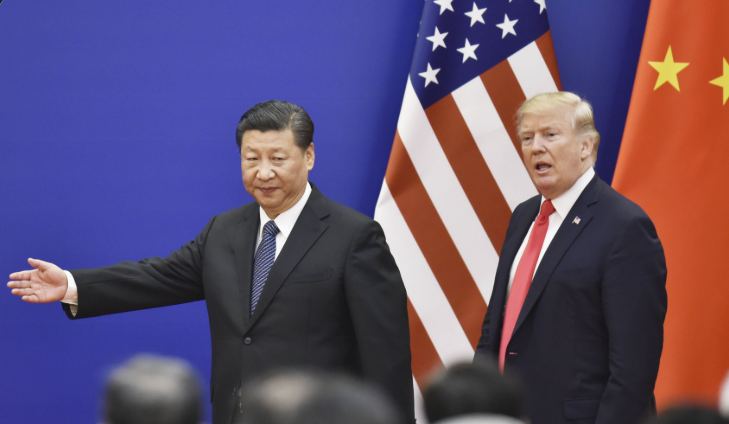
A possible meeting between United States President Donald Trump, Chinese President Xi Jinping and Russian President Vladimir Putin on the sidelines of the Asia Pacific Economic Cooperation summit in Shenzhen would be unprecedented. Its significance, however, should be measured carefully. Bringing together three leaders whose countries occupy central positions in global politics would create an extraordinary diplomatic image, but it would not automatically establish a new alliance, settle the war in Ukraine or produce a common approach to international security. Each government would approach the encounter with different priorities, and those differences may prove more consequential than the symbolism of the meeting itself.
The possibility has moved beyond speculation, although arrangements remain unconfirmed. Beijing has said it is communicating with relevant parties, while the Kremlin has confirmed that work is under way. The proposed setting is the APEC leaders’ summit in Shenzhen on November 18 and 19. Neither a final format nor a common agenda has been publicly established, reflecting the different calculations in Washington, Beijing and Moscow.
For Moscow, even the meeting itself would carry considerable value. Putin would appear alongside the leaders of the United States and China, weakening the image of Russia as a country isolated by Western pressure. The Kremlin could present his participation as evidence that Russia remains an indispensable actor in discussions about global security and the international order. At a time when the war in Ukraine has strained Moscow’s relations with much of Europe and the United States, direct engagement with Trump and Xi would offer a significant diplomatic advantage.
The symbolism becomes more consequential if Ukraine remains outside the trilateral format. Putin would have an opportunity to discuss the wider security environment with two powerful states without Kyiv being represented. Such an encounter would not determine Ukraine’s future, but it could reinforce the impression that major powers can discuss European security independently of the country most directly affected by the war. The danger lies not simply in the photograph of the three leaders, but in the political message that could accompany it.
References to a new Yalta illustrate the attraction of this prospect for Moscow. The 1945 conference brought together the Soviet Union, the United States and Britain to discuss the postwar settlement in Europe. Invoking that history allows Russia to suggest that a small group of powerful states could once again shape the international order. The comparison has serious limitations. The contemporary world is more interconnected, the interests of the three countries are not aligned, and states affected by their decisions cannot simply be treated as passive participants. A meeting in Shenzhen would not give its participants the authority to decide Ukraine’s future or determine Europe’s security arrangements.
Trump would have his own reasons for welcoming the encounter. A personal meeting with Xi and Putin would allow him to present himself as a leader capable of engaging both major strategic competitors of the United States. The image would reinforce his preferred approach to diplomacy, centred on direct relationships between national leaders. He could portray himself as an indispensable dealmaker capable of bringing difficult international disputes to the negotiating table. Even without a substantial agreement, the meeting could be presented domestically as evidence that American power remains central to global diplomacy.
The political value of such optics should not be confused with negotiating leverage. Personal access to Xi and Putin does not mean either leader is prepared to accept American demands. A summit producing declarations without practical commitments could strengthen the appearance of presidential diplomacy while leaving underlying disputes unresolved. Its value would depend on whether it established a process capable of delivering results.
China’s position appears more cautious. Beijing has confirmed discussions about the meeting, but that does not mean it wants the gathering to become a negotiation over Ukraine or nuclear disarmament. German President Frank Walter Steinmeier said after meeting Xi in Beijing on October 30 that the Chinese leader appeared surprised when Ukraine was raised. According to Steinmeier’s account, Xi indicated that the three presidents might meet in Shenzhen but that Ukraine was not the intended subject. He also emphasised that Europeans should participate in discussions about a European conflict. This reflects Beijing’s reluctance to be drawn into a process that could pressure it to endorse either Washington’s or Moscow’s position.
China has also resisted the idea of joining trilateral nuclear disarmament negotiations at this stage, describing such a demand as unfair, unreasonable and unrealistic. Its position reflects the substantial difference between its nuclear capabilities and those of the United States and Russia. Beijing is unlikely to accept a framework that treats all three countries as though they possess comparable arsenals and responsibilities. Trump has expressed interest in discussing nuclear weapons, but his willingness to hold talks does not demonstrate that China has accepted the proposed agenda. Serious arms control negotiations would require sustained technical discussions, credible verification arrangements and consideration of each side’s security concerns.
China’s caution also reflects the state of its bilateral relationship with Washington. Trump and Xi have pursued a separate track, including understandings reached during Xi’s September visit to the United States. Both governments have an interest in maintaining a fragile trade truce, but differences remain over agricultural purchases, rare earths, critical minerals and American trade restrictions. A trilateral meeting could add political theatre without resolving these disputes.
APEC itself has a broader agenda that should not be overshadowed by speculation about a meeting between the three presidents. The 21 member forum is focused on regional economic cooperation, trade, artificial intelligence, supply chain resilience, energy security and food systems. China’s host priorities emphasise openness, innovation and cooperation. These issues affect economies across the Asia Pacific, including countries that have no direct role in the proposed summit. If the gathering becomes dominated by the political symbolism of Trump, Xi and Putin, the wider regional agenda could receive less attention than it deserves. APEC was established to promote economic cooperation, not to function as a private directorate for global security.
For countries outside the proposed meeting, the most serious concern is the possibility that decisions affecting their interests could increasingly be shaped through personalised great power diplomacy. The United States has traditionally coordinated with European and Asian allies before engaging with Moscow or Beijing on matters affecting their security. A separate trilateral encounter could weaken that practice if understandings are reached without prior consultation. European governments would be particularly concerned if Ukraine or the future security of the continent became subjects of discussion without their participation. Asian partners could also question whether their interests might become secondary in wider negotiations between Washington and Beijing.
This does not mean a formal G3 arrangement is emerging. The three countries have conflicting interests on Ukraine, Taiwan, technology, trade and the rules governing international affairs. China and Russia have developed a close strategic relationship, but their objectives are not identical. Beijing seeks to protect its economic interests and international standing, while Moscow wants diplomatic recognition and an end to its isolation. Washington regards both as major competitors even as Trump pursues direct engagement with their leaders. These differences make a durable three power political bloc unlikely.
The real risk is more subtle. Repeated high level meetings could normalise the idea that the most powerful states are entitled to manage international disputes through direct arrangements, leaving smaller countries and affected parties to adapt afterwards. Such diplomacy may appear efficient because it reduces the number of participants, but speed is not the same as legitimacy. Agreements that disregard the interests of those expected to implement or live with them are unlikely to produce lasting stability. Ukraine cannot be treated as an object of negotiation, just as European security cannot be redesigned without meaningful participation from European governments.
The war in Ukraine remains the clearest test of these competing principles. Putin may seek to use the summit to elevate Russia’s status and create the impression that the conflict belongs within a broader negotiation among major powers. Trump may see an opportunity to demonstrate his ability to bring leaders together. Xi may prefer to keep the discussion focused on the relationship between Washington and Beijing. Unless the three leaders share a clear purpose, these ambitions could produce a meeting that is politically impressive but diplomatically inconclusive. Any meaningful progress on Ukraine would still require Kyiv’s participation and serious engagement with European states whose security is directly involved.
A follow up meeting at the G20 summit in Miami in December has also been raised. It would matter only if the Shenzhen encounter produced agreed areas of work, clear responsibilities and a process for involving the countries concerned. Otherwise, another gathering would simply extend the cycle of announcements and photographs.
The outcome should be judged by more than whether the three leaders stand together. On nuclear weapons, progress would require a credible negotiating framework. On Ukraine, any settlement must involve Kyiv and address European security concerns. On trade and technology, Washington and Beijing will need sustained bilateral engagement rather than a symbolic trilateral arrangement.
A Trump, Xi and Putin summit could be a diplomatic coup for Moscow and a valuable stage for Trump, while offering Beijing an opportunity to demonstrate its convening power. These advantages do not establish that the three countries are moving towards a common strategic vision. Their interests remain distinct, and the meeting’s agenda is unsettled. The danger for the rest of the world is not necessarily the creation of a new global triumvirate. It is the gradual acceptance of a diplomatic style in which decisions affecting many countries are discussed by a few leaders, with consultation treated as an afterthought.
If the Shenzhen meeting takes place, it should be seen as a test of how great power diplomacy operates in an increasingly contested international environment. Dialogue among Washington, Beijing and Moscow is necessary, particularly on nuclear risks and strategic stability. But dialogue cannot become a substitute for the participation of countries whose sovereignty and security are at stake. A photograph may demonstrate access and political theatre. Only inclusive negotiations, defined commitments and respect for the interests of affected states can produce an outcome with lasting value.