

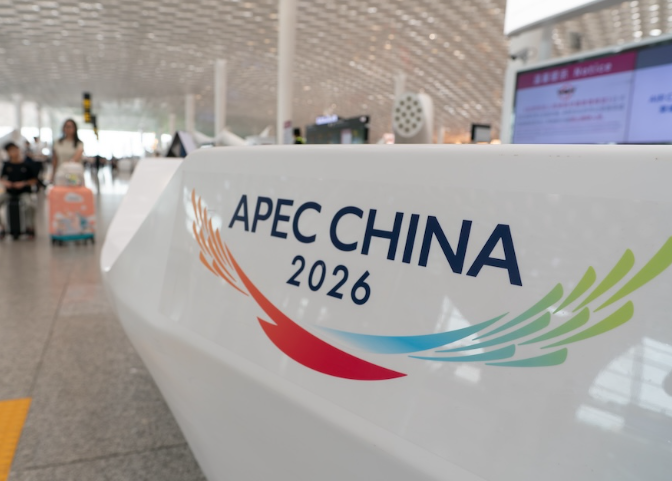
The reported efforts by the USA, China and Russia to establish a common agenda on artificial intelligence and nuclear security ahead of the upcoming APEC summit in Shenzhen point to a potentially significant diplomatic development. The three countries possess the world’s largest nuclear arsenals and play a central role in determining the direction of global strategic stability. Their discussions come at a time when artificial intelligence is increasingly influencing military planning, intelligence assessment and the systems supporting nuclear command and control. Although the three powers remain divided on several major international issues, the possibility of reaching an understanding on the risks associated with AI and nuclear weapons offers a limited but important area for cooperation.
The proposed discussions are particularly significant because they address a danger that extends beyond conventional military competition. Artificial intelligence can process large volumes of information, identify potential threats and support military decision making. However, its integration into nuclear command and control systems raises serious concerns about reliability, human judgement and the possibility of miscalculation. A false warning, an incorrect assessment of an adversary’s intentions or a cyberattack affecting critical military infrastructure could create a dangerous situation. In a nuclear crisis, where decisions may have consequences far beyond the immediate confrontation, reliance on automated systems could increase the risk of escalation.
One of the possible areas of agreement is the principle that humans must retain control over decisions involving nuclear weapons. This is particularly important as military technologies become faster and more sophisticated. Artificial intelligence may assist in analysing information and identifying threats, but the ultimate responsibility for decisions involving nuclear use must remain with human authorities. The USA, China and Russia have a shared interest in preventing technological systems from creating circumstances in which military decisions are made without sufficient human assessment. An understanding on this principle could establish an important foundation for managing the risks associated with AI in nuclear command and control.
However, reaching agreement on the principle will be easier than determining how it should be implemented. The three countries have different military doctrines, technological capabilities and approaches to strategic security. They may agree that human judgement should remain central, but questions will arise over the extent to which artificial intelligence can be used in early warning, threat assessment and military planning. A meaningful arrangement would therefore require more than a general political declaration. It would need to establish a common understanding of the role of AI in nuclear decision making and identify safeguards against unintended escalation.
The discussions could also provide an opportunity to reaffirm the principle that a nuclear war cannot be won and must never be fought. The five permanent members of the United Nations Security Council, including the USA, China and Russia, endorsed this position in their joint statement in January 2022. Reaffirming it would underline the continuing importance of nuclear restraint at a time when technological developments are creating new challenges for strategic stability. Yet the value of such a declaration would depend on whether it is accompanied by practical steps to reduce the possibility of miscalculation and maintain communication during periods of tension.
Another possible area of progress concerns missile launch notifications. Advance communication about certain missile tests can help prevent other countries from misinterpreting military activity as a potential attack. This is especially important when missile launches involve systems with strategic capabilities or take place in sensitive regions. The reported concerns surrounding China’s submarine launched missile test in July have further highlighted the importance of transparency and communication. An understanding among the three countries on notification procedures could reduce uncertainty without requiring them to make immediate changes to their nuclear arsenals or military doctrines.
Such an arrangement could represent a practical starting point because it would address a specific security concern rather than attempt to resolve the broader disagreements surrounding nuclear weapons. The USA, China and Russia could explore procedures for providing advance information about selected missile tests and establishing reliable channels for communicating relevant developments. These measures would not eliminate strategic competition, but they could reduce the possibility that routine military activity is misunderstood during an already tense international situation.
The broader question of nuclear arms control, however, remains considerably more complicated. The USA has an interest in bringing China into discussions on nuclear limitations and transparency, particularly as China’s nuclear capabilities continue to develop. China, for its part, has maintained that the USA and Russia should substantially reduce their nuclear arsenals before Beijing becomes part of comparable negotiations. Its position reflects the considerable difference between China’s nuclear stockpile and those maintained by the two established nuclear powers. Beijing is unlikely to accept an arrangement that treats all three countries as having identical responsibilities without taking these differences into account.
Russia also has its own strategic calculations. Its nuclear capabilities remain central to its national security doctrine, and Moscow is unlikely to accept restrictions that it considers detrimental to its military position. The three countries therefore approach nuclear arms control from different starting points. While the USA seeks greater transparency and broader participation, China wants its relative nuclear position recognised, and Russia remains concerned about preserving its strategic capabilities. These differences make an immediate comprehensive agreement difficult to achieve.
Nevertheless, discussions on transparency and risk reduction could create an opportunity for limited progress. Rather than beginning with numerical restrictions on nuclear warheads, the three countries could consider improving communication, exchanging information on selected military activities and developing common procedures for addressing incidents involving nuclear command systems. Such measures would not amount to disarmament, but they could help reduce uncertainty and establish a basis for more substantive negotiations in the future.
Artificial intelligence makes this dialogue increasingly necessary. The development of advanced military technologies is taking place alongside growing competition between the three powers. Each country has an interest in maintaining its technological advantage, but unrestricted competition in systems connected to nuclear decision making could create risks that none can fully control. The challenge is to recognise that strategic competition and cooperation on certain security safeguards are not mutually exclusive. The USA, China and Russia may continue to compete in military and technological fields while acknowledging the need to prevent AI from increasing the danger of nuclear conflict.
The proposed discussions also reflect the importance of maintaining communication among the three nuclear powers. Differences over international security, military deployments and strategic influence have weakened relations, making regular engagement more difficult. However, nuclear risks cannot be managed effectively without channels through which governments can communicate their concerns and clarify intentions. Even limited cooperation on AI safeguards could help maintain a degree of dialogue at a time when broader diplomatic relations remain strained.
The APEC summit in Shenzhen provides a suitable diplomatic setting for these discussions, particularly as artificial intelligence and technological cooperation are among the wider themes of the gathering. However, the possibility of a trilateral meeting should not be confused with an agreement already reached. The agenda remains under discussion, and the extent of any common understanding will depend on whether the three governments can reconcile their different positions. A meeting may create political momentum, but technical negotiations and sustained diplomatic engagement will be necessary to translate broad principles into workable arrangements.
The significance of the initiative will ultimately depend on what the USA, China and Russia are prepared to put into practice. A renewed commitment to human control over nuclear decisions, improved missile launch notifications and stronger communication channels would represent meaningful steps towards reducing strategic risks. A general declaration without clear procedures would have considerably less value. Comprehensive nuclear arms control may remain beyond immediate reach, but the three countries do not need to resolve every disagreement before taking measures that serve their common security interests.
The emerging nuclear and AI agenda therefore offers a limited opportunity for cooperation amid continuing strategic competition. Its importance lies not in the expectation that the USA, China and Russia will overcome their wider differences, but in their recognition that certain technological risks cannot be managed independently. Preventing artificial intelligence from contributing to nuclear miscalculation is a shared responsibility. If the proposed discussions produce practical safeguards and sustained communication, they could establish a useful foundation for future nuclear risk reduction. The real measure of success will be whether the three powers move beyond diplomatic assurances and translate their common concerns into concrete commitments.