

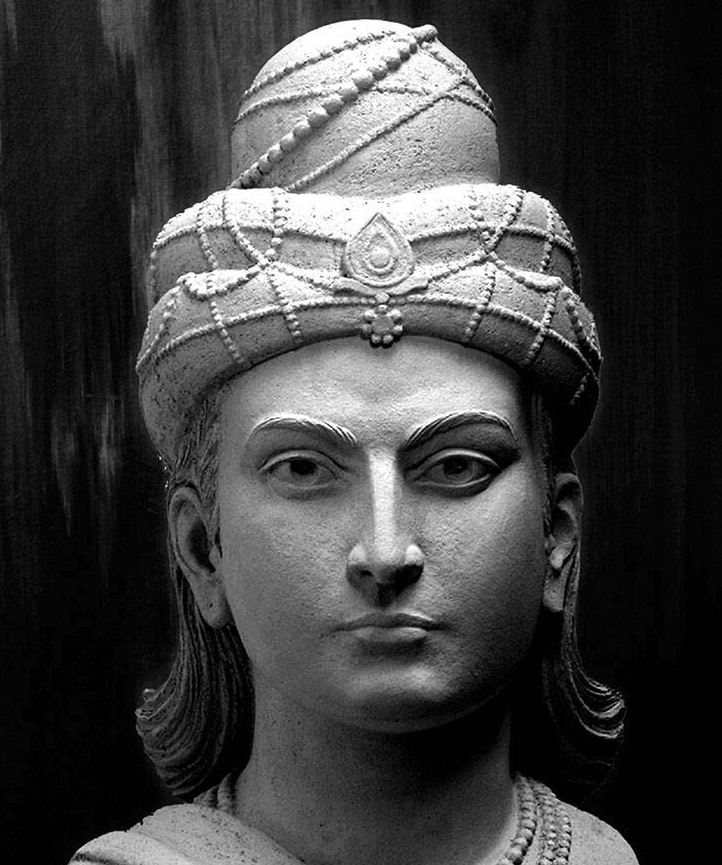
Samrat Ashoka (also spelled Asoka), third ruler of the Maurya Empire, was one of ancient India’s greatest emperors. After a bloody conquest of Kalinga, he embraced Buddhism, renounced violence, and promoted Dhamma (moral law) across his vast realm. His reign marked the first large-scale spread of Buddhism, ethical governance, and religious tolerance in history. Ashoka’s rock and pillar edicts — the earliest decipherable Indian inscriptions — remain the primary source of his life and policies. He is revered today as a model of compassionate leadership and the architect of India’s first welfare state.
Early Origins and Rise to Power
Ashoka was born around 304 BC in Pataliputra (modern Patna) to Emperor Bindusara and Queen Subhadrangi (or Dharma). He was not the eldest son but showed early military talent and administrative skill. As a young prince he suppressed revolts in Taxila and Ujjain, earning a reputation for ruthlessness.
After Bindusara’s death in 273 BC, a four-year war of succession followed. Ashoka emerged victorious around 269 BC and was crowned emperor. In the early years of his reign he continued the aggressive expansionist policy of his grandfather Chandragupta Maurya, conquering most of the Indian subcontinent — from present-day Afghanistan to Bangladesh and south to the Deccan.
Military Achievements and the Turning Point
Ashoka’s greatest military achievement was the conquest of Kalinga (modern Odisha) in 261 BC — his eighth regnal year. The campaign was devastating: Ashoka’s own edicts record 100,000 killed, 150,000 deported, and many more dead from wounds and famine.
The massive human suffering caused a profound transformation. Overcome with remorse, Ashoka renounced war forever, embraced Buddhism under the guidance of monk Upagupta, and adopted Dhamma — a practical ethical code based on non-violence (ahimsa), tolerance, respect for all life, truthfulness, and welfare of subjects. He became the first ruler in history to publicly express regret for conquest and dedicate his reign to moral governance.
Administrative Achievements and Dhamma Policy
Ashoka’s greatest innovation was the empire-wide propagation of Dhamma. He inscribed 14 Rock Edicts, 7 Pillar Edicts, and numerous minor edicts across his realm in Prakrit, Greek, and Aramaic — the earliest written records in India.
Key reforms included:
- Appointment of Dhamma Mahamatras (special officers) to promote morality and welfare.
- Ban on animal sacrifice and hunting; promotion of vegetarianism in the royal kitchen.
- Construction of hospitals, roads, wells, rest-houses, and tree-lined highways for travellers and animals.
- Religious tolerance: support for Brahmins, Jains, Ajivikas, and Buddhists alike.
- Welfare measures for the poor, slaves, and prisoners; abolition of harsh punishments in many cases.
He sent Buddhist missionaries to Sri Lanka, Egypt, Syria, Greece, and Central Asia — the first organised international spread of Buddhism.
Building Projects and Cultural Patronage
Ashoka erected thousands of stupas, monasteries, and the famous Ashoka Pillars — polished sandstone columns 40–50 feet high topped with animal capitals. The most famous is the Lion Capital from Sarnath (four lions standing back-to-back), now the national emblem of India and the source of the Ashoka Chakra on the Indian flag.
He enlarged the original stupa at Sanchi, built the Mahabodhi Temple complex at Bodh Gaya, and created the rock-cut caves at Barabar for Ajivika ascetics. His edicts and pillars served as permanent public proclamations of ethics and imperial policy.
Personal Life, Appearance, and Habits
Ashoka had several wives, the most prominent being Devi (mother of his son Mahinda and daughter Sanghamitta, who carried Buddhism to Sri Lanka), Kaurwaki, and Padmavati. He had at least five sons and several daughters. After Kalinga he lived a simple, semi-ascetic life despite being emperor.
Appearance (from sculptures and descriptions): A tall, strong warrior-king with a stern yet compassionate face, often shown wearing royal robes, turban or crown, and carrying symbols of authority. Later artistic depictions show him in simple robes after his conversion, holding a lotus or surrounded by Buddhist symbols.
Daily Habits and Lifestyle: After embracing Dhamma, Ashoka rose early, personally oversaw administration, toured the empire, listened to complaints, and practised meditation. He reduced royal luxuries, limited meat in the palace, and spent long hours studying Buddhist texts and issuing moral instructions.
Personality, Character Traits, Likes, Dislikes, and Hidden Characteristics
Publicly, Ashoka projected the image of a benevolent Dharmaraja (righteous king) — pious, just, and devoted to the welfare of all beings.
Likes: Non-violence, truth, compassion, learning, religious tolerance, public welfare, and the teachings of the Buddha.
Dislikes: War, cruelty, animal slaughter, religious intolerance, and wasteful royal pomp.
Hidden or Lesser-Known Characteristics:
- Ruthless to Remorseful: Before Kalinga he was known as “Ashoka the Fierce” (Chandashoka); the war transformed him into “Ashoka the Pious” (Dharmashoka).
- Master Propagandist: He used edicts, pillars, and missionaries as sophisticated tools of soft power and ideological control.
- Practical Administrator: Despite his piety, he maintained a strong army, efficient bureaucracy, and intelligence network.
- Personal Suffering: He lost many family members and faced rebellions even after conversion, yet remained steadfast in Dhamma.
- Universal Vision: His concept of Dhamma was secular and ethical, not narrowly Buddhist — applicable to all religions and classes.
These traits reveal a man who moved from brutal conqueror to visionary moral leader, using imperial power for the greater good.
Challenges, Setbacks, and “Fall”
Ashoka faced revolts in the empire’s later years and the immense challenge of enforcing morality across a vast, diverse realm. After his death in 232 BC, the Maurya Empire declined rapidly under weaker successors and was overrun within 50 years.
His successors could not maintain the ethical governance he established, and Buddhism gradually lost state patronage in India (though it flourished abroad). Yet his legacy endured through his edicts and the spread of Buddhism across Asia.
Legacy
Ashoka created the model of ethical kingship that influenced later Indian rulers, including the Mughals and modern India. His Lion Capital became India’s national emblem in 1950; the Ashoka Chakra appears on the national flag. He was the first ruler to promote religious tolerance, animal rights, and social welfare on a subcontinental scale.
Rediscovered in the 19th century through the decipherment of Brahmi script by James Prinsep, Ashoka remains a global symbol of peace, compassion, and the transformative power of remorse. In the words of his own edicts: “All men are my children… I desire that they may be happy in this world and the next.”