

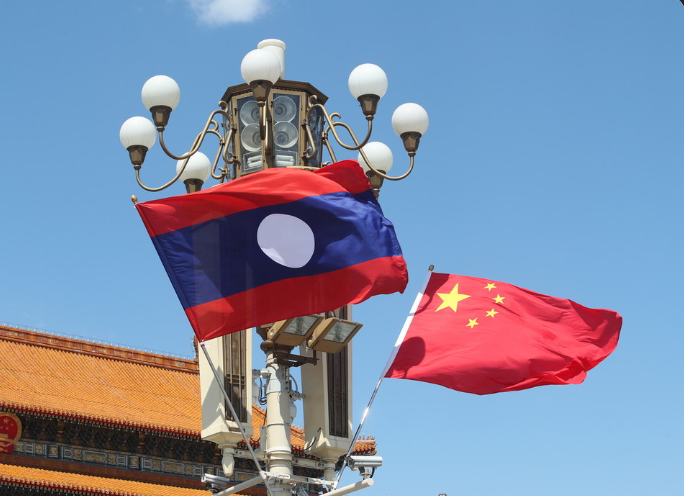
Vietnam’s warning that China Laos military cooperation must contribute to regional stability was diplomatic in tone, but its timing gave the statement particular significance. It followed the establishment of a joint military training facility at Ban Keun Airport in Laos, a development that adds a new dimension to Beijing’s security relationships in Southeast Asia. Vietnamese Foreign Ministry spokesperson Pham Thu Hang said Hanoi hoped Laos would develop peacefully, independently and self-reliantly. She stressed that cooperation between countries should comply with international law, the Treaty of Amity and Cooperation in Southeast Asia and the principles of the United Nations Charter. The emphasis on Laos’s independence suggests that Hanoi sees more than a routine training arrangement.
The China Laos Joint Support and Training Center and the China Laos Friendship Aviation Academy began operations at Ban Keun on September 29. Situated around fifty kilometres from Vientiane, the facility is intended to improve the training and practical skills of Lao military pilots. Chinese and Lao authorities say it is based on mutual respect and is not directed against a third party. Laos has a legitimate interest in improving the capabilities of its air force. Training and technical assistance can be valuable to a country with limited resources. But the official description does not settle every question about the facility’s future role, particularly when a much larger military power is helping establish and operate infrastructure beyond its own borders.
It is not whether Laos is entitled to cooperate with China. The question is whether the terms preserve Lao control and adequately account for regional consequences. Public information has not fully clarified how many Chinese military personnel will work at the site, what aircraft and equipment may use it, how access will be managed or whether the arrangement could eventually extend beyond pilot training. These gaps do not prove a concealed purpose, but warrant scrutiny. When a project has potential security implications beyond the two participating countries, assurances of peaceful intent should be accompanied by enough transparency to allow neighbours to assess its actual scope.
The physical infrastructure has added to the interest surrounding Ban Keun. The runway is approximately two thousand metres long, with taxiways and aircraft parking areas. Construction reportedly continued after inauguration. The runway can accommodate a range of military aircraft, although its length limits the largest platforms that could operate there. This does not prove plans for a combat base, but infrastructure creates options. If facilities expand or access arrangements change, the site’s strategic value could exceed its original public description.
That possibility is precisely why Vietnam’s reference to Laos developing in an independent and self-reliant manner deserves attention. The two countries share a long history of political, security and economic cooperation, shaped by shared conflict and close party ties. Hanoi regards its relationship with Vientiane as central to its western security environment. It cannot expect Laos to limit its partnerships to satisfy Vietnamese preferences. Equally, it cannot ignore a shift that might gradually reduce Laos’s freedom of action or give another power a stronger military foothold in a neighbouring country. The concern is not that Laos must choose Vietnam over China. It is that its choices should remain genuinely its own.
Laos needs investment, infrastructure, technology and external partnerships, and China has become a major source of all four. Defence cooperation is part of that relationship as Lao authorities seek to modernise their armed forces. Yet the imbalance between the two countries matters. China has far greater financial resources, military capabilities and regional influence. An unequal partnership can be mutually beneficial, but immediate assistance must not create long term dependence. If training, equipment, maintenance and operational knowledge all come from one partner, the recipient may struggle to diversify its relationships or make independent decisions.
This is the more critical question for Laos. Does the facility build a capability that the Lao military can eventually operate and sustain independently, or does it deepen reliance on Chinese personnel, systems and support? That distinction matters. A successful training arrangement should leave Laos with stronger national expertise, not merely a continuing need for external supervision. Vientiane should be able to explain the limits of foreign access, the authority of Lao commanders, the duration of deployments and the process through which the agreement can be reviewed. Without clarity on these matters, the language of partnership risks obscuring an unequal relationship.
For Beijing, Ban Keun offers benefits that go beyond the immediate training of Lao pilots. Regular cooperation can build institutional familiarity, improve coordination with the Lao military and give Chinese personnel experience in the region. It also strengthens China’s political relationship with a neighbouring government. None of these outcomes requires a permanent combat base. Influence can grow through repeated access, training, logistical links and relationships between military institutions.
The facility is also being viewed in the context of China’s defence relationship with Cambodia. Beijing has developed a joint support and training arrangement at Cambodia’s Ream naval base, while its overseas military presence in Djibouti provides a separate example of a more established facility. The projects differ in location and function, and do not prove a coordinated plan to establish bases throughout Southeast Asia. Even so, regional governments are entitled to examine the cumulative effect of expanding Chinese access to military infrastructure. Arrangements described separately as training or support may create a wider pattern of access over time, a pattern that deserves scrutiny without being exaggerated.
There is an important difference between a training centre and a forward operating base. A training facility requires instructors, trainees, maintenance personnel and supporting infrastructure. A permanent foreign military presence could involve recurring deployments, long term accommodation, dedicated logistics and broader operational freedom. There is insufficient public evidence that China has obtained exclusive access or that Ban Keun has become a permanent base. But labels are not enough. Its actual purpose will be reflected in operating arrangements, personnel, equipment and command authority. Laos and China should clarify these details.
Vietnam’s invocation of the Treaty of Amity and Cooperation in Southeast Asia was significant. The treaty emphasises sovereignty, non interference, peaceful dispute settlement and rejection of force. The United Nations Charter also protects peaceful relations and political independence. Vietnam did not allege a breach. It placed the cooperation within standards both countries are expected to respect, registering concern without provoking direct confrontation. It also reminds Beijing and Vientiane that bilateral agreements can have consequences for confidence beyond their own relationship.
Geography adds another dimension. Ban Keun is inland, and its immediate military value may be more limited than that of facilities located beside contested maritime areas. China already operates airfields within its own territory that are closer to the South China Sea. The facility does not automatically give Beijing a decisive military advantage over Vietnam. Its value may come from relationships, familiarity and access. A site need not be an ideal launch point to support influence and coordination in a neighbouring country’s security affairs.
Vietnam must consequently balance caution with restraint. Hanoi has an interest in maintaining close ties with Laos while managing a complex relationship with China, particularly amid continuing disputes in the South China Sea. A larger Chinese military presence could affect Vietnamese security planning, but current information establishes neither that it has developed nor that an immediate threat exists. Calling the facility an act of encirclement would go beyond the available evidence. Remaining silent about its possible evolution, however, would leave legitimate questions unanswered. Vietnam communicates concern about strategic dependence while avoiding an accusation that could damage relations with either neighbour.
The wider regional environment makes this careful approach necessary. Southeast Asian countries depend on economic ties with China while maintaining different security relationships with the United States, Japan, India and Australia. The Association of Southeast Asian Nations must manage disagreements over regional risks. A facility viewed by its host as a training investment may look different to a neighbour concerned about foreign military access. If the operating arrangements remain unclear, governments may respond by increasing surveillance, strengthening defence partnerships or seeking additional security assurances. Such responses can intensify competition even without an openly declared intention to confront.
Laos could also underestimate the diplomatic cost of uncertainty. Its government may focus on training and modernisation, but a facility involving a major power can affect how neighbours interpret its strategic orientation. Laos does not need Vietnamese approval for its defence decisions, but regional confidence is valuable to a landlocked state dependent on stable relations with several neighbours. If the project is limited in purpose, explaining those limits would protect Laos’s own interests as much as it would reassure Vietnam.
China and Laos can reduce uncertainty through practical measures. They could clarify the centre’s principal functions, provide general information about the personnel and aircraft expected to use it, and explain whether deployments will be temporary or permanent. They could also set out procedures governing access, command authority and the review of the arrangement. Such disclosures would not reveal sensitive plans, but would demonstrate that the facility operates within agreed limits. If the central purpose is to train Lao pilots and improve national aviation capabilities, evidence of that work should be the strongest response to regional concerns.
Vietnam should assess the facility through verifiable developments rather than assumptions. Changes to infrastructure, aircraft activity, foreign deployments and logistics would provide better indicators of its evolving role. Diplomatic engagement can clarify these developments before uncertainty hardens into suspicion. Hanoi should also avoid framing Laos’s independent choices as a problem in themselves. Its strongest argument is not that Laos should reject Chinese assistance, but that cooperation should not compromise Lao sovereignty or undermine the confidence of neighbouring states.
The establishment of Ban Keun does not prove that China intends to use Laos as a platform for hostile action. It does, however, introduce a strategic variable whose significance will depend on decisions that have not been fully disclosed. Laos should ensure that military assistance produces lasting national capability rather than structural dependence. China should demonstrate that its security partnerships can coexist with the legitimate concerns of neighbouring countries. Vietnam should remain attentive while keeping its response proportionate to the evidence.
The central test is whether the arrangement makes Laos more capable and independent, or more capable but increasingly dependent on Beijing. Military cooperation can strengthen a smaller state, but it can also shift the balance of influence when the provider controls essential training, technology or access. Vietnam’s statement is a reminder that regional stability requires more than assurances. It requires arrangements that respect sovereignty in practice, make foreign military access understandable and avoid creating strategic uncertainty for neighbours. The future of Ban Keun will be judged by whether it strengthens Lao security without narrowing its independence or unsettling Southeast Asia.