

The geopolitical architecture of the North Atlantic Treaty Organization has undergone a profound structural realignment, one crystallized not by the bureaucratic communiqués of Brussels but by the grand physical theater of the 36th NATO summit held at the Bestepe Presidential Complex in Ankara. For nearly a decade, Western capitals viewed Türkiye through a lens of exasperated containment. The country was routinely characterized as the volatile wildcard of the alliance, an autocratic outlier whose purchase of Russian military hardware, unilateral interventions in the Levant, and flirtations with Eurasian alignment threatened the cohesion of the transatlantic bloc. Yet, as the summit proceedings of July 2026 made undeniably clear, the paradigm of the difficult ally has been thoroughly shattered. Ankara has successfully leveraged its geographic centrality, its robust domestic defense apparatus, and its calculated multi-aligned foreign policy to transform itself from a strategic liability into the indispensable power broker of Western security.
The official docket of the Ankara summit mirrored the familiar priorities of an alliance permanently operating on a war footing. Leaders grappled with defense procurement bottlenecks, the escalation of industrial manufacturing requirements, and a collective pledge of approximately 80 billion dollars in military assistance for Ukraine. However, the true significance of the gathering lay entirely outside the pre-negotiated text of the final declaration. The summit served as a grand exhibition of Turkish strategic autonomy. By hosting an array of global leaders that included US President Donald Trump, South Korean President Lee Jae-myung, and the dual leadership of the European Union, Antonio Costa and Ursula von der Leyen, President Recep Tayyip Erdogan signaled that the operational center of gravity within NATO has shifted decisively toward the southeastern flank.
The most acute demonstration of this new reality was visible in the delicate management of the American president. Donald Trump arrived in Türkiye following weeks of blistering public standard-ripping directed at traditional European partners. The American administration had openly lambasted Madrid as an unreliable defense partner and dismissed the fiscal commitments of Berlin as entirely inadequate. Even as German Chancellor Friedrich Merz mounted a vigorous defense of his nation’s historic military expenditures, the atmosphere within the transatlantic partnership turned decisively adversarial. In this climate of fracturing alliances, the institutional continuity of NATO depended entirely on a single variable: keeping the American executive engaged in the room.
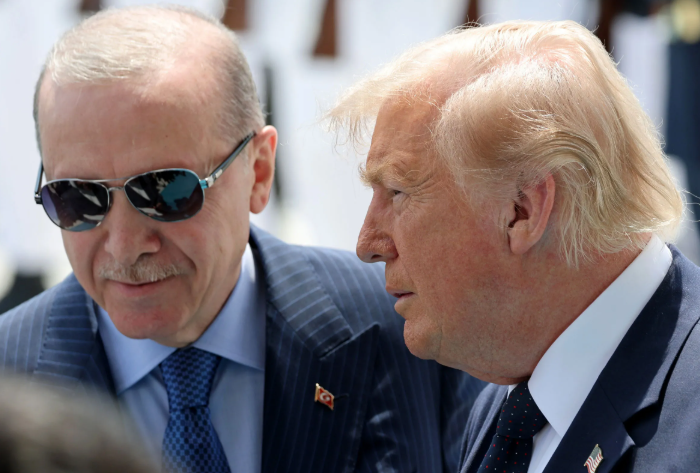
Ankara achieved this outcome by abandoning the clinical institutionalism favored by European capitals and leaning into a highly personalized, transactional style of diplomacy. The Turkish state engineered a reception designed to validate Trump’s preferred model of strongman leadership. From the cavalry escort and honor guard on the tarmac to the traditional Mehter military band performing at the presidential palace, the hosting strategy blended state majesty with direct personal engagement. The efficacy of this approach became evident when Trump explicitly noted to reporters that his very attendance at the summit was contingent upon his personal rapport with Erdogan. By contrasting the cold friction of Berlin and Paris with the warm red carpet of Ankara, Türkiye established itself as the vital bridge capable of anchoring an erratic Washington to a nervous Europe.
This capacity to act as a geopolitical translator extended far beyond the internal mechanics of the alliance into the volatile theater of West Asia. The most remarkable diplomatic event of the summit occurred entirely on the sidelines, away from the formal architecture of NATO command. Under the direct mediation of Turkish intelligence, Donald Trump engaged in a high-stakes meeting with Syrian President Ahmed al-Sharaa. The encounter marked a stunning transformation for al-Sharaa, a former insurgent commander who once occupied the upper echelons of global counterterrorism bounty lists. Trump subsequently signaled an impending normalization of relations, indicating a willingness to remove Syria from the state sponsors of terrorism registry under the justification that the country had achieved stability.
The rapid normalization of the Levant is the direct consequence of a strategic gamble engineered by Ankara following the historic collapse of the Bashar al-Assad regime in December 2024. For over a year and a half, Türkiye has acted as the primary architect, patron, and international guarantor of the new political order in Damascus. By bringing the Syrian leadership into the literal and figurative orbit of a NATO summit, Ankara achieved a long-sought dual objective. It simultaneously addressed its pressing domestic security concerns regarding border stabilization, refugee repatriation, and the suppression of separatist Kurdish militias, while presenting itself to Washington as the sole Western ally capable of managing the chaotic reality of the post-Assad West Asia. The message to the rest of the alliance was unmistakable: while Europe views security through the rigid framework of continental defense, Türkiye possesses the kinetic and diplomatic leverage to actively reshape the regional balances that directly impact global stability.
The ultimate dividend of this structural leverage materialized in the form of a major concession on bilateral defense procurement. During a private session at the presidential palace, Trump announced the intended dismantling of the comprehensive sanctions regime imposed on Türkiye in 2020 under the Countering America’s Adversaries Through Sanctions Act. The penalties, triggered by Ankara’s acquisition of the Russian S-400 surface-to-air missile system, had systematically frozen US-Turkish defense cooperation and resulted in Türkiye’s immediate expulsion from the fifth-generation F-35 Lightning II fighter jet program. Trump’s public directive to his state and treasury departments to unwind these restrictions represents a massive validation of Erdogan’s long-term resistance to Western pressure.
The implications of this policy reversal extend deep into the strategic defense landscape. While institutional factions within the United States Congress and regional allies like Israel remain deeply alarmed by the prospect of introducing stealth aviation assets into the inventory of an independent-minded Turkish military, the political momentum generated in Ankara suggests the old consensus has broken down. Trump openly minimized long-standing technical anxieties regarding the potential exposure of F-35 performance data to Russian radar systems, choosing instead to praise Türkiye’s comparative loyalty over traditional European states. Even if bureaucratic hurdles delay the physical transfer of the initial five fighter jets discussed by the two leaders, the conceptual wall has been breached. The S-400 dispute, which Washington had insisted for six years was an absolute barrier to defense normalization, has been effectively circumvented through raw political leverage.
This sudden ascendancy is not merely the product of opportunistic hosting; it is the culmination of a decade-long investment in comprehensive national power. Türkiye has systematically expanded its domestic defense industrial base, transforming itself from a consumer of Western military technology into a primary exporter of cutting-edge hardware. The global proliferation of Turkish combat drones, which have decisively altered the tactical dynamics of conflicts across North Africa, the Caucasus, and Eastern Europe, has forced NATO planners to reevaluate Ankara’s tangible contributions to collective security. As the alliance shifts its focus from the theoretical defense targets established at the previous summit toward the practical implementation of actual military capability, Türkiye’s massive standing army and autonomous manufacturing capacity stand out as pillars of rare stability on the vulnerable southeastern flank.
The core paradox of Türkiye’s position is that its ultimate value to the alliance derives precisely from its willingness to operate outside the strict parameters of Western consensus. Ankara has steadfastly refused to adopt the binary geopolitical worldview favored by Brussels. It maintains functional, high-level diplomatic and economic channels with Moscow, positions itself as a natural mediator in the Ukrainian conflict rather than a participant in total isolation strategies, and aggressively pursues independent security arrangements across the Gulf, Central Asia, and Africa. In an earlier era, this independent streak was viewed by policymakers in Washington and London as a dangerous liability that threatened to compromise the integrity of the Western bloc. Today, amidst the fragmentation of the global rules-based order, that exact multi-alignment has become the source of Ankara’s profound geopolitical leverage.
The European members of NATO find themselves in a position of acute dependency regarding this new Turkish reality. Facing the twin pressures of an unpredictable American administration less committed to traditional multilateralism and the immediate systemic threat of Russian revisionism, European capitals lack the diplomatic machinery to engage effectively across multiple geopolitical fault lines. They possess no viable channels to Damascus, limited diplomatic ingress to Moscow, and diminishing influence in the broader West Asia. Consequently, the continent relies implicitly on Türkiye to act as a buffer, a mediator, and a stabilizer. The Ankara summit demonstrated that when the broader alliance requires access to hostile actors or seeks to anchor a volatile American executive, it must ultimately rely on the unique diplomatic architecture that only the Turkish state can provide.
Ultimately, the 36th summit will be remembered as the moment Türkiye permanently altered its terms of engagement with the Western world. The structural debates regarding whether Ankara belongs in the transatlantic family or whether its strategic goals are compatible with Western values have been rendered obsolete by the hard realities of realpolitik. By demonstrating that it can deliver the critical strategic access, personal leverage, and regional stabilization that no other member state can replicate, Türkiye has secured a position where it can no longer be disciplined or ignored. Whether the F-35 jets eventually populate the hangars of the Turkish air force is secondary to the larger systemic victory achieved at the Bestepe Complex. Ankara has successfully transitioned from an ally to be managed into a sovereign power broker whose consent and cooperation are absolute prerequisites for the execution of Western grand strategy.