

Nitrogen (N, atomic number 7), the colorless, odorless, tasteless diatomic gas that makes up 78.08% of Earth’s atmosphere, is the element that both sustains and threatens life. Discovered in 1772 by Daniel Rutherford (who called it “noxious air”), it was later named by Antoine Lavoisier from the Greek nitron (“soda”) and genes (“forming”) because he mistakenly believed it was part of nitric acid. In its elemental form (N₂), nitrogen is remarkably inert due to its triple bond—the strongest bond in any diatomic molecule (bond energy 945 kJ/mol)—yet once broken, it fuels everything from fertilizers to explosives.
Nitrogen is the backbone of DNA, proteins, and chlorophyll, yet its compounds include some of the most destructive substances known to humanity.
1. Hidden Features: Triple-Bond Inertia, Cryogenic Power, and Reactive Alter Egos
Nitrogen’s electron configuration [He] 2s² 2p³ gives it five valence electrons and a half-filled p subshell, creating perfect stability in N₂.
- Strongest Triple Bond in Nature The N≡N triple bond is so strong that breaking it requires enormous energy. This makes elemental nitrogen almost completely inert at room temperature—hence its use as an inert atmosphere in food packaging, electronics manufacturing, and chemical storage. Only lightning, certain bacteria, and the Haber-Bosch process can crack it.
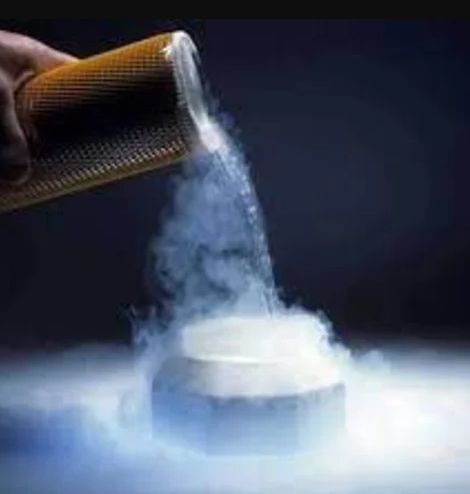
- Liquid Nitrogen – The Ultimate Cryogen At −196 °C (77 K), liquid nitrogen is the cheapest and most widely used cryogenic liquid. It is non-conductive, non-flammable, and leaves no residue—perfect for flash-freezing food, cryopreserving biological samples, cooling superconductors, and creating dramatic stage effects (the “nitrogen fog” in concerts).
- Allotropes & High-Energy Forms Under extreme pressure (>110 GPa), nitrogen forms polymeric “black nitrogen” with single N–N bonds, resembling diamond in hardness. Other high-pressure phases include cubic gauche nitrogen, predicted to be one of the most powerful chemical explosives ever synthesized.
- Isotopic Tracers ¹⁵N (0.36% natural abundance) is a stable isotope used in metabolic tracing, fertilizer studies, and paleoclimatology. The ¹⁵N/¹⁴N ratio in ice cores and tree rings reveals ancient climate and agricultural changes.
- Biological Paradox Nitrogen is essential for all life, yet most organisms cannot use N₂ directly. Only nitrogen-fixing bacteria (and the lightning-enabled Haber-Bosch industrial process) convert it into usable forms—making nitrogen the limiting nutrient in most ecosystems.
2. Covert Uses: Fertilizer Backbone, Explosives, Cryogenics, and Inert Atmospheres
Global nitrogen production exceeds 150 million tonnes/year (as ammonia via Haber-Bosch)—more than any other industrial chemical except sulfuric acid.
- The Fertilizer Revolution ~80% of nitrogen goes into ammonia (NH₃) and its derivatives (urea, ammonium nitrate). The Haber-Bosch process has fed billions; without it, the global population could not exceed ~4 billion. It is simultaneously humanity’s greatest chemical achievement and a major source of environmental nitrogen pollution.
- Explosives & Propellants Nitrogen-rich compounds are the foundation of modern explosives:
- Ammonium nitrate (fertilizer + fuel oil = ANFO, used in mining and the Oklahoma City bombing)
- Nitroglycerin, TNT, RDX, HMX
- Nitrocellulose (smokeless powder)
- Cryogenics & Medicine Liquid nitrogen is used for:
- Cryosurgery (freezing warts, skin lesions, and some tumors)
- Cryopreservation of sperm, eggs, embryos, and blood
- MRI magnet cooling and food flash-freezing
- Inerting & Electronics Nitrogen blankets prevent oxidation in semiconductor manufacturing, food packaging (MAP), and oil refining. High-purity nitrogen is essential for growing silicon crystals and preventing fires in aircraft fuel tanks.
- Space & Defense Liquid nitrogen cools infrared sensors, superconductors in railguns, and provides inert atmospheres in spacecraft and submarines.
In summary, nitrogen isn’t just the air we breathe—it’s the triple-bonded inert giant that protects and preserves, the element that feeds the world through Haber-Bosch, the backbone of every modern explosive, and the cryogenic fluid that lets us freeze time itself.
What’s your favorite nitrogen story—the Haber-Bosch feeding billions, the blue glow of liquid nitrogen, its role in explosives, or simply the fact that 78% of every breath you take is useless N₂? Drop it below!