

The possibility of a formal memorandum of understanding between Iran and the United States marks one of the most consequential diplomatic developments in West Asia since the beginning of the US-Israeli war against Iran earlier this year. According to Iranian Foreign Ministry spokesman Esmaeil Baghaei, Tehran and Washington are now moving closer toward finalising a 14-point framework designed to end the imposed war, halt what Iran describes as American maritime aggression, and secure the release of blocked Iranian assets. While both sides remain cautious, the very existence of such a framework reflects how rapidly battlefield realities, energy disruptions and regional pressure have altered strategic calculations across the region.
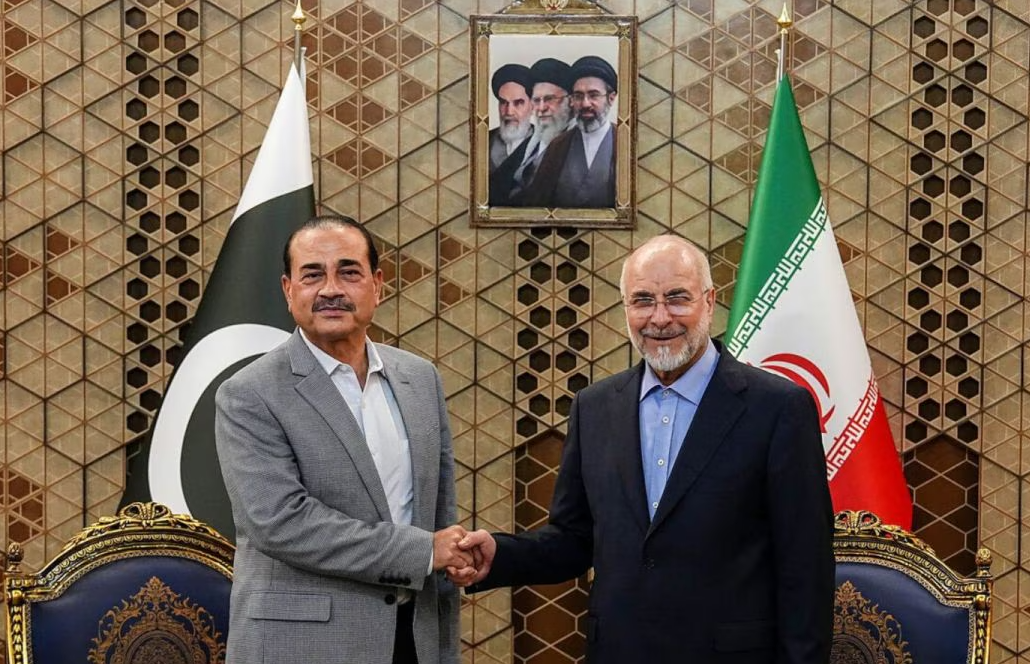
The negotiations themselves reveal an emerging geopolitical reality often overlooked in Western analysis. Pakistan has now positioned itself as the primary mediator between Tehran and Washington, while Qatar has taken on a facilitation role in helping manage technical discussions surrounding specific articles of the proposed agreement. The active involvement of Islamabad is strategically significant. Pakistan maintains working relations with Iran, China, the Gulf monarchies and the United States simultaneously, giving it a unique diplomatic position during a period when traditional Western mediation channels have lost credibility across much of the region. Tehran’s public acknowledgment of Pakistan’s role signals that regional powers are increasingly attempting to manage regional crises independently rather than relying entirely on European or American diplomatic architecture.
The structure of the proposed memorandum itself is revealing. According to Baghaei, the current discussions focus on broad strategic principles rather than detailed implementation mechanisms. Tehran’s immediate objective is not a comprehensive grand bargain with Washington, but rather a phased process beginning with ending the war, reducing maritime escalation and establishing a framework for sanctions relief and asset recovery. Only afterward, within a period of thirty to sixty days, would more technically sensitive issues such as the nuclear file be addressed separately. This sequencing matters enormously because it reflects Iran’s long-standing position that its nuclear programme has been used primarily as a geopolitical pretext rather than the core issue itself.
Iran’s position on the nuclear question has hardened considerably after the recent conflict. Iranian officials argue that the country faced military attacks even while negotiations were ongoing, reinforcing suspicions inside Tehran that diplomacy alone cannot guarantee security. This explains why the nuclear issue has temporarily been pushed aside in favour of immediate war termination. Tehran appears determined to first stabilise the battlefield and maritime environment before engaging in any deeper concessions or technical discussions regarding enrichment, inspections or future monitoring mechanisms.
The Strait of Hormuz remains central to these negotiations because it has become both an economic weapon and a symbol of sovereignty. Iranian authorities insist that the strategic waterway is fundamentally a regional matter involving Iran and Oman rather than an area subject to American military dominance. Tehran’s tightening of controls in Hormuz following US naval pressure and blockade measures triggered major disruptions in global energy markets, driving oil prices sharply higher and exposing the vulnerability of global supply chains. Even without a complete closure, the mere threat to Hormuz once again reminded the world that West Asia still holds the power to destabilise the global economy within days.
At the same time, Tehran’s emphasis on ending what it calls “US piracy and maritime banditry” highlights how naval power has become one of the defining dimensions of this confrontation. The United States framed its operations as enforcement and containment. Iran viewed them as illegal attempts to strangle its economy through maritime coercion. This dispute goes beyond sanctions enforcement. It reflects a broader struggle over who controls strategic waterways in an increasingly multipolar international order.
The regional consequences of the conflict have also reshaped diplomatic behaviour across the Gulf. Countries such as Qatar and Oman have intensified behind-the-scenes engagement because they understand that prolonged escalation between Iran, Israel and the United States threatens the stability of the entire region. Gulf economies remain deeply dependent on uninterrupted maritime trade, energy exports and financial confidence. Any prolonged disruption in Hormuz risks damaging not only Iran’s adversaries but also the broader economic future of the Gulf itself.
Equally important is Tehran’s continued insistence on the removal of all sanctions. Iranian officials describe the sanctions regime as both illegal and inhumane, and their inclusion within the 14-point memorandum demonstrates that economic sovereignty remains inseparable from security negotiations. For Tehran, sanctions relief is not merely an economic demand but a recognition of strategic legitimacy after months of war, pressure and isolation attempts.
Yet despite cautious signs of convergence, deep mistrust still dominates the process. Baghaei openly admitted that Iran remains uncertain whether Washington’s position could shift once again, reflecting years of failed agreements, abandoned understandings and changing American administrations. This lack of trust remains perhaps the single greatest obstacle to any durable settlement. Iran fears another cycle where concessions are followed by renewed pressure. Washington remains concerned about Iran’s regional influence, missile capabilities and long-term nuclear intentions. Neither side fully trusts the other’s strategic endgame.
What makes this moment particularly significant is the wider geopolitical backdrop. The conflict has accelerated coordination between Iran, Russia and China while simultaneously exposing limits in American deterrence and alliance management. Russia has benefited economically from energy instability, China has pushed aggressively for de-escalation to protect maritime trade routes, and regional powers increasingly prefer negotiated stability over open-ended confrontation. The crisis has therefore become more than a bilateral dispute between Tehran and Washington. It now sits at the centre of a larger struggle over the future balance of power in West Asia and the evolving structure of the multipolar world.
If the memorandum is eventually finalised, it will not represent peace in the traditional sense. It will represent managed confrontation, temporary stabilisation and strategic recalibration. But even that would mark a major shift after months of escalation that brought the region dangerously close to a broader regional war. The coming weeks will determine whether diplomacy can consolidate battlefield exhaustion into political compromise, or whether deep mistrust and competing strategic ambitions will once again push the region back toward escalation.