

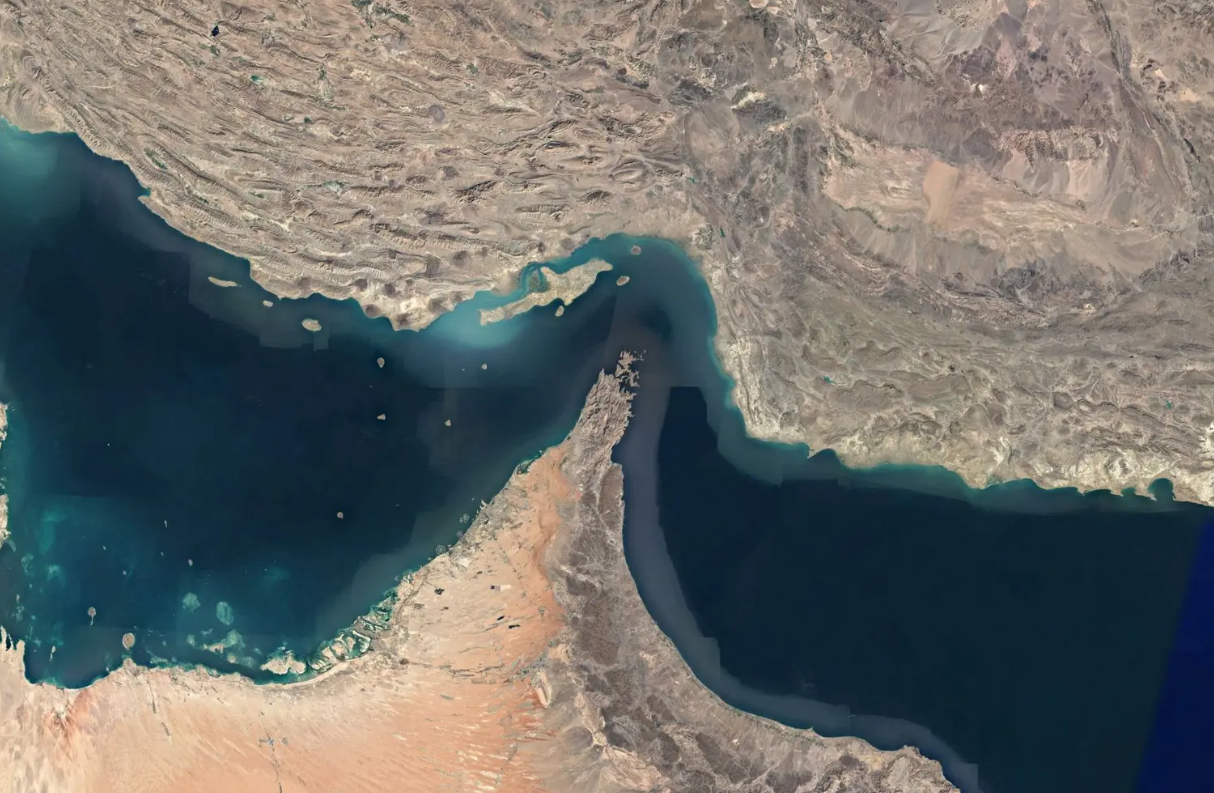
The situation around the Strait of Hormuz has moved beyond signalling and into direct pressure. Iran has not just issued threats, it has constrained movement through one of the world’s most critical energy corridors. Tanker traffic is reduced, insurance costs are rising, and global markets are reacting in real time. What happens in this narrow stretch of water is now shaping decisions far beyond the Gulf.
This is no longer a localised issue. The impact is global because the strait carries a significant share of the world’s oil and energy supply. When it slows down, everything from fuel prices to supply chains begins to feel the strain. The longer it remains restricted, the more normal disruption becomes, and that is where the real risk lies.
At the same time, China and Russia are standing behind Iran, not always openly, but clearly enough. They continue engagement, they provide diplomatic cover, and they maintain access through alternative routes like the Caspian Sea. As long as their own systems are not under stress, there is no urgency for them to push Iran to change course.
For Donald Trump, the situation is becoming more difficult. The strait is not fully open, and extending ceasefires or maintaining presence has not changed that fact. The longer this continues, the more it looks like Iran is setting the pace while others are reacting. That perception matters, especially in a crisis linked to global trade and energy security.
This is where the approach needs to change.
If pressure remains limited to Iran, the burden stays uneven. Iran absorbs it, but its backers do not. That imbalance allows the situation to continue. To shift the outcome, the pressure has to expand beyond the Gulf and reach the countries that are indirectly sustaining the current position.
For Russia, the key vulnerability lies in its access routes. Its exports from the Black Sea depend on the Bosphorus Strait, a narrow passage that connects it to wider markets. Beyond that, movement toward the Atlantic depends on the Strait of Gibraltar. These are not optional routes. They are essential pathways for trade, especially for energy and bulk exports.
For China, the situation is even more concentrated. The Strait of Malacca carries the majority of its energy imports and a large share of its trade. It is narrow, heavily used, and difficult to replace at scale. China has tried to reduce dependence through alternative corridors and ports, but Malacca remains central to its economic flow.
The strategy that emerges from this is direct and calculated.
If Iran can restrict the Strait of Hormuz, then pressure can be applied in return through other chokepoints. Russian vessels can face restrictions or delays at Bosphorus or Gibraltar. Chinese shipping can be slowed or controlled at Malacca. This does not require a complete shutdown. Even limited and selective pressure is enough to send a signal and create economic impact.
This turns the situation into a simple but powerful equation: strait versus strait.
Right now, Russia and China support Iran because they can afford to. They have influence, they can supply expertise, and they can maintain their position without facing immediate consequences. As long as the cost is limited to the Gulf, their involvement remains low risk.
But the moment their own lifelines are touched, the situation changes.
China’s dependence on Malacca is not theoretical. Any disruption there directly affects energy supply and trade continuity. Russia’s reliance on Black Sea access is just as real. If these routes are constrained, even partially, the pressure becomes visible and immediate. It starts affecting revenue, supply stability, and internal economic balance.
At that point, both countries will have to reassess their position. Not because of external pressure alone, but because their own interests demand it.
They have leverage over Iran. They have the ability to influence decisions, whether through diplomacy, economic ties, or strategic coordination. As long as they have nothing to lose, that leverage remains unused. But when the cost begins to affect them directly, that leverage is likely to be exercised.
There is also a wider risk building in parallel. If disruption expands into other areas like the Red Sea, especially through Houthi actions, the strain multiplies. Multiple chokepoints under pressure at the same time create a cascading effect. Shipping becomes more expensive, routes become uncertain, and global trade slows down.
At that stage, reopening routes is no longer about one country or one demand. It becomes a shared necessity.
This is why the focus cannot remain limited to Hormuz alone. The crisis is already larger than that. It involves interconnected routes, shared dependencies, and global consequences. Treating it as a single point issue only prolongs the imbalance.
If Iran has turned Hormuz into leverage, the response does not have to stay confined there. Expanding the pressure across other key straits changes the equation. It distributes the cost and forces all major players to reconsider their positions.
This is not without risk. These straits are not controlled by a single power. The Bosphorus Strait involves Turkey, Malacca involves Southeast Asian states, and Gibraltar sits between multiple jurisdictions. Any move in these areas would require careful handling and could escalate if miscalculated.
But the direction of the strategy is clear.
If one strait can be used to pressure the world, then multiple straits can be used to rebalance that pressure. It is no longer just about reopening the Strait of Hormuz. It is about ensuring that the cost of keeping it restricted is shared by everyone involved.
Iran may have started this situation, but it does not have to end on its terms. Once the pressure reaches all sides, the outcome will be driven not by control, but by necessity.
Disclaimer:
This is a strategic perspective based on a hypothetical reading of current developments. It is meant to be taken as one possible approach, not the only solution. The intent is to analyse how pressure dynamics could evolve across interconnected maritime chokepoints. The author is not biased against any country and does not advocate for escalation. This is purely a discussion of strategy, and readers should treat it as such.