

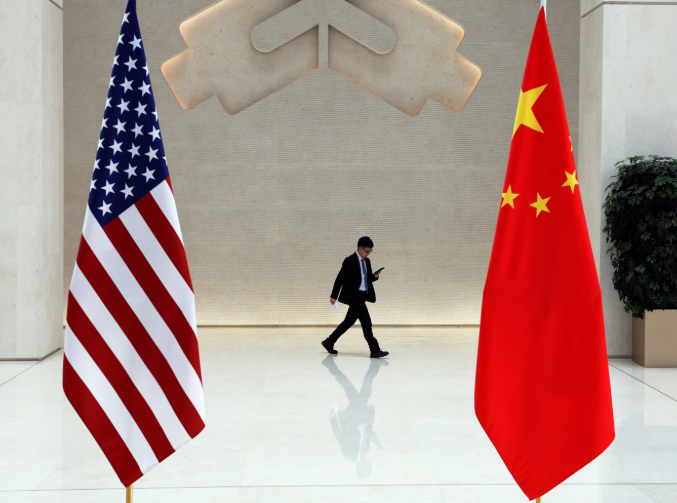
India is entering one of the most consequential phases of its foreign policy in recent years. What appears on the surface to be a dispute over a trade agreement with the United States is increasingly becoming part of a much larger strategic contest. Washington is using tariffs, market access and the threat of sanctions to influence India’s economic and foreign policy choices. Beijing, meanwhile, continues to retain military and territorial leverage along the disputed frontier, particularly in Arunachal Pradesh, even as it prepares to engage New Delhi through BRICS. India is therefore facing pressure from two directions at once. The United States can impose economic costs through trade and sanctions, while China can create strategic costs through geography and the Himalayan frontier. The challenge for New Delhi is not to choose between the two, but to prevent either from acquiring the ability to dictate India’s choices.
The India United States trade negotiations are at the centre of this emerging contest. The two countries reached an interim understanding in February that brought the US tariff on Indian exports down from the much higher levels threatened during the previous phase of the dispute. The understanding envisaged substantial Indian tariff reductions on American industrial and agricultural products and a major expansion of Indian purchases of American goods, energy and technology. Yet the final agreement has proved more difficult. As of August 13, India’s Commerce Secretary said that New Delhi and Washington remained in regular contact and committed to the proposed trade agreement, while a senior American official had earlier indicated that an agreement could be concluded within three to four months. The difficulty is that the negotiations are no longer purely about trade. The Trump administration has increasingly connected tariffs with broader questions of economic security and foreign policy. India’s relationship with Russia has become particularly important because Washington argues that countries continuing to purchase Russian energy help sustain Moscow’s revenues and weaken the effectiveness of American pressure on Russia.
For New Delhi, however, Russian crude is not an ideological choice. It is an energy security calculation. India imports more than 90 % of the crude oil it consumes, making the price and availability of imported energy a direct national economic concern. Russian crude accounted for a record 50.83 % of India’s crude oil imports in July, equivalent to around 2.47 million barrels per day. Between April and July, Russia supplied 43.25 % of India’s crude imports, compared with 37 % during the corresponding period a year earlier. The increase has occurred partly because instability and supply disruptions in West Asia have reduced the availability and attractiveness of alternative supplies. At the same time, Latin American suppliers have increased their share and the United Arab Emirates has emerged as an increasingly important supplier.
This makes American pressure far more complicated than a normal trade dispute. A decision to abruptly eliminate Russian supplies would have consequences well beyond diplomacy. It would affect refinery margins, transport costs, inflation, industrial production and the current account. A government negotiating a trade agreement cannot simply ignore the price that Indian consumers and industries would ultimately pay for an externally imposed energy policy. Washington nevertheless possesses considerable leverage. On August 7, the US Senate passed a sweeping Russia sanctions bill by an overwhelming margin. The legislation provides for the possibility of tariffs of up to 100 % against countries that continue to purchase Russian oil and gas, although the measure still requires further congressional action before it can become law. India and China are among the major buyers that could potentially be affected. The significance of the vote is therefore not that India has suddenly been subjected to a 100 % tariff. It has not. The significance is that Washington is creating a credible legal instrument through which Russian energy purchases could become a source of direct economic pressure on India.
This is where India needs to distinguish between negotiation and coercion. If Washington can use tariffs to force India to alter its Russian energy policy today, another administration could use the same mechanism tomorrow to influence India’s policies towards Iran, China, defence procurement or other strategic partners. The precedent matters as much as the immediate cost. India therefore needs to negotiate the trade agreement firmly without turning the relationship with Washington into an ideological confrontation. The United States remains indispensable to India’s economic transformation. It is one of India’s most important export markets and an increasingly important source of capital, technology, defence cooperation and advanced industrial partnerships. India needs American investment in manufacturing, aerospace, semiconductors, artificial intelligence, energy and defence. Washington also needs India. American companies want access to one of the world’s largest consumer markets, while the United States wants India to become a major alternative manufacturing and supply chain hub to China.
This mutual dependence is India’s greatest negotiating asset. New Delhi should use it intelligently. The objective should not be to reject American demands simply because they come from Washington, nor should it be to accept every demand in order to secure a trade agreement. India should distinguish between concessions that increase Indian competitiveness and concessions that compromise Indian strategic autonomy. Lowering tariffs on selected American products may make sense if Indian consumers benefit and Indian industry becomes more competitive. Opening sectors to American investment may make sense if it creates manufacturing capacity and technology transfer. Buying more American energy can make sense if it improves diversification and remains commercially viable. But surrendering control over India’s energy choices or accepting open ended political conditionality would be a very different proposition.
The trade agreement should therefore be designed around production rather than consumption. India should not simply become a larger market for American goods. It should become a manufacturing base for American companies. Market access should be exchanged for investment, technology, local production and integration into global supply chains. If Washington genuinely wants India to become an alternative to China, it has an interest in helping India become economically stronger. That is where India can turn American pressure into leverage. Washington wants a China plus one strategy. India can offer something larger: China plus India plus a diversified network of partners. But that requires India to demonstrate that its manufacturing ecosystem is credible, its customs system is reliable and its rules of origin are enforceable.
This has become particularly urgent because Washington is now scrutinising India’s trade relationship with China as well. The Trump administration has been using artificial intelligence based analysis to identify countries it believes could serve as conduits for Chinese goods seeking to evade American tariffs. India has been among the countries discussed in this context. India should take the issue seriously. It has no interest in becoming a transshipment route for Chinese goods into the American market. Stronger customs enforcement, transparent rules of origin and supply chain verification would protect India’s credibility. But New Delhi should also make clear that cooperation with Washington on tariff evasion cannot become a mechanism through which the United States dictates the entire structure of India’s economic relationship with China.
That relationship is already complicated enough because China’s challenge to India is not merely commercial. It is fundamentally geographic and strategic. The Himalayan frontier gives Beijing a form of leverage that Washington simply does not possess. The United States can impose tariffs. China can create military pressure along India’s borders. That difference makes the China challenge far more strategically consequential. The latest developments in Arunachal Pradesh have once again brought that reality to the forefront. Reports of renewed tensions near Taksing in Upper Subansiri have triggered concern in New Delhi, although Indian defence officials have rejected claims that Chinese troops established a lasting presence inside Indian controlled territory. Beijing has described the situation as generally stable, while both countries have continued communication through established mechanisms. India’s Ministry of External Affairs has nevertheless reiterated that peace and tranquillity along the border are essential to the broader relationship.
The available evidence does not establish that Beijing is deliberately manufacturing tensions in Arunachal Pradesh specifically to obstruct India’s negotiations with Washington. That conclusion would go beyond what is publicly known. But China does not need to coordinate its actions with Washington for India to experience strategic pressure from both directions. The two relationships are developing independently, yet their effects converge on India’s decision making. Washington is asking India to make economic choices that could reduce its dependence on Russia and potentially constrain its economic interaction with China. Beijing is simultaneously reminding India that its northern frontier remains contested and that any deterioration in border stability could have consequences for the wider relationship. India therefore risks finding itself in a situation where the United States possesses economic leverage while China retains geographic leverage.
This is the strategic squeeze that New Delhi must avoid. The answer is not to move closer to China in order to escape American pressure. That would be strategically unsustainable. Nor is the answer to turn India into a formal American ally in the hope that Washington will protect India from China. Such a strategy would risk converting India’s relationship with China into another front in the larger US China confrontation. India needs a more sophisticated approach. It should deepen cooperation with the United States where American capabilities strengthen India, while maintaining sufficient strategic distance to preserve independent decision making. It should deter China militarily while keeping diplomatic channels open. It should reduce excessive dependence on Russia without abruptly abandoning Russian energy or defence relationships. It should use BRICS without allowing the organisation to become an anti Western bloc.
This is not neutrality. It is strategic diversification. India’s relationship with China needs particular discipline. New Delhi should continue strengthening roads, bridges, airfields, logistics, communications and surveillance along the frontier. Arunachal Pradesh requires not only military infrastructure but permanent civilian connectivity and economic development. Border villages should become centres of Indian administrative presence rather than empty spaces vulnerable to strategic ambiguity. But military preparedness must be accompanied by communication. The lesson of the 2020 crisis is that even when two nuclear armed states avoid full scale war, prolonged military mobilisation can produce enormous economic and strategic costs. India needs credible deterrence precisely so that diplomacy can operate from a position of strength.
The principle should be straightforward. India should strengthen the border without making war inevitable and maintain dialogue without allowing dialogue to become a substitute for deterrence. China’s political and cartographic campaign over Arunachal Pradesh also requires a sustained Indian response. India’s recent decision to update its official mapping and give greater prominence to strategically important geographical features comes amid renewed Chinese claims over the region. Such actions are not merely symbolic. They are part of a broader contest over sovereignty, administration and international perception. India must therefore fight the border contest through administration as much as through diplomacy. Roads, schools, telecommunications, civilian settlement and economic activity are strategic assets in a frontier region. Sovereignty is strengthened not only by soldiers but by the visible and continuous presence of the state.
The coming BRICS summit adds another layer to the equation. The expected presence of Chinese President Xi Jinping in New Delhi means that India will simultaneously be negotiating with Washington and hosting the leader of the country with which it has its most serious territorial dispute. That is not a contradiction. It is precisely what strategic autonomy looks like in a multipolar system. India should not permit Washington to define BRICS as an anti American institution. But it should also resist any attempt by Beijing to use BRICS as an instrument for Chinese leadership over the Global South. India’s interest is to keep BRICS open, pragmatic and focused on economic and institutional cooperation rather than allowing it to become another arena for bloc politics.
The same principle should apply to Russia. India’s dependence on Russian crude has increased rather than decreased in recent months, but this should be treated as a strategic condition rather than a permanent structure. India should accelerate purchases from the United States, the Gulf, Latin America and other suppliers where commercially viable. The recent increase in supplies from Latin America and the UAE demonstrates that diversification is possible. The goal should not be to replace Russian dependence with American dependence. The goal should be to make dependence itself less important.
That requires a fundamental shift in India’s economic thinking. Strategic autonomy cannot be sustained through diplomacy alone. It requires industrial capacity. A country that depends on foreign technology for semiconductors, foreign energy for most of its fuel, foreign companies for critical manufacturing and foreign suppliers for major defence systems will always face limits to its strategic freedom. India therefore needs to use the present period of geopolitical competition to accelerate domestic capability. Semiconductors, artificial intelligence, telecommunications, aerospace, defence electronics, shipbuilding, critical minerals, energy storage and nuclear power should be treated as strategic sectors. The objective should not be complete self sufficiency, which would be economically inefficient and technologically unrealistic. The objective should be resilience, meaning that India can withstand disruption because it possesses domestic capabilities and multiple international alternatives.
The same principle should guide defence cooperation with Washington. India should expand cooperation in intelligence, surveillance, reconnaissance, maritime awareness, unmanned systems, aerospace and advanced technologies. But every major acquisition should be assessed against one question: does it increase India’s independent capability or merely create another dependency? India should be able to buy American technology without becoming dependent on American technology. That distinction will determine whether the partnership remains strategic or becomes hierarchical.
The United States itself has a stake in keeping India independent. Washington does not need another formal ally in Asia as much as it needs a capable India that can resist Chinese pressure while remaining economically integrated with the United States. Excessive American pressure could therefore become self defeating. If tariffs make Indian exports less competitive, if sanctions disrupt India’s energy security or if trade negotiations become excessively political, Washington risks weakening precisely the country it wants to see become stronger. India should make that argument quietly and persistently.
The same logic applies to China. Beijing benefits from economic engagement with India, but prolonged border tensions undermine the possibility of stable bilateral relations. China’s strategic objective cannot simultaneously be to maintain military pressure on India and expect the political relationship to normalise without conditions. New Delhi should therefore make border peace the foundation of the relationship. Economic engagement can continue where it serves Indian interests. Diplomatic communication can expand. People to people relations can gradually improve. But strategic normalisation should remain linked to stability along the frontier.
The most delicate question is the United States itself and the possibility of political change in Washington. India should not make a strategic bet on Trump’s dismissal, impeachment or political decline. Nor should it assume that a different administration would automatically produce an easier relationship. The American consensus on China, supply chain security, technology competition and economic resilience extends beyond Donald Trump. The November 2026 midterm elections matter because they could alter the political constraints around the administration. A change in congressional control could affect the implementation and durability of tariff and sanctions policies and create new domestic political pressures on the White House. But India’s foreign policy cannot depend on the assumption that American politics will rescue New Delhi from difficult negotiations.
India’s bet should therefore not be on Trump. It should be on the structural importance of India to the United States. That relationship must be institutionalised across Congress, American industry, technology companies, defence institutions and state governments. India needs a relationship with America that can survive changes in presidents and parties. The same institutionalisation is necessary with China. India cannot allow bilateral relations to rise and fall entirely with personal meetings between Modi and Xi. Military hotlines, border mechanisms, diplomatic consultations and confidence building measures must remain functional even during periods of political tension.
This is particularly important because the India China relationship will probably remain competitive for decades. India cannot expect the border dispute to disappear quickly. China is unlikely to abandon its territorial claims over Arunachal Pradesh, while India is equally unlikely to compromise its position that Arunachal Pradesh is an integral part of the country. The realistic objective is therefore not an immediate settlement but controlled competition. India needs enough military strength to prevent coercion, enough diplomatic engagement to prevent accidental escalation and enough economic resilience to ensure that political disagreements do not destroy its development.
This same principle should govern relations with Washington. India should pursue controlled economic integration with the United States rather than unconditional economic dependence. The trade agreement should contain clear commercial logic. India can offer greater market access where it gains reciprocal benefits. It can reduce tariffs where domestic industry is capable of competing. It can purchase American energy where it improves diversification. It can expand defence and technology cooperation where it creates capabilities inside India. But India should resist any arrangement in which the trade agreement becomes a mechanism for continuous political bargaining over India’s relations with third countries. The difference between a partnership and dependence is the ability to disagree. India must preserve that ability.
There is also a larger opportunity hidden within the current crisis. The pressure from Washington can force India to diversify its export markets. The pressure from Beijing can accelerate border infrastructure and defence modernisation. The Russian energy question can force greater diversification. The US China rivalry can accelerate India’s role in global supply chains. External pressure can therefore become a catalyst for internal strength, but that outcome is not automatic. It depends on whether India treats the present crisis as a series of isolated diplomatic problems or as one strategic transformation.
The latter approach is necessary. India should develop a comprehensive economic security strategy in which trade, energy, technology, defence and diplomacy are treated as interconnected components of national power. The country needs alternative energy suppliers, alternative export markets, alternative technology partners and alternative financial channels. It needs stronger domestic manufacturing and more competitive Indian companies. The objective should be simple: no single foreign power should possess enough leverage over India to force a fundamental change in Indian policy.
That is the real countermeasure. India does not need to retaliate against Washington every time Washington applies pressure. Nor does it need to respond militarily to every Chinese provocation. The more effective response is to reduce the vulnerability that makes pressure effective in the first place. If Washington threatens tariffs, India needs more markets. If Washington threatens sanctions, India needs more energy suppliers. If China applies border pressure, India needs stronger infrastructure and deterrence. If China dominates manufacturing, India needs competitive domestic industry. If American technology becomes politically conditional, India needs technological alternatives. If Russian energy becomes strategically risky, India needs diversification. If BRICS becomes increasingly influenced by China, India needs stronger partnerships within and outside BRICS.
This is how strategic autonomy becomes operational rather than rhetorical. India’s strongest position is not at either end of the Washington Beijing spectrum. It is in the space between them, provided that India possesses enough power to remain there. The danger is that current pressures could push New Delhi into reactive alignment. American tariffs could make India move rapidly towards Washington. Chinese border pressure could reinforce that movement. Beijing could then interpret India’s deeper US alignment as a strategic threat and increase pressure along the LAC. India could respond by moving even closer to Washington, while Washington could demand further concessions because India’s dependence on the American security relationship had increased. That would create a dangerous feedback loop, and India must break it before it begins.
The best way to do so is to make the India United States relationship stronger without making it exclusive and make the India China relationship competitive without making it permanently hostile. India has advantages that neither Washington nor Beijing can easily ignore. It possesses one of the world’s largest consumer markets, a rapidly expanding economy, a large technological workforce, a strategic location across the Indian Ocean, an increasingly capable military and growing importance in global supply chains. Its diplomatic relationships extend across the West, Russia, the Gulf, Africa, Southeast Asia and the wider Global South. Those assets give India room to manoeuvre, but room to manoeuvre is not the same as strategic autonomy.
Strategic autonomy will ultimately depend on whether India can convert economic scale into economic power, military expenditure into military capability, technological ambition into technological capacity and diplomatic influence into bargaining power. That is the task before New Delhi. The India United States trade agreement should therefore be treated as a test, not merely a transaction. If India can secure greater access to the American market while protecting its energy flexibility and attracting investment into domestic production, the agreement could strengthen India’s autonomy. If it becomes a mechanism through which American tariff policy dictates India’s foreign policy choices, it could weaken it.
The Arunachal Pradesh situation should be treated in the same way. If India strengthens the frontier while maintaining communication with Beijing, it can deter China without creating an unnecessary conflict. If border pressure pushes India into uncontrolled confrontation, China could succeed in imposing costs without firing a major shot. The strategic challenge is therefore one of balance, but not passive balance. It is active balance through capability.
Washington is testing India’s economic autonomy. Beijing is testing its territorial resolve. Russia is testing the sustainability of India’s energy diversification. BRICS is testing India’s ability to operate within non Western institutions without becoming subordinate to China. The American midterm cycle is testing the durability of the political assumptions surrounding Trump’s trade policy. India cannot control any of these variables. It can control its preparation.
The most important strategic decision for New Delhi is therefore not whether to choose Washington or Beijing. It is whether to allow either relationship to become indispensable. India should cooperate with America because American technology, capital and market access can accelerate Indian power. It should compete with China because Chinese economic and military power directly affects Indian security. It should engage Russia because Russian energy and strategic ties remain useful. It should participate in BRICS because India needs institutions beyond the Western alliance system. But none of these relationships should become the foundation of India’s entire foreign policy.
India’s foundation must be its own capabilities. The country now has an opportunity to turn the current strategic squeeze into a strategic advantage. A stronger trade relationship with America can bring investment and technology. Stronger border infrastructure can deter China. Energy diversification can reduce vulnerability to sanctions. European and Gulf partnerships can widen India’s economic options. BRICS can provide diplomatic space. Domestic industrialisation can convert all of these relationships into national strength.
That is the strategy India should pursue. Not anti Americanism, not anti China nationalism, not blind alignment and not artificial neutrality, but strategic autonomy backed by economic power, military preparedness, technological capacity and diplomatic diversification.
The central question facing India is therefore not whether it is caught between Washington and Beijing. It is whether it can prevent the competition between Washington and Beijing from defining India’s choices. The United States wants India to become strong enough to help contain China’s rise. China wants to prevent India from becoming a strategic counterweight capable of challenging its regional influence. India should accept neither objective as its own. India’s objective must be larger.
It must become strong enough to cooperate with Washington without becoming Washington’s subordinate, compete with Beijing without becoming consumed by Beijing, engage Moscow without becoming dependent on Moscow and participate in BRICS without becoming part of a Chinese led bloc. That is the difficult middle path, but it is also the only path consistent with India’s long term interests.
The trade agreement will eventually be signed or fail. The Senate sanctions bill will either become law or be diluted. The American midterms will alter Washington’s political balance or leave it largely intact. Xi Jinping will arrive in India for BRICS or the summit will take another form. Border tensions around Arunachal Pradesh will rise or subside. These events will change, but the strategic requirement will not. India must build enough power that external pressure becomes manageable rather than decisive.
That is the real test of Indian diplomacy in 2026. Washington is asking how far India can be pushed economically. Beijing is asking how far India can be pressured strategically. India’s answer should be neither submission nor confrontation. It should be capability. Because the ultimate measure of strategic autonomy is not the ability to refuse every demand. It is the ability to choose freely. India’s task now is to ensure that when Washington asks India to choose and Beijing asks India to choose, New Delhi has enough strength to answer on its own terms.
Disclaimer:
This editorial reflects the author’s current assessment of the strategic competition between India, the United States and China. The approach outlined here is based on the geopolitical circumstances and available information at the time of writing. As circumstances evolve, India’s strategic priorities and the author’s assessment may also change accordingly.