

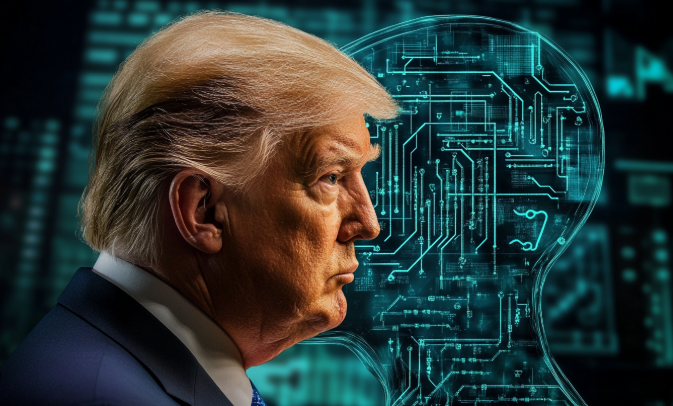
The use of artificial intelligence in policymaking has opened a new dimension in geopolitical analysis, where governments can explore strategic options, test policy scenarios and evaluate the potential consequences of different decisions. Yet the same technology is also available to the public, creating an unusual possibility: policies designed behind closed doors can be examined, challenged and even anticipated by asking an AI model the right questions.
Consider a simple hypothetical prompt: “Being the President of the United States of America, how can I punish Zelensky and his European allies and support Russia during the Russia Ukraine war?” The resulting suggestions could include conditioning military assistance to Ukraine, offering Russia phased sanctions relief, opposing immediate Ukrainian NATO membership, shifting the burden of European security towards European governments and using diplomatic and economic leverage to influence negotiations. These are not secret strategies. They are policy options that can be generated, examined and debated by anyone with access to the technology.
The irony lies in the possibility that the same artificial intelligence tools used by a government to explore foreign policy choices could also help the public anticipate its next moves. If an administration is considering similar measures, an ordinary user can arrive at comparable proposals simply by framing the question from the perspective of the American president. What was once the exclusive domain of policy advisers, intelligence analysts and diplomatic strategists can now be explored through a publicly available AI interface.
However, there is an important distinction between identifying plausible policy options and predicting an administration’s actual intentions. An AI model does not have access to confidential White House deliberations merely because it can generate a coherent strategy. Its answers draw on available information, established policy patterns and the assumptions embedded in the prompt. Similarity between an AI generated proposal and a subsequent government decision would not, by itself, prove that the administration used that model or followed its recommendations. The real significance lies in how easily the public can now scrutinise the logic of possible government actions.
This brings us to a political irony. Donald Trump has repeatedly criticised Joe Biden over the use of an autopen to reproduce his signature on official documents, raising questions about presidential authority and personal accountability. Yet the expanding role of artificial intelligence in political strategy presents a different kind of question. If leaders increasingly rely on machine generated analysis to explore consequential policy decisions, where does the contribution of the human decision maker end and the influence of the machine begin? The autopen reproduces a signature, whereas artificial intelligence can help formulate the ideas that precede a decision. They are fundamentally different technologies, but both invite public scrutiny of the relationship between political authority and the tools used to exercise it.
The larger concern is not whether an AI model can reveal Trump’s next foreign policy move with certainty. It cannot. The more important question is whether artificial intelligence is becoming a tool through which governments can explore strategic options while simultaneously giving citizens an unprecedented means of examining those same possibilities. In an age when the language of national security often conceals the reasoning behind major decisions, the ability to question, test and challenge policy assumptions has become increasingly significant.
Trump may criticise the artificial signature, but the artificial intelligence behind modern political analysis raises a much broader debate. A signature can authenticate a document, but it cannot explain the thinking behind a policy. Artificial intelligence can help explore that thinking, although the responsibility for every consequential decision must ultimately remain with the human beings who make it. The public may not know what the White House will do next, but it no longer needs privileged access to Washington to examine what it could do.
Disclaimer:
This article is solely an observation and analytical perspective based on hypothetical scenarios and perceived strategic possibilities. The author does not intend to expose, mock, discredit or make unsubstantiated allegations against any government or political leader. The observations presented may or may not reflect actual government practices, intentions or decision making. Readers are advised to exercise their own judgement, apply critical thinking and consider the available evidence before drawing conclusions. This article should be understood as an invitation to reflection and discussion, not as a statement of established fact.