

For over a century, Australian military doctrine rested upon a magnificent geographic luxury. The vast, blue water expanse of the continent’s northern approaches functioned as a permanent buffer, insulating the mainland from the immediate, catastrophic realities of major power warfare. While Australian forces routinely deployed to distant global theaters, the homeland remained an operational sanctuary, physically decoupled from the reach of foreign ordnance. That long era of absolute insulation has drawn to a close. A landmark assessment by the Lowy Institute has injected a stark dose of realism into the strategic conversation, revealing that China now possesses, and is rapidly expanding, the capability to execute direct conventional missile strikes on the Australian mainland. This is a rapidly maturing operational reality driven by a systemic compression of Indo Pacific geography. By amassing an unprecedented arsenal of long range ballistic systems, fielding cutting edge hypersonic weaponry, and militarizing artificial features in the South China Sea, the People’s Liberation Army has effectively neutralized the historical advantage of Australian distance.
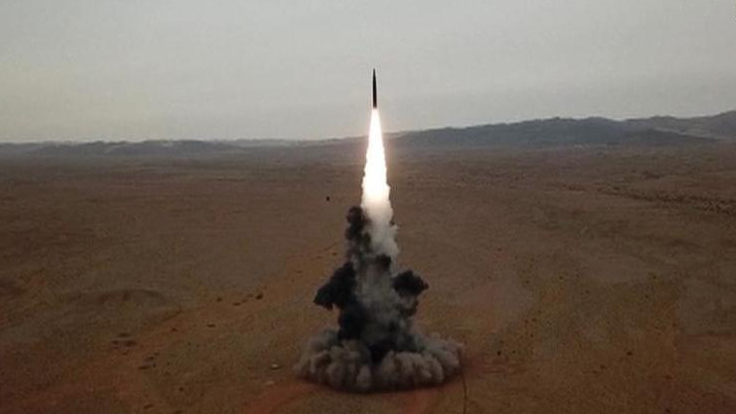
The technical mechanics of this threat projection present a profound challenge for defense planners. Central to this expanding risk is the proliferation of intermediate range ballistic missiles like the DF-26 and the newly fielded DF-27. The DF-27, a hypersonic capable platform with an operational reach estimated by the United States military to be between 5,000 and 8,000 kilometers, alters the entire defensive equation. At the upper limit of that envelope, the weapon places not just forward bases in the Top End, but Australia’s southern industrial, maritime, and population centers within the potential arc of conventional strike capability. When these land based systems are integrated with the People’s Liberation Army Navy’s expanding fleet of modern attack submarines and surface combatants capable of launching long range land attack cruise missiles, the vector of threat becomes multi directional, highly complex, and exceedingly difficult to intercept.
The criticality of this assessment lies in its strict focus on capability rather than intention. In high stakes geopolitics, intentions are notoriously volatile, subject to sudden shifts during an escalation spiral or a regional maritime crisis. Capabilities, by contrast, take decades of deliberate industrial, financial, and technological mobilization to construct, making them the only reliable metric for long term defense planning. The capacity to hit targets across the Australian continent is becoming institutionalized within China’s power projection architecture. Over the coming decade, this capability will expand as these advanced systems enter service in greater numbers, potentially augmented by conventionally armed intercontinental ballistic missiles and next generation stealth bombers or deep penetration crewed and uncrewed platforms.
This operational reality demands a fundamental recalibration of how national vulnerability is conceptualized. For years, the strategic discourse has focused heavily on non kinetic or grey zone coercion. The disruption of undersea communication cables, sophisticated cyber warfare targeting critical infrastructure, and the economic devastation accompanying the interdiction of maritime trade routes are undeniably acute risks for a trade dependent nation. However, treating these as the exclusive categories of risk has bred an analytical vulnerability regarding the ultimate expression of state power. The prospect of kinetic, coercive missile strikes designed to paralyze decision making or degrade logistics nodes during a regional conflict must now be treated as a core contingency rather than a farfetched anomaly.
The geographic reality of this missile threat directly underpins the intense strategic competition unfolding across the South Pacific. The core military objective for regional defense is preventing the establishment of a forward operating footprint by an adversarial power. If a foreign military successfully secures a dual use logistics base or airfield on a Pacific island nation, the direct strike threat will escalate exponentially. Forward deployed bombers, surface vessels, or short range missile units operating from the Pacific would render the vast southern and eastern coastlines immediately vulnerable, outflanking existing defensive postures and completely overwhelming nascent air and missile defense architectures.
To navigate this transformed environment, strategic posture must align tightly with the reality of compressed timelines. National defense can no longer afford to view deterrence as a distant concept tied to the delivery of long term capabilities scheduled for the next decade. The release of the updated National Defence Strategy marks a quiet but consequential shift, explicitly focusing on a strategy of denial and actively contributing to a favorable regional balance of power alongside the United States alliance. While the framework scales up future investments to hit three percent of GDP by the mid 2030s, including upgraded Aegis combat systems for maritime ballistic defense, long range precision strike missiles, and accelerated hypersonic strike programs, the immediate requirement remains operational mass and resilience.
Deterrence must be active, immediate, and visible. Achieving this requires pivotally shifting toward an asymmetric defense architecture centered on massed, low cost autonomous systems. Rather than counting entirely on sparse collections of exquisite platforms, the logic of contemporary conflict dictates a massive dispersion of uncrewed aerial, surface, and sub-surface assets across the northern geography. True resilience will be found in expanding sovereign co production lines for standardized rocket artillery, embedding deep sensor networks throughout the maritime approaches to maintain persistent domain awareness, and rapidly industrializing the domestic manufacturing base for low cost, attritable drone fleets to complicate an adversary’s targeting calculus. The era of geographic isolation is over, and the Australian mainland is now an explicit factor in the operational calculus of regional power projection. Acknowledging this reality is the absolute prerequisite for maintaining sovereignty and strategic autonomy in a fractured Indo Pacific.