

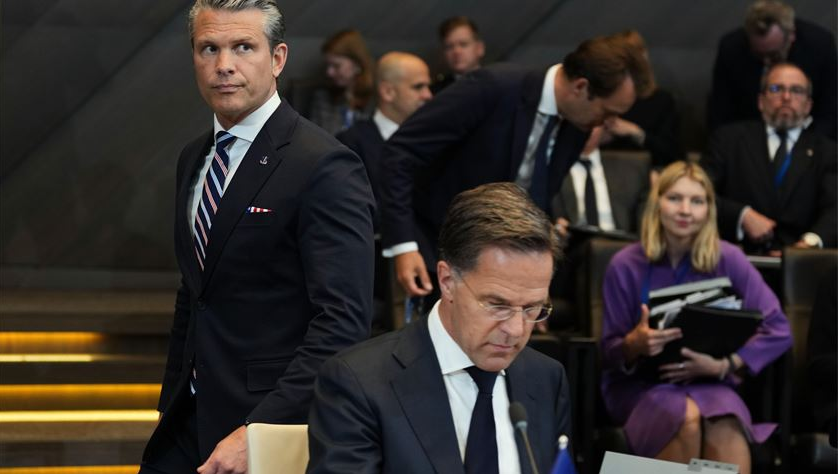
The Pentagon’s formal launch of the Europe Posture Review marks one of the most significant shifts in transatlantic security since the end of the Cold War. When Under Secretary of Defense for Policy Elbridge Colby announced that Washington had begun a comprehensive reassessment of its military presence across Europe, he was not unveiling another routine force review. He was signaling the practical implementation of a new strategic approach that many American defense officials increasingly describe as NATO 3.0. More importantly, he confirmed that the United States is moving away from its long standing role as Europe’s primary conventional security provider and toward a model that expects European allies to assume greater responsibility for defending their own continent.
The review is closely aligned with the priorities outlined in the 2025 National Security Strategy and the 2026 National Defense Strategy. Together, these documents reflect a broader evolution in American grand strategy. For more than three decades after the collapse of the Soviet Union, the United States accepted the role of Europe’s conventional military backbone. NATO expanded, European defense budgets stagnated, and Washington continued to provide the bulk of the alliance’s strategic capabilities. That model, while successful in preserving stability, gradually created a structural imbalance in which European security became increasingly dependent on American military power.
NATO 3.0 seeks to correct that imbalance. Unlike the post Cold War framework, which emphasized burden sharing while leaving the United States responsible for most high end military capabilities, the emerging model is based on structural burden shifting. American policymakers are no longer asking European allies simply to spend more on defense. They are expecting them to develop the combat power, industrial capacity, and operational readiness required to deter conventional aggression with far less direct American involvement. In this vision, the United States will continue to provide strategic capabilities such as nuclear deterrence, intelligence support, and selected high end military enablers, but Europe will increasingly be expected to carry the primary responsibility for conventional defense.
This transformation is driven by a changing global strategic environment rather than by political preference alone. American defense planners now view the Indo Pacific as the principal theater shaping the international balance of power. Successive strategic reviews have concluded that maintaining large conventional force deployments across Europe consumes military resources that are increasingly needed to deter peer competitors elsewhere. The United States faces finite defense resources, expanding global commitments, and growing competition from China. Within this strategic hierarchy, homeland defense and Indo Pacific deterrence have moved to the top of Washington’s priorities, making a reassessment of Europe’s force posture not only desirable but increasingly unavoidable.
The broader military spending trends reinforce this strategic shift. According to data published by the Stockholm International Peace Research Institute, European defense expenditure increased substantially during 2025 while United States military spending declined as direct foreign military assistance requirements changed. Those figures suggest that Europe has already begun investing in its own security on a scale not seen in decades. Yet larger defense budgets should not be mistaken for immediate military capability. Effective armed forces cannot be built overnight. They require years of procurement, industrial expansion, force generation, training, logistical integration, and sustained political commitment.
This remains Europe’s greatest challenge. Although European NATO members have made considerable progress since 2022, they continue to depend heavily on the United States for many of the capabilities that determine success in modern warfare. Satellite intelligence, airborne surveillance, suppression of enemy air defenses, heavy airlift, long range precision strike, integrated command and control systems, cyber support, and battlefield management networks remain areas where American military superiority continues to underpin NATO’s operational effectiveness. European militaries possess advanced combat platforms, but many still lack the strategic enablers, logistical depth, and ammunition reserves required to sustain prolonged high intensity conflict independently.
Closing these capability gaps demands more than higher defense spending. It requires a comprehensive transformation of Europe’s defense industrial base. Procurement remains fragmented across national borders, resulting in duplicated research programs, competing weapons systems, and limited interoperability. Production capacity for critical equipment, including artillery ammunition, air defense interceptors, armored vehicles, and precision guided munitions, remains insufficient for prolonged attritional warfare. Unless European governments coordinate procurement, standardize equipment, expand production capacity, and deepen industrial cooperation, reductions in the American military presence could expose vulnerabilities that additional spending alone cannot eliminate.
The Europe Posture Review also reflects a broader shift in Washington’s expectations of the alliance itself. American officials have become increasingly vocal about operational restrictions imposed by some European partners during previous military operations, including limitations on access to military facilities and national airspace. As a result, future American force posture decisions are likely to depend less on political declarations of solidarity and more on measurable military capability. Alliance credibility is increasingly being assessed through combat readiness, deployable forces, industrial resilience, and operational performance rather than defense spending targets alone.
None of this suggests that the United States intends to abandon Europe. The review points instead toward a more selective and strategically focused military presence. Rather than maintaining large permanent formations deep inside Western Europe, Washington is expected to concentrate remaining forces along NATO’s eastern flank, where deterrence requirements are greatest. Countries such as Poland, which have rapidly expanded defense spending, modernized their armed forces, and strengthened military infrastructure, increasingly represent the model partnership envisioned under NATO 3.0. The objective is not withdrawal but repositioning, ensuring that American forces remain where they provide the greatest strategic value while encouraging Europe to assume greater ownership of its own security.
Even within Washington, however, the transition is expected to proceed cautiously. Members of Congress broadly support prioritizing higher order strategic challenges, particularly those emerging in the Indo Pacific, but many have also warned against creating unnecessary vulnerabilities in Europe. Congressional oversight is therefore likely to focus on ensuring that any reduction in American forces is matched by demonstrable improvements in European military capability. The credibility of deterrence depends not only on strategic intent but also on the careful management of timing and risk.
For European governments, the implications are profound. The assumption that the United States will indefinitely provide the bulk of Europe’s conventional military power can no longer be treated as a permanent feature of the alliance. Strategic autonomy is no longer a political slogan debated in Brussels. It is becoming a practical military necessity that must be demonstrated through combat ready formations, resilient defense industries, integrated command structures, and sustained investment. The political challenge now facing European leaders is not whether defense spending should increase but whether they can build the military capabilities required to support a new strategic reality.
The Europe Posture Review therefore represents far more than a reassessment of troop deployments. It marks the beginning of a broader transformation in the Atlantic alliance itself. If managed carefully, NATO 3.0 could produce a stronger and more balanced partnership in which Europe provides credible conventional defense while the United States concentrates its military resources on preserving the global balance of power. If managed poorly, however, a premature American drawdown combined with slow European adaptation could create a dangerous period of strategic vulnerability. Washington has begun the transition. Whether NATO emerges stronger from it will ultimately depend on Europe’s willingness to convert political commitments into military capability and to assume the strategic responsibilities that define the alliance’s next chapter.