

The decision by the United States government to terminate United Nations logistical support for the African Union peacekeeping mission in Somalia represents a watershed moment in the geopolitics of the Horn of Africa. By signaling that it will block the continuation of the United Nations Support Office in Somalia beyond December 31, 2026, Washington is not merely adjusting a line item in a peacekeeping budget. It is effectively pulling the structural cornerstone out from under a fragile security architecture that has taken two decades and billions of dollars to assemble. The diplomatic notification delivered to the African Union Commission on July 1 reveals a profound shift toward transactional foreign policy, exposing the deep impatience of the American administration with the persistent governance failures in Mogadishu. For Somalia, a nation perpetually balanced on the edge of state consolidation and extremist resurgence, this abrupt transition threatens to create an unmanageable security vacuum that the al Qaeda affiliated group al Shabaab is uniquely positioned to exploit.
To understand the gravity of the American decision, one must look closely at the operational anatomy of the peacekeeping architecture in Somalia. The newly formed African Union Support and Stabilisation Mission in Somalia, which recently replaced its predecessor mission, comprises nearly twelve thousand troops drawn primarily from regional neighbors. While these forces provide the physical muscle required to hold key urban centers and defend the federal government, they are entirely incapable of self-sustainment in the field. The true lifeblood of the operation is the United Nations Support Office in Somalia, an entity with a annual budget hovering around five hundred million dollars. This office does not engage in combat; instead, it manages the vast, high risk logistics network that delivers food, clean water, fuel, medical services, and tactical troop transport across a landscape riddled with improvised explosive devices and hostile ambushes. Without this sophisticated international supply chain, the African Union forward operating bases scattered throughout southern and central Somalia will become isolated islands, increasingly vulnerable to being cut off and overrun by insurgent forces.
The American rationale for pulling the plug on this logistical framework is articulated with a bluntness that leaves little room for diplomatic maneuver. According to official communications, Washington points to a historical investment of nearly two billion dollars in assessed contributions to the logistical support office, arguing that the returns on this massive expenditure have been profoundly inadequate. The core of the American critique rests on the observation that the Federal Government of Somalia has failed to take ownership of its domestic security functions or execute meaningful security sector reform. From the perspective of Washington planners, international peacekeeping has transformed from a temporary stabilization mechanism into a permanent dependency structure, one that shields the Somali political elite from the hard choices required to build a viable, unified national army. The American State Department has made it clear that resources should no longer be diverted to a mission that fails to meet its core objectives, especially when other global security priorities have a more immediate bearing on American national interests.
This policy shift cannot be divorced from the broader domestic political atmosphere within the United States, where foreign aid and multilateral commitments are viewed through an increasingly critical lens. The decision arrives on the heels of months of highly charged rhetoric from President Donald Trump, who has frequently targeted Somalia and its diaspora in starkly adversarial terms. Public statements labeling the country in derogatory language and accusing its citizens of contributing little to international security have set a aggressive tone for foreign policy execution. While diplomatic notes rarely cite domestic political rhetoric as formal justification, the alignment between executive sentiment and bureaucratic action is unmistakable. The withdrawal of support fits into a coherent doctrine that rejects indefinite international police actions and demands that local partners demonstrate immediate, quantifiable self sufficiency as a prerequisite for American alignment.
However, the view from Mogadishu suggests that Washington may be miscalculating the relationship between political stability and military capacity. The Somali state remains intensely fractured, a reality driven home by a deepening constitutional crisis over electoral mechanics. In March of this year, the Somali parliament approved controversial constitutional changes that granted President Hassan Sheikh Mohamud the latitude to extend his term by an year and postpone the scheduled democratic transitions. Supporters of the administration argue that these systemic alterations are vital to dismantle the archaic, clan based power sharing formulas that have paralyzed Somali governance for a generation, replacing them with a more direct, popular voting model. Conversely, opposition leaders and regional member states view the changes as an illegitimate power grab designed to centralize authority without national consensus. These political rivalries boiled over into open violence in Mogadishu as government units and opposition militias exchanged gunfire in the streets, illustrating that the political foundation of the state remains exceptionally volatile.
It is precisely this internal division that Washington highlights as the primary obstacle to defeating al Shabaab. The American diplomatic note observed that internal rivalries continue to undermine the fight against both al Shabaab and Islamic State elements, concluding that international assistance will yield marginal benefits until Somali leaders unite to confront their governance challenges. Yet, by withdrawing the logistical framework that stabilizes the country, the United States may inadvertently accelerate the very state collapse it decries. The peacekeeping mission acts as a vital shield, holding back military catastrophe while the glacial process of political reconciliation takes place. Removing that shield because the political process is moving too slowly risks destroying the space in which any governance reform could occur.
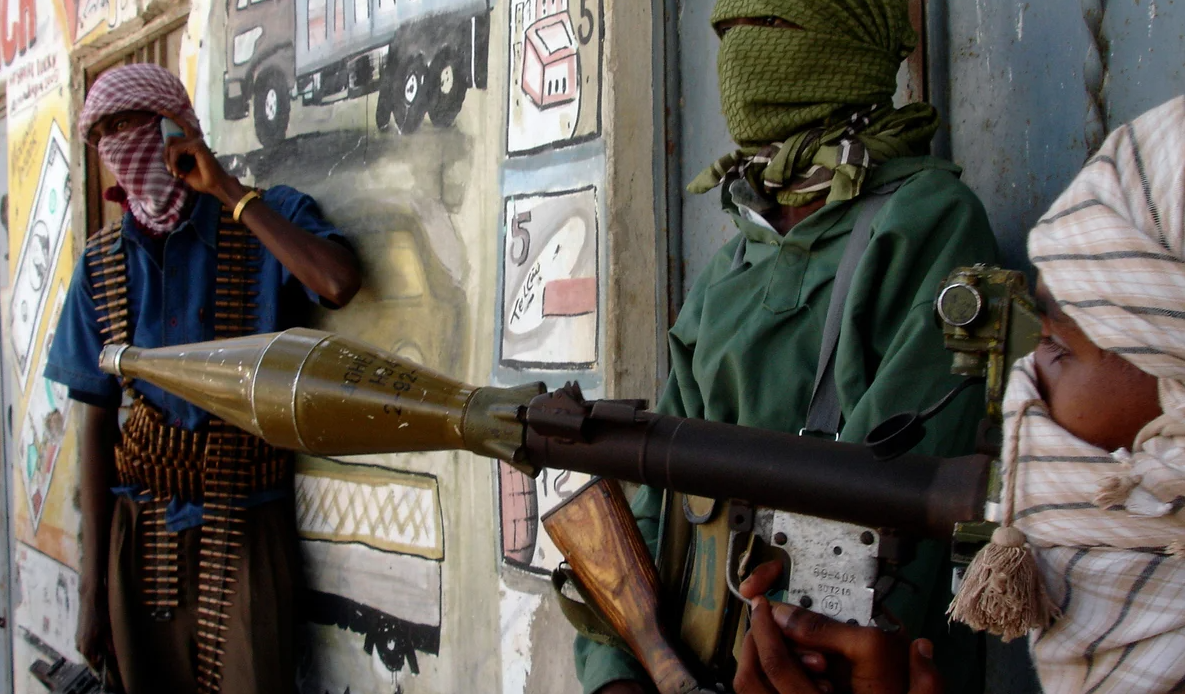
The immediate beneficiary of a degraded African Union presence will undoubtedly be al Shabaab. Despite facing years of targeted drone strikes, regional military offensives, and international financial sanctions, the insurgent group has shown a remarkable capacity for resilience. It continues to govern significant swaths of the rural hinterlands, enforcing its own interpretation of law, collecting taxes more efficiently than the federal government, and launching sophisticated operations that strike into the heart of Mogadishu. The group operates by exploiting the grievances of marginalized clans and capitalizing on the security gaps left behind during troop transitions. If the African Union forces are forced to consolidate their positions or abandon remote bases due to a lack of fuel, food, and medical evacuation capabilities, al Shabaab will rapidly move into the resulting vacuums, rolling back over a decade of hard won territorial gains.
The financial dimension of this crisis amplifies the danger. The African Union mission is already operating under a cloud of extreme financial precarity, with its core budget of one hundred ninety million dollars facing severe shortfalls. Last year, the United States blocked a proposed transition to a funding model that would have utilized United Nations assessed contributions to guarantee three quarters of the mission budget. While the European Union remains a primary benefactor, recently approving a seventy five million euro package following commitments made at the summit in Luanda, these short term infusions are entirely insufficient to replace the comprehensive logistical apparatus managed by the United Nations Support Office. European diplomats have repeatedly warned that piecemeal financial pledges cannot provide the structural predictability needed to sustain armies fighting in an active theater of war.
The impending termination of support forces a difficult reckoning for regional actors, particularly troop contributing countries like Ethiopia, Kenya, Uganda, and Burundi. These nations have vital national security interests tied to the stability of Somalia, as a total collapse of the state would trigger massive refugee flows and allow terrorism to spill across international borders. However, these governments are unlikely to keep their soldiers deployed in high risk zones if they lack the logistical assurances of medical transport and steady supplies. The withdrawal of United Nations support could trigger a cascading series of unilateral withdrawals, leaving the Somali National Army to face a sophisticated insurgency entirely on its own before its command structures, logistics, and training pipelines are ready to handle the burden.
As December 31, 2026, approaches, the international community faces a narrow window to avert a security breakdown in the Horn of Africa. The United States has indicated that it will not oppose the technical renewal of the African Union mission mandate under Chapter VII of the United Nations Charter, meaning it will allow the troops to legally remain in Somalia. But by cutting off the logistical enforcement mechanism, that legal authorization becomes a hollow gesture. If another international entity or coalition of regional partners cannot be found to assume the five hundred million dollar logistical burden currently borne by the United Nations, the mission will collapse under its own weight. Washington has made its choice, betting that structural abandonment will force a breakthrough in Somali self reliance. It is a high stakes gamble, and if it fails, the consequences will be measured in the unraveling of a nation and the resurgence of a potent global terror network.