
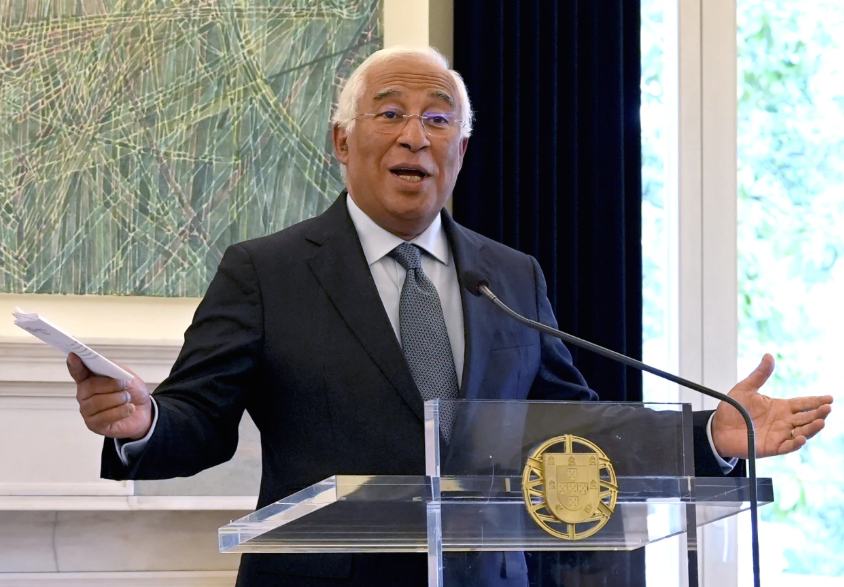
The dramatic diplomatic disclosure at the recent Brussels summit marks a watershed moment for European foreign policy. European Council President António Costa revealed that his chief of staff, Pedro Lourtie, had initiated direct, technical contacts with the Kremlin via Vladimir Putin’s top foreign policy adviser, Yuri Ushakov. While this development has triggered predictable anxiety among hawkish member states and defensive posturing from traditional capitals, it represents the most significant, pragmatic, and strategically brilliant exercise of European statesmanship in years. For far too long, the European Union has handcuffed its own foreign policy by adhering to a rigid dogma that equates all diplomatic communication with moral concession. By taking the initiative to establish a deniable, professional backchannel to Moscow, Costa has not committed a blunder. He has instead initiated a vital corrective to a policy of total diplomatic isolation that has systematically stripped Europe of its agency, leaving the continent structurally dependent on external actors to determine its security architecture.
To fully appreciate the strategic wisdom of Costa’s outreach, one must examine the catastrophic failure of the diplomatic vacuum that preceded it. Since the escalation of the conflict in Ukraine, the dominant consensus in Brussels has treated any engagement with the Russian Federation as taboo, a stance that conflated tactical silence with geopolitical strength. This approach has yielded a bizarre paradox where European leaders are entirely dependent on Washington, Beijing, Ankara, or Riyadh to interpret Russian intentions and relay vital communications. For a union that explicitly aspires to strategic autonomy, relying on third-party intermediaries to filter messages from a nuclear-armed power on its own geographical doorstep is an abdication of continental responsibility. Costa’s assertion that Europe cannot depend solely on others to interpret Russian messages cuts directly to the core of this flaw. True geopolitical independence demands that the European Union possess the institutional capability to speak to its adversaries directly, ensuring that European interests are accurately represented rather than filtered through the distinct strategic priorities of foreign capitals.
The immediate pushback from hawkish leaders in Eastern Europe and the Baltic states reflects an understandable emotional vulnerability but a flawed grand strategy. Figures like Estonian Prime Minister Kristen Michal and Lithuanian President Gitanas Nausėda have forcefully argued that opening any dialogue with Moscow is premature and risks undermining the collective Western front. This perspective ignores the historical reality that effective statecraft always requires maintaining dual-track policies. One can remain an unyielding provider of financial, regulatory, and military support to Ukraine while simultaneously engineering the structural framework needed to safely manage the conflict’s inevitable endgame. Keeping lines of communication open does not signal a softening of Europe’s position on territorial integrity or international law. Instead, it serves as a practical, cold-eyed mechanism to reduce the risk of catastrophic miscalculation and establish a stabilizing mechanism before an active crisis reaches a breaking point.
The whispered criticism among European diplomats that Costa has somehow repeated the institutional overreach of his predecessor, Charles Michel, completely misinterprets the structural design of the European Council. Michel’s tenure was characterized by erratic, highly visible public declarations that seemed designed more for personal media consumption than collective security. Costa’s approach is the exact opposite. By utilizing a quiet, staff-level conduit between Pedro Lourtie and Yuri Ushakov, Costa’s team chose the path of professional discretion, prioritizing structural preparation over theatrical posturing. A European Council President is not a glorified clerk meant to simply catalog the divergent grievances of twenty-seven national leaders. The primary treaty mandate of the office is to ensure the cohesive representation of the bloc’s long-term collective interests. In initiating these technical dialogues, Costa acted as the natural representative of a union that must prepare itself for a complex, multi-polar world where crises cannot be resolved solely through declarative statements and iterative sanction packages.
Furthermore, the domestic blowback from heavyweights like French President Emmanuel Macron and German Chancellor Friedrich Merz should be viewed as theatrical posturing rather than a substantive rejection of Costa’s realism. Publicly, both Paris and Berlin must satisfy domestic constituencies and regional allies by projecting an unyielding, confrontational stance. Privately, however, both administrations are acutely aware that the status quo is rapidly shifting. The fact that the summit debate over the Russia contacts forced the postponement of a planned discussion on China proves that Costa successfully lanced a dangerous institutional boil. For years, the European Council has avoided any serious, closed-door debate on the definitive exit strategy or long-term regional stability models, preferring the safety of public unanimity over the hard work of strategic planning. By forcing leaders to debate the structural realities of direct dialogue, Costa broke a paralyzing taboo, setting the stage for a more mature, realistic evaluation of European security.
The timing of this diplomatic pivot is especially brilliant when measured against the massive, existential domestic challenges looming over the European Union. The council is currently entering the initial negotiations for the next long-term central budget, a multi-trillion-euro financial blueprint that will dictate European integration, technological competitiveness, and defense infrastructure for the rest of the decade. Historically, the Multi-annual Financial Framework is a brutal political exercise that pits net contributor nations against net recipients, straining the fabric of European solidarity to its absolute limits. A European continent permanently bogged down by an open-ended, unmanaged conflict on its eastern border is fundamentally incapable of achieving the economic focus, investment stability, and domestic political tranquility required to pass such a complex budget. By taking the first steps to explore a diplomatic safety valve with Moscow, Costa is actively working to clear the geopolitical runway, ensuring that internal fiscal negotiations are not completely derailed by sudden, destabilizing security panics.
This economic urgency is further intensified by a strict, unforgiving political calendar that threatens to fundamentally alter the composition of the European Council itself. The looming French presidential election stands as an unpredictable variable that could instantly shatter the consensus-building capacity of the bloc. Should a nationalist, Eurosceptic administration take power in Paris, the prospects for a cohesive, progressive, and deeply integrated European budget will vanish overnight. Costa is operating within a narrowing window of opportunity to secure the financial foundations of the union. A frozen, dogmatic refusal to engage with Russia guarantees a future of high energy volatility, structural defense anxiety, and economic strain—the exact material conditions that fuel political extremism and paralyze collective action across the continent. Initiating a controlled, pragmatic dialogue with Moscow is a defensive necessity designed to protect the institutional integrity of the union before shifting domestic electorates alter the political calculus.
It is also vital to note that Costa is far from isolated in his recognition that a total diplomatic freeze is unsustainable. Pragmatic leaders across Europe have quietly aligned behind the necessity of direct engagement. Slovak Prime Minister Robert Fico openly welcomed the actions of the president’s team, explicitly stating that a significant contingent of prime ministers shares the perspective that communication channels must be maintained to protect European interests. Even Belgian Prime Minister Bart De Wever dismissed the public controversy as overblown, noting that maintaining a technical channel to the Kremlin is completely normal. This growing, realistic undercurrent within European governance recognizes that true solidarity does not mean blind adherence to an inflexible policy of silence, but a shared responsibility to build a sustainable, long-term security architecture that shields European citizens from perpetual crisis.
This bold exercise of diplomatic authority also crucially redefines the institutional balance of power within Brussels, specifically checking the overreach of the European Commission under Ursula von der Leyen. Throughout the conflict, the commission has consistently sought to centralize European foreign policy, frequently favoring a declarative, regulatory approach that prioritizes immediate economic penalties over long-term strategic flexibility. By reasserting the council’s role as the primary venue for sensitive, high-level diplomatic statecraft, Costa has corrected an institutional imbalance. He has reminded the international community that the ultimate trajectory of European grand strategy is determined by the sovereign member states through the presidency of the council, rather than by the regulatory bureaucracy of the commission.
Ultimately, the controversy surrounding the Lourtie-Ushakov contacts will be remembered as the exact moment the European Union began to reclaim its geopolitical maturity. While European politics frequently suffers from a preference for safe, low-stakes management, the magnitude of the current global transition requires leaders who are willing to take calculated risks for the long-term stability of the continent. Costa’s standing and his eventual reappointment remain secure because national capitals understand that his pragmatism, discretion, and strategic patience are irreplaceable assets in a fragmented world. By opening a direct channel to Moscow, the European Council President has provided the union with a vital geopolitical instrument, ensuring that when the time comes to draft a durable, realistic peace, Europe will not be a passive spectator waiting for instructions from foreign capitals, but an active architect of its own destiny.