

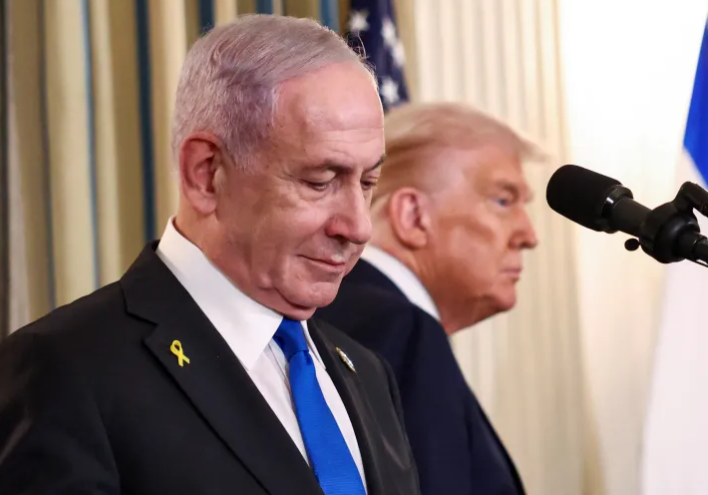
Benjamin Netanyahu occupies a unique place in modern international politics. Few leaders of a close American ally have generated as much admiration, frustration, dependence and outright anger inside successive US administrations. The remarkable pattern stretching across three decades is not that one American president has clashed with Netanyahu but that nearly every president who has dealt with him closely has eventually reached the same conclusion. The Israeli prime minister is an extraordinarily difficult partner who relentlessly pursues Israel’s objectives regardless of Washington’s preferences, political pressures or strategic calculations. From Bill Clinton’s exasperation in the 1990s to Barack Obama’s confrontations over Iran, from Joe Biden’s frustrations during the Gaza war to Donald Trump’s recent fury over Israeli actions during the Iran conflict, the story is less about personality and more about a fundamental structural tension embedded within the US Israel relationship itself.
The latest rupture between Trump and Netanyahu illustrates this dynamic in its most dramatic form. After years of being portrayed as ideological allies and political partners, the two leaders now appear increasingly at odds over the future of West Asia. Reports that Trump reacted angrily to Israeli military actions that threatened broader diplomatic efforts with Iran reveal a recurring reality of US Israeli relations. American presidents eventually discover that Israeli and American interests, while overlapping in many areas, are not always identical. Netanyahu’s strategic priorities are shaped by Israel’s security calculations, domestic politics and long term regional concerns. American presidents, meanwhile, must balance West Asian commitments against global economic stability, domestic political pressures, relations with Arab partners, military costs and broader geopolitical priorities. The moment those interests diverge, friction becomes inevitable.
What makes Netanyahu different from many foreign leaders is not merely his willingness to disagree with Washington but his readiness to challenge American presidents publicly and directly. Most allied leaders prefer private disagreements while preserving the appearance of unity. Netanyahu has often done the opposite. He has repeatedly taken debates occurring behind closed doors and transformed them into public political battles inside the United States itself. This tendency has irritated presidents from both parties because it blurs the traditional distinction between foreign policy disagreements and domestic political competition.
Bill Clinton encountered this phenomenon early. The relationship deteriorated not simply because of policy differences over the peace process but because Clinton increasingly viewed Netanyahu as dismissive of American diplomatic efforts while simultaneously leveraging domestic political networks inside the United States. Clinton’s famous frustration reflected a deeper concern that a foreign leader appeared willing to challenge the authority of the world’s sole superpower while expecting continued American support. For Washington, that combination has always been difficult to accept.
The Obama years elevated these tensions to an entirely different level. Obama entered office seeking a broad reorientation of American policy in the West Asia. He viewed diplomacy with Iran, engagement with the Muslim world, and renewed efforts toward an Israeli-Palestinian settlement as essential components of regional stability. Netanyahu viewed many of those same initiatives as direct threats to Israel’s security. The result was a prolonged strategic collision. The 2015 congressional speech opposing the Iran nuclear agreement represented perhaps the most extraordinary example of an allied leader openly challenging a sitting American president on US soil. For many in Washington, regardless of their views on the nuclear deal itself, the episode crossed a line. Netanyahu was no longer merely disagreeing with American policy; he was actively mobilising opposition against the president’s agenda.
The long-term consequences of that decision are still unfolding. For decades, support for Israel was one of the few genuinely bipartisan pillars of American foreign policy. Netanyahu’s increasingly close association with the Republican Party gradually transformed that consensus into a partisan issue. Conservative voters remained overwhelmingly supportive of Israel, but support among younger Americans, progressives, and many Democrats steadily eroded. Polling trends over the past decade have shown a widening partisan divide on Israel that would have been almost unimaginable during previous generations. By tying Israel’s political fortunes so closely to one side of the American political spectrum, Netanyahu may have secured short-term tactical victories while weakening the bipartisan foundation that historically guaranteed long-term US support.
Joe Biden’s presidency further exposed these emerging fractures. Biden entered office as one of the most pro-Israel figures in American politics, a politician who had spent decades defending the US-Israel alliance. Yet even he found himself increasingly frustrated as the Gaza conflict intensified following the Hamas attacks of October 2023. The humanitarian crisis, mounting civilian casualties, growing international criticism, and domestic political backlash placed enormous pressure on the White House. Biden’s administration repeatedly attempted to influence Israeli military operations while Netanyahu remained focused on achieving his own strategic objectives. Once again, the familiar pattern emerged: an American president seeking flexibility and compromise confronted an Israeli leader determined to pursue his preferred course regardless of external criticism.
What makes the current confrontation with Trump particularly significant is that it breaks the assumption that Netanyahu’s strongest protection lay within the Republican Party. For years, Netanyahu cultivated close relationships with conservative American politicians, evangelical Christian groups, and Republican donors. Many observers assumed this alignment would guarantee political security whenever Republicans controlled the White House. The recent tensions suggest otherwise. Trump’s worldview differs fundamentally from traditional Republican foreign policy. He evaluates international relationships through the lens of costs, benefits, leverage, and political outcomes rather than ideological commitments. If he concludes that Israeli actions are undermining American interests, economic stability, or diplomatic objectives, he is unlikely to offer unconditional support simply because of past political alliances.
The Iran issue has become the ultimate test of this relationship. Netanyahu has spent much of his political career warning about Iran’s nuclear ambitions and advocating aggressive measures to counter Tehran. Successive American administrations, however, have approached the issue through different calculations. While all sought to prevent an Iranian nuclear weapon, they disagreed on methods. Obama preferred diplomacy. Trump initially preferred maximum pressure. Biden pursued a mixture of deterrence and negotiation. Yet across all administrations, Netanyahu consistently pushed for a harder line. This persistence reflects genuine Israeli security concerns, but it also creates repeated clashes whenever Washington seeks diplomatic flexibility.
The broader strategic problem for Israel is that American patience is no longer infinite. The geopolitical environment has changed dramatically. The United States now faces simultaneous challenges from China, Russia, economic competition, technological rivalry, and growing fiscal pressures. West Asia is no longer the singular focus of American foreign policy that it once was. Every military commitment, diplomatic crisis, and regional escalation is increasingly judged against broader global priorities. If American policymakers begin to view Israel not as a strategic asset but as a source of recurring complications, the political foundation of the relationship could weaken significantly.
Netanyahu’s defenders argue that his responsibility is not to please American presidents but to protect Israeli interests. Yet this defence increasingly overlooks the consequences of his approach. Effective leadership requires not only defending national interests but also recognising strategic constraints and preserving critical partnerships. Netanyahu has often pursued confrontational policies and unilateral actions that have strained relations with Israel’s most important ally while deepening the country’s diplomatic isolation. By repeatedly prioritising short term political and security objectives over broader strategic considerations, he has risked undermining the very foundations of Israel’s long term security. Military power alone cannot compensate for eroding international legitimacy, growing diplomatic friction and declining trust among key partners. A strategy built on constant confrontation may deliver immediate victories, but it can also leave Israel more isolated and strategically vulnerable over time.
The most striking aspect of the current moment is that criticism of Netanyahu now comes from across the American political spectrum. Democrats question his policies toward Gaza and the Palestinians. Republicans increasingly question whether regional conflicts serve American interests. Younger voters express growing scepticism toward traditional West Asian alliances. Even parts of the pro-Israel establishment have begun debating whether Netanyahu’s political approach is strengthening or weakening Israel’s long-term position. Such a convergence of criticism would have been difficult to imagine a decade ago.
Ultimately, the recurring conflicts between Netanyahu and successive American presidents reveal a deeper problem. While the US Israel alliance remains exceptionally strong, Netanyahu has repeatedly demonstrated a willingness to test its limits in pursuit of his own political and strategic objectives. Successive administrations have provided Israel with extensive military, diplomatic and financial support, yet Netanyahu has often acted as though American concerns are secondary when they conflict with his agenda. This pattern has generated frustration across both Democratic and Republican administrations. The issue is not merely disagreement but a recurring perception in Washington that Netanyahu prioritises short term political gains and unilateral action even when doing so complicates broader American regional objectives. As a result, tensions have become less an exception and more a recurring feature of his relationship with the United States.
For three decades, Netanyahu has survived political crises, diplomatic disputes, military conflicts, and repeated predictions of his downfall. He has outlasted numerous American presidents and many of his domestic rivals. But the challenge confronting him today may be different. The issue is no longer whether one particular president dislikes him. It is whether the political and strategic foundations that sustained his approach for so long are beginning to erode. When frustration with a leader emerges across Democratic and Republican administrations alike, it suggests a deeper problem than personality clashes. It signals a growing perception that the relationship itself has become more difficult, more costly, and more contentious than at any point in recent memory.
That is why the latest dispute with Trump matters. It is not simply another quarrel between two strong-willed leaders. It may represent the moment when a strategy that once gave Netanyahu extraordinary influence in Washington begins to encounter its limits. The question facing Israel is whether future leaders will continue down the same path or conclude that preserving bipartisan American support requires a different approach. The answer could shape not only the future of US-Israel relations but the strategic balance of West Asia for years to come.