

For decades, NATO’s nuclear architecture rested on a relatively stable formula. The United States stationed nuclear weapons in a handful of Western European countries, maintained strategic control over them, and reassured allies that the American nuclear umbrella remained the ultimate guarantee against aggression. Today, that formula is being quietly reconsidered.
The confirmation by Poland and Lithuania that they are participating in discussions about a larger role in NATO’s nuclear deterrence framework is not merely another defence policy debate. It is a reflection of a deeper transformation underway in European security. The question facing Europe is no longer whether Russia poses a long term threat. That debate effectively ended with the invasion of Ukraine. The real question now is how Europe intends to deter that threat in an era when confidence in permanent American military engagement can no longer be taken for granted.
The timing is significant. President Donald Trump’s efforts to reduce aspects of America’s conventional military footprint in Europe have revived old anxieties across the continent. European governments understand that Washington is not abandoning NATO, but they also recognise that future American administrations may demand a greater European contribution to collective defence. In response, NATO allies are exploring ways to strengthen deterrence without necessarily increasing direct American troop deployments. Nuclear deterrence has become a central part of that conversation.
What makes the current discussions particularly noteworthy is that Poland and Lithuania are not publicly seeking their own nuclear arsenals. Nor are they formally requesting the deployment of American nuclear weapons onto their territory. Polish Deputy Defence Minister Paweł Zalewski has explicitly described the issue as creating better conditions for deterrence rather than hosting nuclear weapons, while Lithuanian officials have confirmed that classified discussions are underway. The distinction matters. Europe is not witnessing the birth of new nuclear powers. Instead, it is witnessing an effort to expand participation in existing deterrence structures.
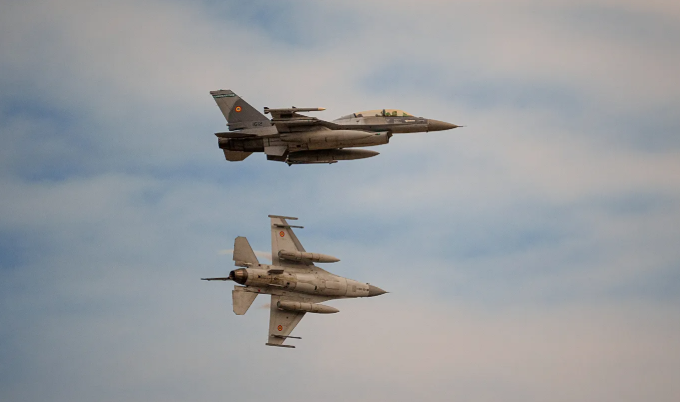
This has given rise to what some analysts describe as a potential “nuclear sharing light” arrangement. Under such a model, countries like Poland could operate dual capable aircraft certified to carry American nuclear weapons during wartime, while the weapons themselves remain stationed elsewhere. The concept would increase NATO’s flexibility and survivability without crossing the politically explosive threshold of permanently deploying nuclear bombs in Eastern Europe. Such an arrangement would also address concerns that existing nuclear infrastructure remains concentrated in a small number of Western European states.
From Moscow’s perspective, however, even limited changes could carry strategic implications. Russia has long opposed any eastward expansion of NATO’s military capabilities. Previous American administrations were cautious about deploying nuclear assets closer to Russia’s borders because of fears that such moves could provoke escalation. That concern has not disappeared. It remains one of the principal reasons why discussions are focused on participation, aircraft certification and operational integration rather than actual nuclear deployments.
Yet the debate unfolding today cannot be understood solely through the lens of the United States. A second and equally important development is reshaping European strategic thinking: the emergence of France as a more active nuclear actor. Under the leadership of Emmanuel Macron, Paris has launched an ambitious effort to coordinate its nuclear deterrent more closely with European partners. Poland has already joined these discussions, while countries including Norway, Germany, the Netherlands, Belgium, Denmark, Sweden and others have shown interest in participating in various forms. France’s initiative allows allied countries to engage in strategic consultations, deterrence exercises and temporary deployments of French nuclear capable aircraft.
The significance of this French initiative extends beyond military planning. For the first time in decades, Europe is openly discussing how much of its security should depend on Washington and how much should be generated within Europe itself. Macron’s vision is not designed to replace NATO. Even NATO Secretary General Mark Rutte has described the French effort as complementary to the alliance’s existing deterrence posture. Nevertheless, the initiative reflects a growing European desire for strategic resilience in a world where geopolitical assumptions are changing rapidly.
Recent developments illustrate how quickly this idea is gaining traction. Norway became the ninth European country to join France’s emerging deterrence framework in late May, while France and Poland have simultaneously expanded defence cooperation through satellite and military technology projects. What began as a French proposal has evolved into a broader conversation about Europe’s future security architecture.
Still, there is a danger in exaggerating what nuclear deterrence can accomplish. Nuclear weapons can prevent large scale aggression by raising the cost of conflict to unacceptable levels. They cannot occupy territory, defend borders, intercept drones or reassure civilians living near the front lines. This is why many defence experts continue to argue that stronger nuclear arrangements cannot replace conventional military presence. A nuclear umbrella without credible conventional forces underneath it risks sending contradictory signals. If an alliance claims it is prepared to risk nuclear escalation for an ally, but appears reluctant to defend that ally through conventional means, questions about credibility inevitably emerge.
That reality explains why NATO’s discussions on nuclear deterrence are taking place alongside broader efforts to strengthen conventional capabilities. NATO’s High Level Group recently met in Brussels to prepare for June discussions on the alliance’s future nuclear posture, reaffirming that deterrence and defence remain inseparable pillars of alliance strategy. The objective is not simply to add more nuclear options but to maintain a coherent and credible deterrence structure across every level of conflict.
Poland and Lithuania’s involvement therefore represents something larger than a technical defence adjustment. It reflects the emergence of a Europe that is increasingly unwilling to rely on assumptions formed during a different geopolitical era. The continent is preparing for a future in which deterrence must be broader, more distributed and more resilient. Whether through American nuclear sharing, French strategic cooperation or expanded European defence integration, the direction is becoming clear.
The era when nuclear deterrence in Europe was managed quietly by a small group of countries may be ending. A new phase is emerging, one in which frontline states want a direct role in shaping the strategic shield that protects them. For NATO, the challenge will be finding the balance between strengthening deterrence and avoiding unnecessary escalation. For Europe, the challenge will be ensuring that greater nuclear coordination enhances security without creating new divisions or risks.
The discussions involving Poland and Lithuania are still in their early stages. But they already reveal an important truth about the security landscape of 2026: Europe is no longer merely adapting to geopolitical change. It is beginning to redesign its own place within it.