

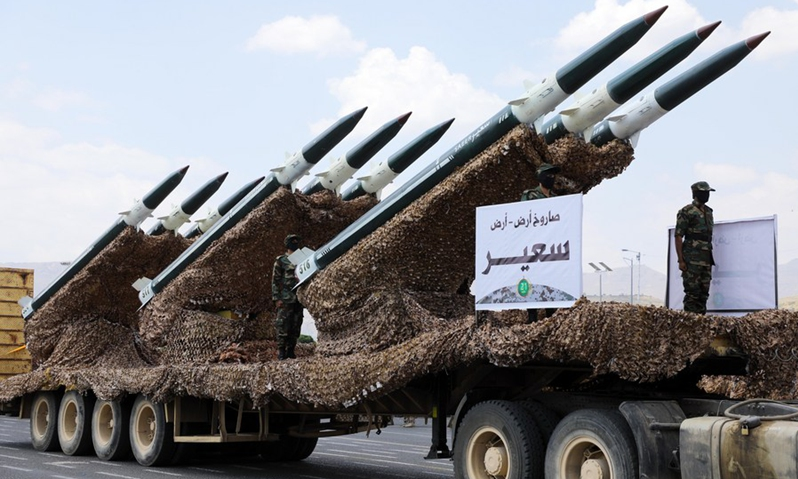
The geopolitical fault lines of West Asia have shifted with alarming speed, shattering the fragile, unannounced peace that had largely held over the skies of Yemen since the spring of 2022. The roar of explosions at Sanaa International Airport on July 13, 2026, did not merely tear up concrete runways; it effectively dismantled years of quiet diplomacy and exposed the soft underbelly of the global economic order. While the internationally recognized Yemeni government in Aden claimed responsibility for the strike, stating it acted to block an unauthorized Iranian flight carrying a senior Houthi delegation back from the funeral of Ayatollah Ali Khamenei, the Ansarullah movement immediately directed its fury at Riyadh and Washington. The subsequent Houthi drone and missile retaliations against Saudi Arabia’s Abha International Airport signaled that the de escalation era is dead. What follows is a highly combustible standoff that carries the explicit threat of a dual maritime blockade capable of choking the world economy.
For years, international analysts treated the conflicts in the Persian Gulf and the Red Sea as distinct, parallel theatres of friction. That comforting compartmentalization has been erased by the explicit warnings emanating from the political bureau of Ansarullah. Yemeni officials have stated that if the military pressure continues to aggregate, the Bab el Mandeb Strait will be sealed in an operational alliance with the already heavily restricted Strait of Hormuz. This is not an empty rhetorical flourish; it represents a coordinated doctrine intended to form a unified operational axis across the most vital energy arteries on earth. If the Strait of Hormuz is the primary strategic lever for regional deterrence, the Bab el Mandeb has transformed into the decisive secondary lever, a reserve capability that can turn a regional naval standoff into an immediate global emergency.
The mathematics of this twin chokepoint threat are staggering and explain why major capitals from Washington to Beijing are viewing the situation with profound anxiety. Under normal operating conditions, the Bab el Mandeb Strait handles approximately 10% to 12% of global seaborne oil trade, alongside roughly 13% of global container traffic. When this gateway is combined with the Strait of Hormuz, the two waterways control the transit of more than a quarter of the world’s daily petroleum supply. Concurrently blocking or severely disrupting both channels would mean removing millions of barrels of crude and refined products from the daily global ledger almost overnight. Energy analysts have long warned that such a scenario would trigger a historic supply shock, likely forcing crude prices to fly past the $200 per barrel mark, a number that would instantly plunge industrialized and developing economies alike into a deep stagflationary crisis.
To understand the leverage currently held by the forces in northern Yemen, one must examine the geography and structural dependence of modern maritime commerce. The Bab el Mandeb, translating appropriately to the Gate of Tears, is a narrow passageway measuring less than 20 miles across at its narrowest point between the Arabian Peninsula and the Horn of Africa. It serves as the indispensable southern entry point to the Red Sea, which in turn feeds the Suez Canal. For decades, the global consumer economy has relied on the absolute predictability of this route to sustain just in time supply chains between the manufacturing hubs of East Asia and the consumer markets of Western Europe. Electronics, automotive parts, industrial machinery, and consumer appliances flow northward through the strait, while agricultural outputs and manufactured goods return southward.
The economic vulnerability is further magnified by the specific nature of the commodities passing through these waters. The strait is not just a highway for consumer electronics; it is a critical pipeline for the survival of global agriculture and food security. A significant percentage of international maritime trade in essential grains, particularly wheat and rice, relies on the Red Sea route to reach destinations across North Africa, the Levant, and Europe. Furthermore, a substantial portion of the global trade in chemical fertilizers passes through the Bab el Mandeb, meaning that a prolonged closure would not only increase the cost of transporting food but would also drive up the baseline production costs of agriculture globally. Similarly, liquefied natural gas shipments, particularly those originating from Qatar and destined for European utilities seeking to stabilize their grids, are deeply dependent on the unrestricted freedom of navigation through this narrow corridor.
When shipping lanes are compromised, the immediate corporate response is to seek alternative routes, but the alternatives come with an exorbitant premium. Rerouting a massive container vessel or a supertanker around the Cape of Good Hope at the southern tip of Africa adds between ten and fourteen days to a standard voyage from Asia to Northern Europe. This detour forces ships to steam an extra three thousand five hundred to four thousand nautical miles, dramatically escalating fuel consumption, increasing greenhouse gas emissions, and driving up overall vessel operations costs by hundreds of thousands of dollars per journey. Beyond the immediate fuel burn, the extended transit times effectively shrink the global fleet capacity, as ships remain tied up on longer journeys, leaving fewer vessels available at ports to load new cargo. The United Nations Conference on Trade and Development has noted that even partial diversions in the past led to a double digit increase in global demand for container ship capacity, causing port congestion to cascade across international maritime hubs.
The financial fallout of this geographic displacement hits regional economies with immediate fiscal trauma, with Egypt standing as a prime example. The Suez Canal is one of Cairo’s primary sources of foreign currency, historically generating upwards of $10 billion annually. Yet, when the security environment in the Bab el Mandeb deteriorates, the canal’s revenues collapse precipitously, sometimes falling by more than half as shipping lines choose the predictability of the longer African route over the hazards of the Red Sea. This puts immense balance of payments pressure on an already fragile Egyptian economy, illustrating how a security crisis in the highlands of Yemen can quickly transform into a fiscal emergency in North Africa. The economic shockwaves ripple onward to major Asian exporters like China, South Korea, and Japan, which find their competitive advantages eroded by surging freight rates and unpredictable delivery schedules.
The current crisis also highlights the limits of traditional military power when confronted with deeply entrenched, asymmetric adversaries. In previous years, the United States and the United Kingdom launched extensive naval campaigns aimed at degrading the military infrastructure of the Ansarullah movement, striking hundreds of land targets, command nodes, and coastal radar installations. Yet, despite the immense disparity in technological sophistication and financial resources, the Western coalition discovered that naval dominance cannot easily neutralize a decentralized, highly mobile adversary operating from rugged mountainous terrain. The Yemeni forces proved capable of maintaining their drone and missile production pipelines, continually adapting their tactics to challenge multi billion dollar naval vessels with relatively inexpensive, domestically assembled armaments. The reality on the ground has forced a quiet acknowledgment in Western strategic circles that military deterrence in the Red Sea cannot be achieved through bombardment alone.
This strategic reality is further complicated by the broader regional alignment known as the Axis of Resistance. The Ansarullah movement does not operate in a vacuum; its strategic decisions are closely attuned to the geopolitical moves of Tehran, Damascus, and Beirut. The warning of a coordinated closure of both Hormuz and the Bab el Mandeb underscores the high degree of operational and political synergy within this network. By demonstrating the capability to threaten the two main western maritime choke points simultaneously, the alliance creates a complex defensive shield. Any direct military action taken by Western powers against one node of the axis risks triggering a asymmetric response from another, effectively multiplying the strategic calculations and potential costs for Washington and its regional partners.
The role of regional powers, particularly Saudi Arabia, remains highly delicate as the kingdom attempts to balance its massive domestic transformation plans with the realities of its immediate neighborhood. Under the guidance of Crown Prince Mohammed bin Salman, Riyadh has spent years attempting to pivot its economy away from an exclusive reliance on oil through ambitious infrastructure and tourism initiatives. These projects require massive foreign direct investment and a regional environment characterized by long term stability. A return to open warfare with Yemen, marked by cross border missile strikes on Saudi infrastructure and international airports, represents a direct threat to these economic ambitions. This explains why the kingdom had previously pursued a cautious de escalation policy with the Houthis, a policy that now stands on the brink of collapse following the latest round of airport strikes.
As the international community grapples with the fallout of the July 13 escalation, the diplomatic options appear increasingly constrained. The United Nations and regional mediators like Oman face the daunting task of constructing a new framework for stability at a time when regional trust has reached a nadir. The previous truce, while imperfect and legally expired, had provided a vital breathing space for the civilian population of Yemen and stabilized the shipping lanes for several years. Reassembling those pieces will require addressing the core sovereignty disputes between the competing factions in Yemen, alongside finding a mechanism to manage the overarching friction between the United States and Iran. Without a comprehensive diplomatic breakthrough, the threat to the maritime corridors will remain an active, destabilizing variable in the global economy.
Ultimately, the crisis in the Bab el Mandeb demonstrates the structural fragility of the modern globalized world. The fact that a localized political and military dispute in the southern corner of the Arabian Peninsula can immediately threaten the stability of international energy markets and disrupt supply chains across multiple continents reveals a profound systemic vulnerability. The world’s economic architecture has been built on the assumption that the great maritime commons will always remain open and secure, maintained by the consensus of major trading nations. That assumption is now being fundamentally challenged by non state and semi state actors who have successfully leveraged geography, asymmetric military technology, and strategic patience to claim a veto power over global commerce. As the standoff continues, the global economy remains hostage to the next tactical decision made in the command centers of Sanaa and Aden, a stark reminder that in the modern era, geography remains destiny.