
The Trump administration’s increasingly aggressive posture toward Cuba is beginning to resemble the strategy it deployed against Venezuela, but the comparison reveals as many differences as similarities. Oil pressure, military signalling, criminal indictments and escalating rhetoric have all reappeared in Washington’s Caribbean playbook. Yet Cuba is not Venezuela, and the political, military and strategic realities surrounding Havana make any attempt at replicating the Venezuelan model far more uncertain and potentially dangerous.
For Donald Trump, the Venezuela operation became a symbol of decisive American power projection. The removal of Nicolás Maduro earlier this year reinforced the belief inside sections of the American security establishment that sustained economic pressure combined with military intimidation and political destabilisation can eventually force regime change. Since then, Trump has openly hinted that Cuba may become the next target of American pressure. His public remarks about Havana “being ready to fall” and suggestions that the United States could have “the honour of taking Cuba” were not casual political rhetoric. They were signals intended both for domestic audiences in Florida and for the Cuban leadership itself.
The strategy unfolding against Cuba follows a familiar sequence. Economic strangulation through oil restrictions comes first. Diplomatic isolation and legal escalation follow. Military visibility in the surrounding region gradually increases. The goal is not necessarily immediate invasion, but the creation of sustained pressure capable of weakening the state internally while signalling overwhelming American dominance externally.
Yet the Cuban case exposes major limitations in this strategy. Venezuela’s political structure allowed Washington to exploit internal fractures after Maduro’s removal. Power transitioned through existing figures already positioned within the state apparatus. In Cuba, there is no equivalent scenario waiting in the background. The Cuban political system remains far more centralised, ideologically consolidated and historically conditioned by decades of confrontation with the United States. Removing one individual would not automatically produce a leadership willing to align itself with Washington’s strategic preferences.
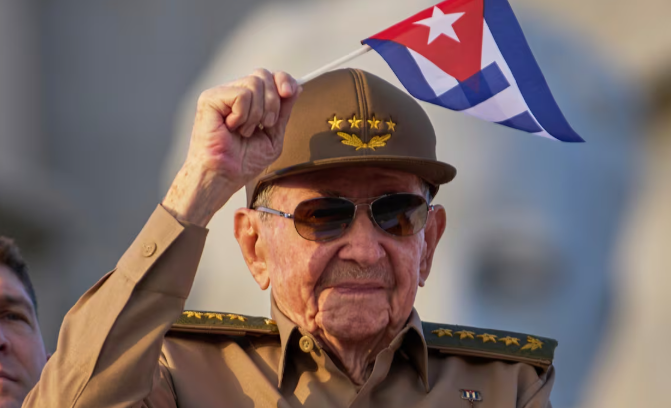
This is why the indictment against Raúl Castro, despite its symbolic significance, carries different strategic weight from the earlier charges levelled against Maduro. Maduro was the sitting president and the operational centre of Venezuelan power when American legal charges were weaponised against him. Raúl Castro, despite remaining influential within Cuba’s revolutionary establishment, no longer manages the daily machinery of government. Charging a ninety-four-year-old former leader may increase pressure psychologically and politically, but it does not fundamentally alter the internal balance of power in Havana.
The economic dimension of the pressure campaign is equally complex. In Venezuela, sanctions and oil restrictions were designed primarily to deprive the government of export revenue. In Cuba, the objective is almost the reverse. The United States is attempting to restrict imports of fuel into an already energy-starved economy. This distinction matters because Cuba’s economic vulnerabilities are directly linked to domestic survival conditions. Fuel shortages quickly translate into electricity blackouts, transportation paralysis and public frustration. Washington hopes this economic exhaustion will weaken the state’s resilience over time.
But there are risks to such a strategy. Cuba’s proximity to the United States creates a migration variable absent in many other geopolitical confrontations. Any serious destabilisation of the island risks triggering another large-scale refugee movement toward Florida similar to the crises of the 1990s. This places Washington in a strategic contradiction. Trump’s political identity is heavily tied to immigration control and border security. A collapsing Cuban economy could generate precisely the kind of migration wave his administration seeks to prevent.
Military signalling also reveals the difference between the two theatres. Before Maduro’s capture, the United States assembled one of the largest military concentrations seen in Latin America in decades. Aircraft carriers, amphibious assault ships, Marines, surveillance aircraft and regional operations created a clear atmosphere of imminent intervention. The Caribbean presence surrounding Cuba today is considerably smaller and more ambiguous. Although the arrival of the USS Nimitz and accompanying warships was presented as a demonstration of strength, the carrier itself is nearing decommissioning and participating primarily in broader maritime exercises rather than a focused intervention posture.
Even so, the symbolism matters. Washington understands that visible military pressure amplifies psychological pressure inside targeted states. The combination of naval movements, sanctions, criminal charges and public threats creates an environment designed to communicate inevitability. The message is simple: resistance will only deepen isolation.
Yet Cuba’s geopolitical position differs fundamentally from Venezuela’s. Havana has survived decades of American sanctions, covert operations, diplomatic isolation and economic warfare. It has built an identity around resistance itself. More importantly, the international environment surrounding Cuba has changed. China and Russia now maintain stronger global positions than during earlier decades of American unipolar dominance. While neither power is likely to confront Washington militarily over Cuba, both have strategic interests in preventing another successful American-led regime change operation in the Western Hemisphere.
There is also a broader international concern about the precedent such interventions create. The Venezuela operation already raised questions regarding sovereignty, extraterritorial law enforcement and the expanding use of economic coercion backed by military intimidation. Applying the same model repeatedly risks normalising interventionist doctrines at a time when global trust in international legal frameworks is already eroding.
The deeper issue is that Washington increasingly appears to view geopolitical crises through a template-based approach. Success in one theatre encourages attempts to replicate similar tactics elsewhere, whether in Venezuela, Iran or Cuba. But geopolitical environments are not interchangeable. Historical memory, institutional resilience, geography, external partnerships and domestic political structures differ dramatically from one state to another.
Cuba therefore represents a far more complicated challenge than many in Washington appear willing to admit. Pressure alone may weaken the island economically, but it may not produce the political outcome American strategists expect. Instead, excessive escalation could destabilise the wider Caribbean, trigger migration shocks, deepen anti-American sentiment across Latin America and push Havana further toward alternative global partnerships.
The unfolding confrontation is therefore not simply about Cuba itself. It reflects a larger debate about whether the United States still believes regime change remains a viable instrument of twenty-first century power projection, and whether the world is once again entering an era where economic blockades, military intimidation and coercive diplomacy become normal tools of international order.