

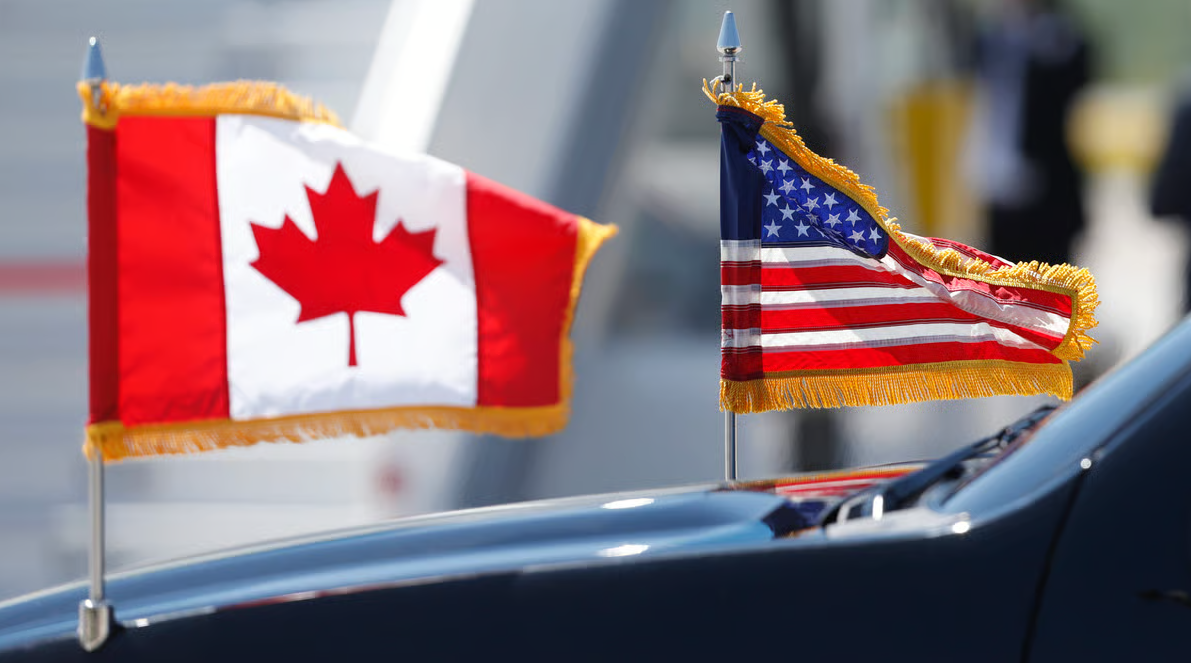
For more than eight decades, the Permanent Joint Board on Defense stood as one of the quiet foundations of North American strategic stability. Created during the Second World War by Franklin Roosevelt and William Lyon Mackenzie King, the body survived the Cold War, nuclear tensions, global terrorism, and multiple geopolitical crises without becoming a major public controversy. It functioned less as a headline-generating institution and more as a symbol of strategic trust between the United States and Canada. That is precisely why Washington’s decision to suspend participation in the board is far more significant than it initially appears.
The Trump administration’s move is not simply about defence budgeting. It reflects a much deeper transformation underway inside the Western alliance system itself. The old assumption that the United States would indefinitely subsidise the security architecture of its allies without demanding strategic reciprocity is collapsing in real time.
US Undersecretary of Defense Elbridge Colby framed the decision as a reassessment of whether Canada is meeting its defence responsibilities. His message was blunt: Washington no longer believes rhetoric alone is enough. The administration argues that allies benefiting from American military protection must begin carrying a far greater share of the burden, particularly at a time when the United States is simultaneously confronting China’s rise, Russia’s prolonged confrontation with NATO, instability across West Asia, and growing fiscal pressures at home.
From the Trump administration’s perspective, this is about strategic realism. From Ottawa’s perspective, however, the decision looks increasingly like pressure politics wrapped in defence language.
The symbolism matters enormously because the Permanent Joint Board on Defense was never just another bureaucratic committee. It represented the institutional logic behind continental defence cooperation. It helped shape military coordination across North America decades before NORAD became central to regional security. Even during periods of disagreement over Iraq, trade disputes or Arctic policy, neither side seriously questioned the foundation of the relationship itself.
That has now changed.
The deterioration in US-Canada relations since Trump’s return to office has moved beyond tariffs and political rhetoric into the strategic sphere. Trump’s repeated references to Canada becoming the “51st state” may have initially been dismissed by some as political theatre, but the cumulative effect has been deeply corrosive. In diplomacy, perception matters as much as policy. Public humiliation between allies gradually weakens the psychological trust required for long-term strategic cooperation.
Canadian Prime Minister Mark Carney has responded by accelerating efforts to reduce Canada’s dependence on the United States economically, militarily and diplomatically. His government’s support for increasing NATO defence spending toward 5 percent of GDP was partly intended to answer American criticism directly. Ottawa has also expanded discussions around defence industrial autonomy, Arctic security infrastructure, cyber resilience and deeper coordination with European middle powers.
Yet the dispute exposes an uncomfortable truth both countries have tried to avoid for years: the North American alliance was built during an era when American supremacy was so overwhelming that strategic imbalances inside the partnership did not threaten the relationship itself. That era is ending.
Washington now increasingly evaluates alliances through a transactional lens shaped by great-power competition. Every alliance commitment is being measured against the broader strategic contest with China. From the White House perspective, allies unable or unwilling to rapidly expand defence capacity are becoming liabilities in an era of mounting geopolitical confrontation.
This is part of a wider pattern visible across NATO and the Indo-Pacific. Trump has repeatedly pressured European allies over military spending, criticised Germany’s defence posture, questioned alliance commitments and warned that American patience with unequal burden-sharing is running out. The suspension of the defence board with Canada signals that even America’s closest geographical partner is no longer exempt from this recalibration.
At the same time, the administration’s approach carries serious risks for Washington itself.
The United States benefits enormously from strategic stability with Canada. The two countries share the world’s longest undefended border, deeply integrated defence industries, intelligence networks, energy infrastructure, supply chains and Arctic security coordination. Alienating Ottawa during a period of intensifying global instability may satisfy domestic political narratives about burden-sharing, but it also weakens one of America’s most reliable strategic relationships.
This is particularly dangerous as the Arctic emerges as a major geopolitical theatre. Russia continues expanding Arctic military infrastructure while China increasingly describes itself as a “near-Arctic state” seeking influence over northern trade routes, rare earth resources and future maritime corridors created by melting ice. In that environment, US-Canada defence fragmentation benefits neither side.
The economic dimension is equally significant. The United States, Canada and Mexico are approaching negotiations over an updated version of the USMCA trade agreement later this year. Trust already weakened by tariffs, sovereignty rhetoric and economic disputes now enters those negotiations alongside a visible security rupture. That combination creates uncertainty not only for governments but for industries dependent on North American integration.
The irony is that both sides are reacting to the same geopolitical reality in completely different ways.
Washington sees a world becoming too dangerous for unequal alliances. Ottawa sees a world becoming too unstable to remain excessively dependent on a single great power partner. Both conclusions emerge from the same global disorder, yet they pull the alliance in opposite directions.
There is also a broader historical lesson unfolding beneath this dispute. Great alliances rarely collapse overnight. They weaken gradually through accumulated mistrust, political resentment and diverging strategic priorities. The Atlantic alliance survived the twentieth century largely because its members believed they ultimately shared the same civilisational direction. Today, that certainty appears increasingly fractured.
Canada now faces a strategic dilemma. Geography ensures it can never truly detach itself from the United States. The American market, military umbrella and continental infrastructure remain deeply embedded into Canada’s national reality. Yet politically and psychologically, Ottawa increasingly wants room for strategic diversification.
The United States faces its own dilemma. Washington wants allies to become stronger and more self-reliant, but aggressive pressure tactics risk pushing partners toward strategic distancing instead of deeper cooperation.
This is the paradox at the centre of Trump’s foreign policy doctrine. America demands stronger allies while simultaneously creating political conditions that weaken allied trust.
The suspension of the Permanent Joint Board on Defense may eventually prove temporary. Cooler calculations on both sides could restore cooperation. But the deeper damage has already been done. A relationship once treated as virtually unbreakable is now openly being measured through the language of leverage, obligations and transactional utility.
That shift matters far beyond Canada.
It signals the arrival of a harsher geopolitical era in which even the closest alliances are no longer protected from the pressures of great-power competition, economic nationalism and strategic recalculation. North America’s security architecture was built on the assumption that trust between Washington and Ottawa was permanent. For the first time in generations, that assumption no longer appears guaranteed.