

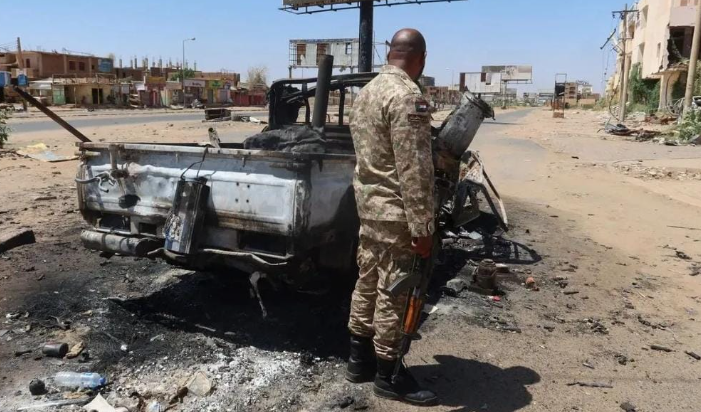
Reports from El Fasher suggest that what is unfolding under the control of the Rapid Support Forces has moved beyond the chaos of siege warfare into a pattern of deliberate and sustained cruelty against civilians.
Since the RSF seized the city on 26 October 2025 after an 18 month siege, testimonies gathered by Sudanese doctors and rights monitors describe a system where detention is not only about control, but punishment. Civilians, including women and children, are being held in large numbers, often without any formal charge. Data collected between January and April 2026 indicates that around 1,470 civilians are currently detained, among them 426 children and 370 women. Many are confined in improvised sites such as Shala Prison, hospital buildings, transport depots, and even sealed shipping containers where ventilation is minimal and movement is restricted.
What emerges from survivor accounts is a pattern of violence that is both physical and targeted. Detainees describe repeated beatings during interrogation, often tied to accusations of links with the Sudanese Armed Forces. These accusations are frequently based on ethnicity rather than evidence. In February, at least 16 civilians were executed at El Fasher University, with survivors stating they were selected on ethnic grounds. The executions were carried out publicly, sending a clear message to others in detention.
Sexual violence is also repeatedly mentioned in testimonies, particularly involving female detainees. Women report harassment, assault, and threats of rape during questioning and confinement. In some cases, sexual violence is used as a form of coercion or punishment. The presence of hundreds of detained women, held in overcrowded and poorly monitored facilities, has created conditions where abuse can occur with little restraint. For many survivors, speaking about these experiences remains difficult, which suggests that reported cases may only represent a fraction of what is happening.
The cruelty is not limited to direct violence. Neglect itself has become a weapon. Many detainees arrive with injuries from shelling during the siege, but receive no treatment. Wounds are left to worsen. Infections spread. Food is scarce, and access to clean water is extremely limited. Malnutrition is widespread, especially among children.
Inside these detention spaces, even death does not bring immediate relief. Bodies are often left where they fall, sometimes for hours or longer, before other detainees are forced to remove and bury them. This has contributed to the rapid spread of disease, including a cholera outbreak that began in February. Doctors estimate that between five and ten people are dying each week from cholera alone, with more than 300 deaths recorded over two months. In overcrowded and unsanitary conditions, the disease moves quickly, turning confinement into a deadly trap.
The collapse of the medical system in El Fasher has intensified the crisis. Hospitals are no longer functioning, supplies are exhausted, and healthcare workers are either missing or detained. At least 22 doctors, including four women, have reportedly been taken into custody. With no medical oversight, no treatment, and no sanitation, detention centres have become places where preventable conditions become fatal.
What is taking shape is a system where violence, humiliation, and deprivation are intertwined. Physical abuse, sexual violence, ethnic targeting, and the deliberate withholding of basic needs are not isolated acts. Together, they form an environment designed to break those inside it.
This is unfolding within the wider war in Sudan, but the nature of the abuse in El Fasher points to something more specific. It reflects a shift from open conflict to controlled brutality, where civilians are held, identified, and subjected to violence away from the battlefield.
Access to the city remains extremely limited, making independent verification difficult. Yet the consistency of testimonies from survivors, medical networks, and local observers points to a pattern that is hard to dismiss. Calls for humanitarian access and protection of detainees have so far produced little change on the ground.
What is happening in El Fasher is not just about detention. It is about how power is being exercised over those who have already lost everything. When violence becomes routine, when ethnicity determines who lives or dies, and when even illness is allowed to spread unchecked, the line between war and atrocity is no longer blurred. It is clearly crossed..