

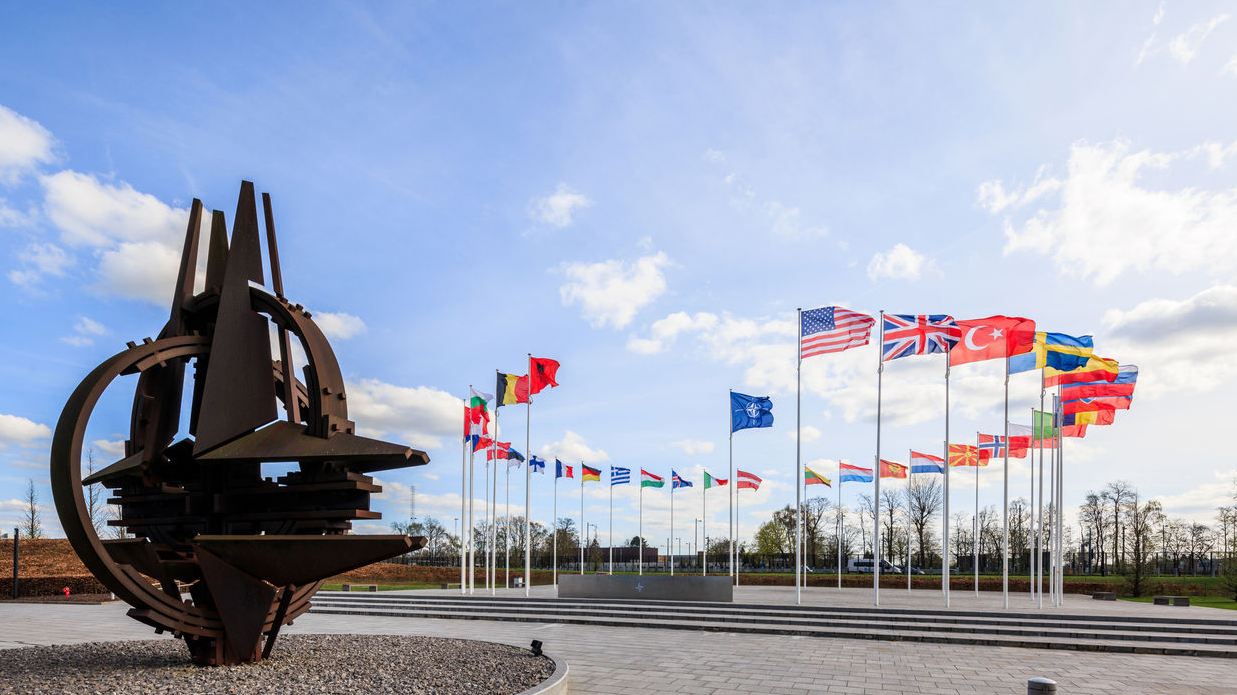
Divisions inside the North Atlantic Treaty Organization have reached a level that many now consider unprecedented. What was once a tightly held military bloc is now facing a political crisis that goes far beyond funding disputes or routine disagreements over burden sharing. At the centre of this rupture is Donald Trump and his increasingly confrontational approach toward European allies after their refusal to support a US-led war on Iran.
The immediate trigger is clear. Washington expected NATO backing for its military action. Several European members refused to participate or provide operational support. The response from the United States was not quiet diplomacy but visible frustration at the highest levels. According to internal defence discussions, options were even explored that included punitive measures against certain allies, including Spain and the United Kingdom. The idea of penalising NATO members from within the alliance has sent shockwaves through diplomatic and defence establishments across Europe.
Spain’s position has been particularly sensitive. Madrid refused to allow its territory to be used for launching attacks on Iran, citing legal and international constraints. The United Kingdom, while maintaining cooperation in some areas, declined involvement in key operational aspects linked to the Strait of Hormuz. In response, Washington has reportedly examined broader measures, including revisiting long standing political sensitivities such as support related to the Falkland Islands dispute, a move that immediately revived historical tensions with Argentina and concern in London.
Across Europe, reactions have been cautious but increasingly firm. Major NATO members including France, Germany and Italy have resisted direct military involvement in the Iran operation, stressing the importance of international law, diplomatic restraint and coordinated decision making within the alliance framework. Their position reflects a broader European argument that NATO cannot be reduced to automatic participation in externally initiated conflicts without consensus among members.
Canada has also aligned itself with this cautious approach. While maintaining its commitment to NATO obligations, Ottawa has not supported escalation in the Iran conflict and has echoed concerns over unilateral military action without broad alliance approval. Canadian officials have emphasised the need for de escalation and multilateral coordination, reinforcing the view that alliance solidarity does not require automatic endorsement of every US led military operation.
The tension is not limited to individual governments. Across the alliance, the dispute has exposed deeper disagreements about strategy and responsibility. European members and Canada argue that NATO action must remain anchored in collective agreement and international legitimacy, rather than political pressure from any single member state. For Washington, particularly under Trump’s leadership, the expectation is more direct: allies should contribute decisively when core US security interests are engaged.
At the same time, political friction has intensified on both sides of the Atlantic. Several European governments and Canada have reacted strongly to Washington’s tone, warning that threats of punishment and unilateral decision making risk undermining the foundations of collective defence. Rather than aligning with pressure from the United States, these members are asserting more independent positions, openly questioning the direction of American leadership and its approach to military escalation. This widening resistance is turning what began as a policy disagreement into a broader political confrontation inside the alliance.
Underlying all of this is a deeper question about NATO’s purpose. Originally formed during the Cold War to counter Soviet expansion, the alliance has struggled for decades to redefine itself. While it found renewed relevance during crises such as Ukraine, the current dispute over Iran has exposed how fragmented its strategic outlook has become. Member states are no longer aligned on when and how military force should be used, or even on what constitutes a shared threat.
Budgetary debates continue in the background, but they no longer define the crisis. European members and Canada have increased defence spending in recent years, yet Washington continues to argue that contributions remain uneven and insufficient. For many allied governments, however, defence spending decisions remain tied to domestic priorities and political constraints, making rapid alignment with US expectations difficult.
Beneath the immediate arguments lies a more fundamental shift. Trust, once the foundation of NATO cohesion, is now being tested. The United States is increasingly questioning the value of automatic alliance commitments, while European governments and Canada are reassessing how dependent they should remain on American military leadership.
The result is an alliance that still exists in formal terms but is under growing strain in practice. Coordination remains, but consensus is weakening. What was once a predictable structure of collective defence is now marked by hesitation, disagreement and strategic divergence.
As tensions escalate, the central issue facing NATO is no longer just external security threats. It is whether the alliance can maintain internal unity at a time when its most powerful member and several of its closest allies are no longer aligned on the basic terms of engagement.