

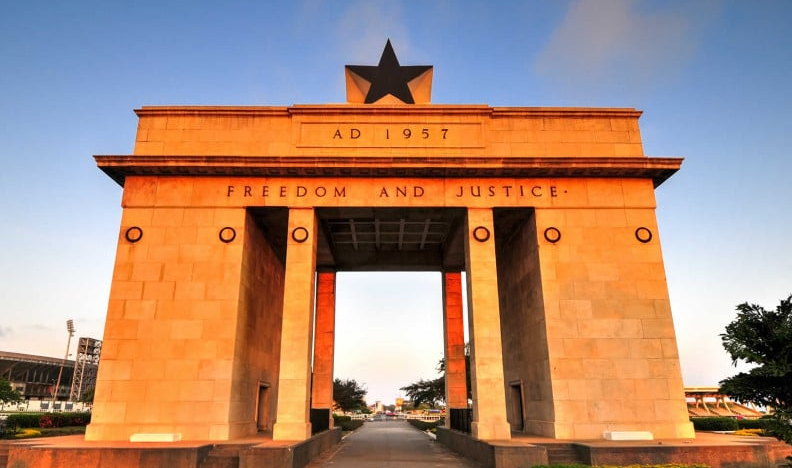
On March 6, 2026, Ghana proudly celebrates Independence Day, the country’s most important national holiday, marking the 69th anniversary of its independence from British colonial rule on March 6, 1957.
At midnight on that historic day, the Union Jack was lowered at the Old Polo Ground in Accra, and the new red-yellow-green flag with a black star was raised for the first time. Dr. Kwame Nkrumah, Ghana’s first Prime Minister (and later first President), famously declared: “At long last, the battle has ended! And thus Ghana, your beloved country is free forever!”
Ghana became the first sub-Saharan African country to gain independence from colonial rule. This event inspired independence movements across the continent and made Ghana a beacon of Pan-Africanism and anti-colonial struggle. Dr. Nkrumah, a leading figure in the fight for independence and a champion of African unity, remains the central hero of the day.
Significance in 2026:
- In 2026, Ghana marks 69 years of independence — a milestone that reflects on the nation’s journey from colonial Gold Coast to a stable, democratic, and culturally vibrant country.
- The day reaffirms core Ghanaian values: freedom, unity, self-reliance, Pan-African solidarity, and pride in being the first Black African nation to break the chains of colonialism.
- It also serves as a moment to reflect on both achievements and ongoing challenges — economic development, youth empowerment, good governance, and national unity.
Celebrations and Observances:
- National Parade in Accra: The grandest event is the military and civilian parade at the Independence Square (formerly Black Star Square) in Accra. The President, Vice President, government officials, military, police, and schoolchildren participate. The national flag is raised, the national anthem (“God Bless Our Homeland Ghana”) is sung, and a 21-gun salute is fired.
- Presidential address: The President delivers the annual Independence Day message, usually focusing on national achievements, challenges, and the vision for Ghana’s future.
- Cultural performances: Traditional dances (Adowa, Kpanlogo, Agbadza), drumming, and cultural displays from all 16 regions of Ghana showcase the country’s rich ethnic diversity. Schoolchildren perform drills and patriotic songs.
- Nationwide events: Similar parades and celebrations take place in regional capitals (Kumasi, Tamale, Takoradi, Ho, Sunyani, Cape Coast, etc.). Many towns and villages hold local parades, church services, and community gatherings.
- Public holiday activities: As a public holiday, government offices, banks, and schools close. Families enjoy special meals (fufu with soup, jollof rice, waakye, kelewele), visit historical sites (like the Kwame Nkrumah Mausoleum and Museum), or watch the live broadcast of the parade.
- Symbolic acts: The Ghanaian flag (red, yellow, green with black star) flies everywhere; many people wear national colors or traditional kente cloth; the day ends with fireworks in major cities.
Independence Day is Ghana’s biggest and most joyful national celebration — a day filled with pride, music, dance, and gratitude for the freedom won in 1957.
A common greeting on this day: “Happy Independence Day, Ghana! Long live Ghana!”
On March 6, Ghana raises its flag high, remembers the courage of the independence pioneers, and celebrates the birth of the first sub-Saharan African nation to gain freedom — the “Black Star of Africa.” 🇬🇭