

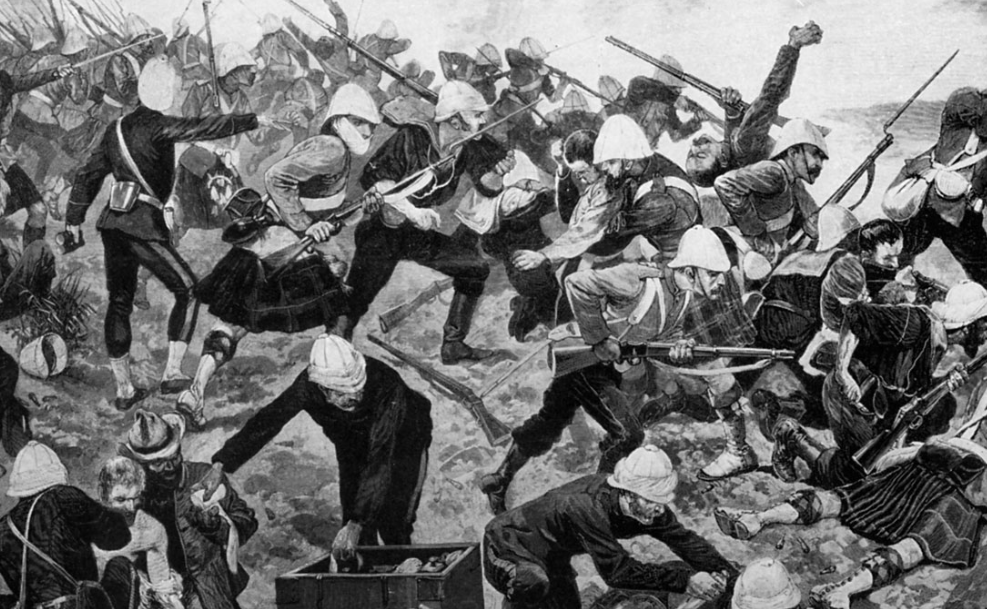
On February 27, 2026, a small number of Afrikaner cultural and heritage groups in South Africa privately or semi-publicly commemorate Majuba Day (Majubadag), marking the 145th anniversary of the decisive Boer victory at the Battle of Majuba Hill on February 27, 1881.
This battle was the final and most famous engagement of the First Anglo-Boer War (1880–1881). On Majuba Hill (near Volksrust, on the modern KwaZulu-Natal/Mpumalanga border), a small force of approximately 450 Boer commandos under Commandant-General Piet Joubert decisively defeated a larger British contingent led by Major-General George Pomeroy Colley. The Boers stormed the hill at dawn, killed or wounded over 200 British soldiers (including Gen. Colley himself), and forced a humiliating British retreat. Total Boer casualties were only 1 killed and 5 wounded.
The victory at Majuba led directly to the Pretoria Convention (August 1881), which restored self-government to the South African Republic (Transvaal) under British suzerainty and is seen by many Afrikaners as the moment the Boers proved they could stand up to a major imperial power.
Significance in 2026:
- For those who still commemorate it, Majuba Day symbolizes Boer courage, tactical brilliance, faith, and the spirit of independence that later defined the Second Boer War (1899–1902) and Afrikaner nationalism.
- The day is not an official public holiday in post-apartheid South Africa and is observed only by a minority of Afrikaner cultural organizations, historical societies, and some conservative or traditionalist groups (such as certain Voortrekker/Boer heritage associations, cultural clubs, or private family gatherings).
- It is controversial and rarely mentioned in mainstream media or government events, as it is associated with Afrikaner nationalist history and the old South African Republic — a narrative that sits uneasily with the country’s post-1994 emphasis on reconciliation and inclusivity.
Observances (where they still occur):
- Private or small-group commemorations: Some Afrikaner families, cultural societies, or historical reenactment groups hold quiet gatherings — often on private farms or at historical sites near Volksrust, Laing’s Nek, or Majuba Hill itself. They may read accounts of the battle, sing old Boer war songs (such as “Majuba” or “Transvaal Volkslied”), pray, and share stories passed down through generations.
- Ceremonial acts: A few groups raise the old Vierkleur (Transvaal flag: red, white, blue with vertical green stripe) or the old Orange Free State flag; wreaths or crosses are sometimes placed at Majuba Hill or related monuments.
- Historical reflection: Talks or slideshows recount the battle, the role of Boer leaders (Piet Joubert, Nicolaas Smit), and the significance of Majuba as a symbol of resistance to imperial overreach.
- Low-key nature: There are no large public parades, official ceremonies, or media broadcasts. The day passes almost unnoticed in most of South Africa, with no closures of schools, businesses, or government offices.
Majuba Day is not a public holiday and is observed only by a small segment of the Afrikaner community — a quiet, private act of historical memory rather than a widespread celebration.
A phrase sometimes recalled on this day (from Boer war lore): “Majuba het ons vryheid gegee.” (“Majuba gave us our freedom.”)
On February 27, a handful of Afrikaners in South Africa pause to remember the Boer commandos who scaled Majuba Hill and won a victory that echoed far beyond the battlefield — a day of quiet pride in a chapter of history that fewer and fewer openly celebrate in modern South Africa. 🇿🇦