

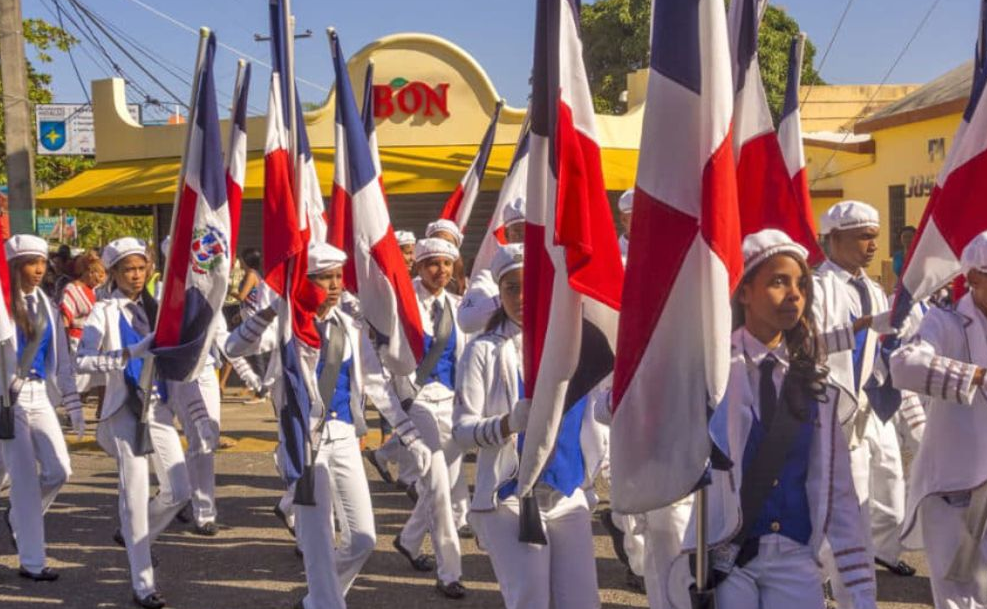
On February 27, 2026, the Dominican Republic celebrates Independence Day (Día de la Independencia), the country’s most important national holiday, marking the 182nd anniversary of its declaration of independence from Haiti on February 27, 1844.
After more than two decades of Haitian occupation (1822–1844), a group of Dominican patriots known as La Trinitaria — founded by Juan Pablo Duarte, Francisco del Rosario Sánchez, and Matías Ramón Mella — launched a secret revolutionary movement to restore Dominican sovereignty. On the night of February 27, 1844, they seized the Puerta del Conde (now Independence Gate) in Santo Domingo, raised the Dominican flag for the first time, and proclaimed the birth of the Dominican Republic as an independent nation. Mella fired the famous shot (“el trabucazo”) to signal the start of the uprising, and the new blue-white-red flag (with the coat of arms) was unfurled.
This marked the beginning of the Dominican War of Independence (1844–1856), a series of battles that ultimately secured Dominican freedom and established the republic as a sovereign state.
Significance in 2026:
- In 2026, the Dominican Republic celebrates 182 years of independence — a powerful symbol of national identity, resilience, and the enduring spirit of the founding fathers (Los Trinitarios).
- The day reaffirms core Dominican values: liberty, sovereignty, unity, and pride in a multicultural heritage (Taíno, African, Spanish, and later influences).
- It is a moment to reflect on the country’s history of struggle — from colonial rule to Haitian occupation, multiple restorations of independence, and modern challenges — while celebrating progress in democracy, tourism, and national development.
Celebrations and Observances:
- National ceremony in Santo Domingo: The main event takes place at the Puerta del Conde (now part of Parque Independencia / Independence Park). The President, Vice President, military leaders, and dignitaries raise the Dominican flag, deliver speeches, and participate in a military parade with the Dominican Army, Navy, Air Force, and National Police. A 21-gun salute is fired, and the national anthem (“Quisqueyanos Valientes”) is sung.
- Military parade: A grand parade along George Washington Avenue or other major streets features marching troops, tanks, artillery, aircraft fly-pasts, and cadets from military academies. It is one of the largest military displays of the year.
- Cultural festivities: Street parties, concerts, folk dances (merengue, bachata, gagá), and cultural performances showcase Dominican heritage. Many cities (Santiago, La Romana, Puerto Plata) hold their own parades, fireworks, and festivals.
- Public holiday activities: As a public holiday, government offices, banks, and schools close. Families enjoy barbecues, beach trips, or gatherings with traditional foods (sancocho, mangú, mofongo, tostones). Fireworks and street celebrations light up the night.
- Educational programs: Schools hold assemblies with flag-raising, recitations of the Declaration of Independence, and lessons on Duarte, Sánchez, and Mella (Los Padres de la Patria). Students often perform patriotic songs and skits.
- Symbolic acts: The Dominican flag (blue-red-white with coat of arms) flies everywhere; many citizens wear national colors or traditional attire; the day ends with a sense of unity and pride.
Independence Day is the Dominican Republic’s most patriotic and unifying holiday — a day of parades, music, fireworks, and deep gratitude for the freedom won in 1844.
A common greeting on this day: “¡Feliz Día de la Independencia, República Dominicana!” (“Happy Independence Day, Dominican Republic!”)
On February 27, the Dominican Republic raises its flag high, marches in pride, and celebrates the courage of the Trinitarios who declared: “¡Viva la República Dominicana libre y soberana!” — long live the free and sovereign Dominican Republic. 🇩🇴