

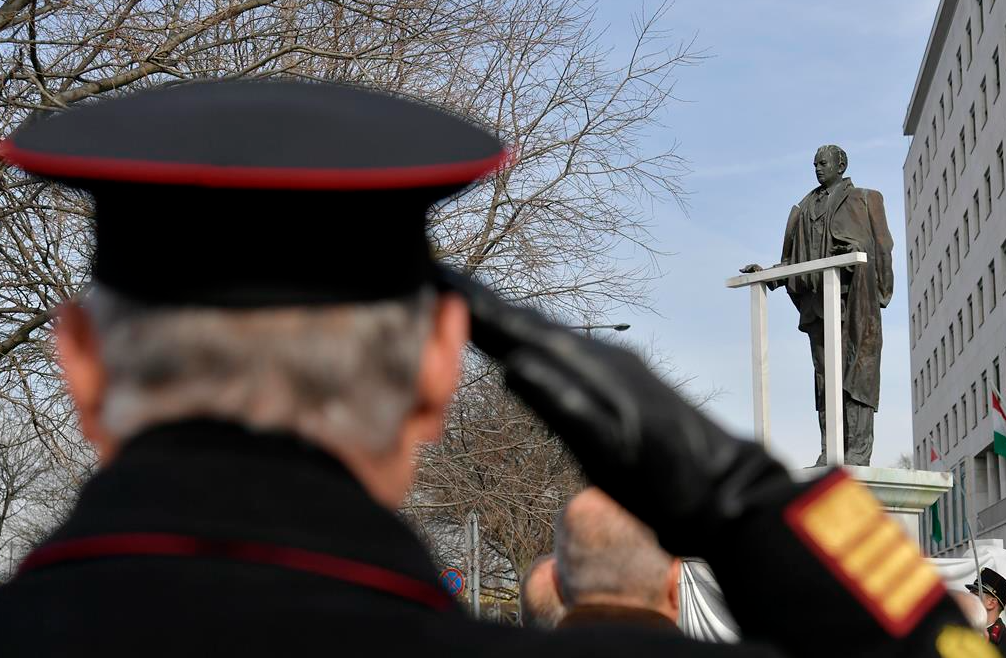
On February 25, 2026, Hungary observes Memorial Day for the Victims of Communist Dictatorships (A kommunista diktatúrák áldozatainak emléknapja), a national day of remembrance dedicated to honoring the hundreds of thousands of Hungarians who suffered, were imprisoned, tortured, executed, or deported under communist rule from 1945 to 1989.
The date was chosen to mark February 25, 1947, when the democratically elected Smallholders Party leader Béla Kovács — then Secretary-General of the party and a symbol of post-war democratic hopes — was illegally arrested by Soviet military authorities. His abduction and deportation to the Soviet Union without trial marked the decisive step in the Soviet-orchestrated destruction of multi-party democracy in Hungary and the full imposition of communist dictatorship.
The Memorial Day was established by Act XXV of 2000 and is one of Hungary’s official remembrance days, alongside March 15 (1848 Revolution), October 23 (1956 Revolution and 1989 Republic Proclamation), and others. It is a day of solemn reflection on the crimes of the communist regime: show trials, forced collectivization, labor camps, mass surveillance, suppression of religion, and the destruction of civil society.
Significance in 2026:
- In 2026, Hungary marks the 79th anniversary of Béla Kovács’ arrest — a poignant symbol of the violent suppression of democracy and the beginning of decades of totalitarian rule.
- The day honors all victims: political prisoners (tens of thousands sent to Soviet gulags or Hungarian labor camps like Recsk), executed leaders (László Rajk, Imre Nagy, and others), deported families, and ordinary citizens who lost their freedom, property, faith, or lives.
- It reaffirms Hungary’s rejection of totalitarianism, commitment to democracy, and remembrance of the price paid for freedom — especially resonant amid contemporary debates on historical memory and national identity.
Observances and Commemorations:
- National ceremony in Budapest: The main event is held at the House of Terror Museum (the former headquarters of the Arrow Cross and ÁVH secret police) or the Monument to the Victims of Communism near the Parliament. The President, Prime Minister, Speaker of Parliament, and opposition leaders lay wreaths, light candles, and deliver speeches. A minute of silence is observed at 10:00 am or during the ceremony.
- Regional tributes: Similar wreath-laying ceremonies take place at local memorials, churches, and former prison sites (Recsk labor camp, Vác prison, Kistarcsa internment camp). Many municipalities hold remembrance events with schoolchildren and veterans.
- Religious services: Catholic, Protestant, and other churches hold memorial Masses or services; candles are lit for the victims; the Hungarian Catholic Church often commemorates the martyrs of the communist era.
- Cultural and educational programs: Schools organize lessons on the communist period, show trials, the 1956 Revolution, and personal testimonies. Museums (House of Terror, National Museum, 1956 Institute) offer free or discounted entry and special exhibitions.
- Public reflection: The Hungarian flag flies at half-mast in the morning on public buildings; many citizens light candles at home or visit memorials; social media shares black-and-white photos, victim stories, and messages of remembrance.
- Symbolic acts: The day is observed with dignity and mourning rather than festivity; many wear black ribbons or attend silent vigils.
Memorial Day for the Victims of Communist Dictatorships is not a restricted public holiday with mandatory closures (schools and offices generally remain open), but it is one of Hungary’s most solemn national remembrance days — a time for quiet reflection, gratitude, and resolve never to forget.
A phrase often recalled on this day: “Soha többé diktatúrát!” (“Never again dictatorship!”)
On February 25, Hungary remembers the victims of communist terror — those who were silenced, imprisoned, or killed for their faith, freedom, or beliefs — and reaffirms its commitment to democracy, human dignity, and the truth of history. 🇭🇺