

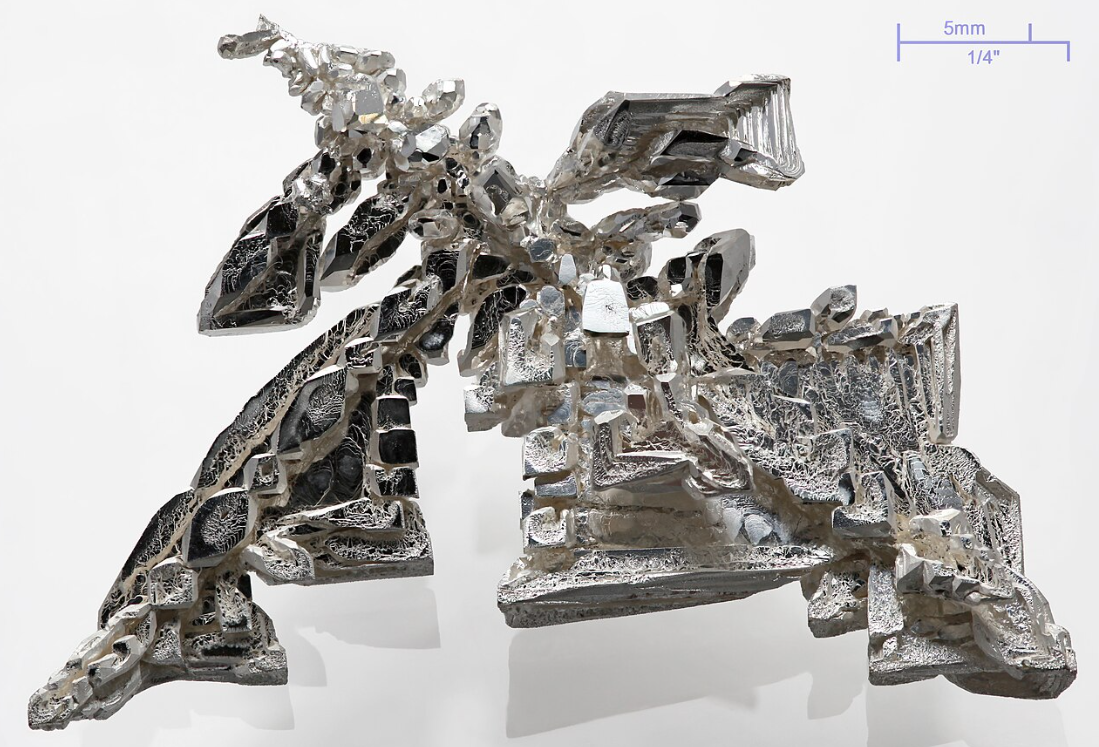
Silver (Ag, atomic number 47), the lustrous white metal long associated with the Moon (its Latin name argentum and alchemical symbol ♆ reflect lunar ties), is a highly reflective, ductile, malleable transition metal in group 11 (below copper and above gold). Known and worked since at least 4000 BCE (earlier than gold in some regions), silver has served as currency, jewelry, mirror backing, photography, electronics, and medicine. Though less “precious” than gold in modern investment terms, silver’s unmatched electrical and thermal conductivity, reflectivity, and antimicrobial properties keep it indispensable across industries.
1. Hidden Features: Supreme Conductivity, Antimicrobial Power, and Relativistic Shine
Silver’s electron configuration [Kr] 4d¹⁰ 5s¹ gives it classic coinage-metal traits with exceptional performance.
- Highest Electrical & Thermal Conductivity Silver has the highest electrical conductivity of any element (~63 × 10⁶ S/m) and the highest thermal conductivity (~429 W/m·K)—surpassing copper by ~5–6%. This makes it irreplaceable in high-performance applications where even tiny resistance losses matter.
- Highest Optical Reflectivity Polished silver reflects ~95–98% of visible light (best across the entire visible spectrum) and excellent in UV and near-IR—making it the material of choice for precision mirrors, telescope coatings, and solar reflectors before gold took over in space applications for better IR performance.
- Natural Antimicrobial Action Silver ions (Ag⁺) disrupt bacterial cell walls, enzymes, and DNA replication—giving silver intrinsic antibacterial, antifungal, and antiviral properties known since antiquity (silver vessels preserved water). Modern uses include silver nanoparticles in wound dressings, medical devices, textiles, and coatings.
- Photography Legacy & Halide Chemistry Silver halides (AgBr, AgCl, AgI) darken on exposure to light due to photoreduction to metallic silver—powering analog photography for over 150 years. Though digital largely replaced film, silver halide emulsions remain in high-end archival printing and holography.
- Relativistic Effects on Color & Bonding Like gold and copper, silver’s filled 4d shell and relativistic contraction of 5s create a small energy gap, leading to strong absorption in the blue-violet region—giving it a slight yellowish tinge compared to the pure white of aluminum or magnesium.
2. Covert Uses: Electronics Backbone, Solar Power, Medicine, and Investment Hedge
Global silver production is ~25,000–28,000 tonnes/year, with ~50% industrial demand, ~25% jewelry/silverware, ~20% investment (bars, coins, ETFs), and the rest in photography and other uses.
- Electronics & Conductors ~30% of silver goes to electrical contacts, switches, conductors, and printed circuit boards—especially in high-reliability applications (aerospace, automotive, 5G infrastructure). Silver paste is critical for photovoltaic cells (solar panels), enabling efficient current collection.
- Solar Photovoltaics Silver is the dominant conductive material in solar cell front contacts (firing through antireflective layers). As solar capacity grows rapidly, silver demand from photovoltaics is projected to exceed 200 million ounces annually by the late 2020s—driving recycling and substitution research.
- Medical & Antimicrobial Applications Silver sulfadiazine cream treats severe burns; silver-impregnated dressings (Acticoat, Aquacel Ag) prevent infection in chronic wounds; silver nanoparticles coat catheters, endotracheal tubes, and surgical instruments. Emerging: silver in masks, air filters, and coatings for hospitals.
- Brazing Alloys & Mirrors Silver-copper-zinc alloys (silver brazing) join metals at lower temperatures with high strength—used in HVAC, plumbing, and jewelry. Silver mirrors (silver nitrate + reducing agent) remain the highest-reflectivity option for lab optics and telescopes.
- Investment & Bullion Silver often moves more dramatically than gold (higher beta) and serves as an inflation hedge, industrial demand proxy, and portfolio diversifier. Central banks and investors hold physical bars, coins (American Silver Eagle, Canadian Maple Leaf), and ETFs.
In summary, silver isn’t just the Moon metal—it’s the best conductor on Earth, the antimicrobial guardian in medicine, the reflective backbone of precision optics, and the quiet workhorse powering the solar revolution and modern electronics.
What’s your favorite silver story—the way it powered early photography, its role in today’s solar boom, or the sheer beauty of a polished silver mirror? Drop it below!