

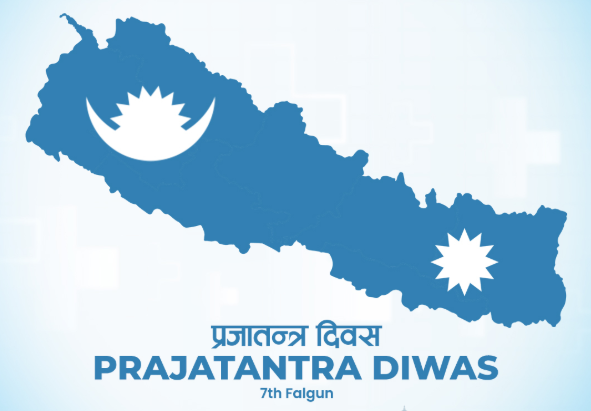
On Falgun 7, 2082 BS (which falls on February 18 or 19, 2026 in the Gregorian calendar), Nepal observes National Democracy Day (राष्ट्रिय प्रजातन्त्र दिवस / Rastriya Prajatantra Diwas), a major public holiday commemorating the overthrow of the Rana dynasty and the restoration of parliamentary democracy in 1951.
The day marks the end of the 104-year Rana oligarchy (1846–1951), when the Rana prime ministers held hereditary power and reduced the Shah kings to figureheads. On Falgun 7, 2007 BS (February 18, 1951), King Tribhuvan returned from exile in India after months of popular uprising led by the Nepali Congress under B.P. Koirala and other democratic forces. The Ranas surrendered power, and a new interim government was formed, paving the way for the first general elections in 1959 and the establishment of constitutional monarchy with democratic governance.
National Democracy Day celebrates this peaceful transition, the triumph of people power, and the beginning of modern democratic Nepal.
Significance in 2026:
- In 2026, Nepal marks the 75th anniversary (Diamond Jubilee) of the 1951 revolution — a historic milestone that reflects on the long journey from autocratic Rana rule to constitutional monarchy (until 2008), civil war (1996–2006), abolition of monarchy, and the current federal democratic republic.
- The day reaffirms Nepal’s commitment to democracy, pluralism, inclusive governance, and the rights of all citizens — especially amid ongoing debates about federalism, political stability, and strengthening democratic institutions.
- It honors the sacrifices of the martyrs and leaders of the 1951 revolution, including those killed in the armed struggle and protests against the Ranas.
Celebrations and Observances:
- Official ceremonies in Kathmandu: The main event is held at Singha Durbar (government secretariat), Narayanhiti Palace Museum (former royal palace), or Martyrs’ Memorial Park. The President, Prime Minister, Speaker of Parliament, Chief Justice, and leaders of major parties participate in wreath-laying at martyrs’ memorials, flag-hoisting, and speeches on democracy and national unity.
- Nationwide flag-raising: The national flag (crimson with blue border, sun and moon) is raised at government offices, schools, and homes. The national anthem (“Sayaun Thunga Phool Ka”) is sung at public gatherings.
- Cultural and educational programs: Schools and colleges hold special assemblies with speeches, patriotic songs, quizzes on the 1951 revolution, and drama performances depicting the fall of the Ranas. Many students wear national dress (daura suruwal for boys, sari or kurta suruwal for girls).
- Public festivities: In cities like Kathmandu, Pokhara, Biratnagar, and Butwal, street processions, cultural shows, and concerts feature traditional dances (Maruni, Chhaupadi, Dhime), folk music, and revolutionary songs from the 1950s. Some areas organize blood donation camps or tree-planting drives in honor of martyrs.
- Media coverage: Nepal Television (NTV), Radio Nepal, and private channels broadcast live from the capital, documentaries on King Tribhuvan and the revolution, and interviews with historians and descendants of 1951 leaders.
- Symbolic acts: Many Nepalis light oil lamps (diyo) at home or visit martyrs’ memorials; the day ends with fireworks in major cities.
National Democracy Day is a public holiday in Nepal — government offices, banks, schools, and most businesses close — allowing families to join parades, attend cultural events, or simply enjoy a day of national pride and reflection.
A common greeting on this day: “राष्ट्रिय प्रजातन्त्र दिवसको हार्दिक शुभकामना!” (“Heartfelt congratulations on National Democracy Day!”)
On Falgun 7, Nepal raises its flag high, remembers the struggle of 1951, and celebrates the democratic spirit that continues to shape the nation. 🇳🇵