

On February 17, 2026, Kosovo marks Independence Day (Dita e Pavarësisë), the country’s most important national holiday, commemorating the unilateral declaration of independence from Serbia on February 17, 2008.
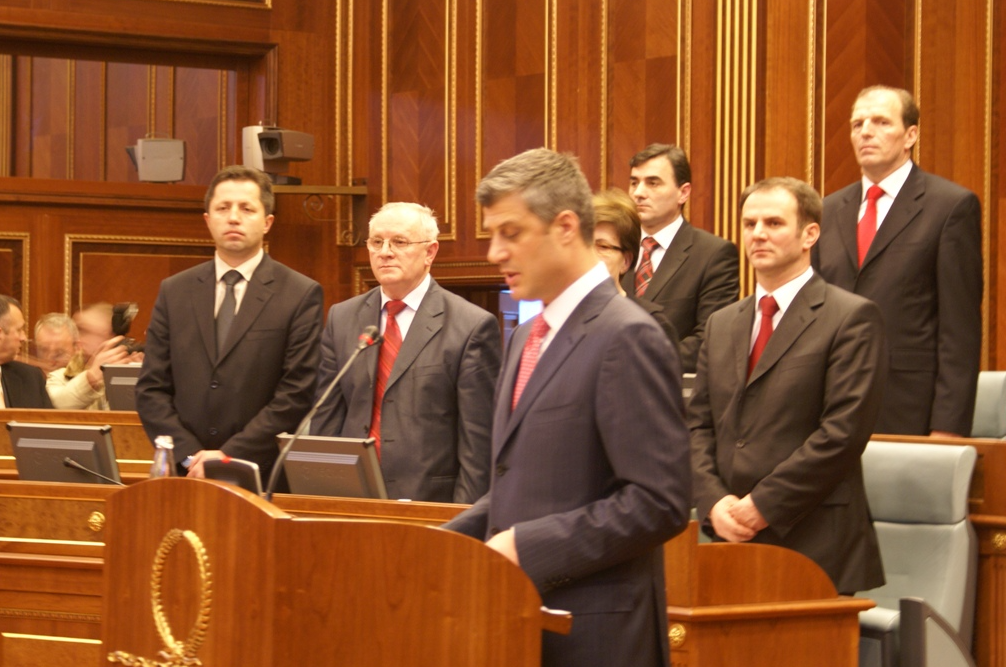
At 15:39 on that date, Prime Minister Hashim Thaçi read the declaration in the Assembly of Kosovo in Pristina, proclaiming Kosovo “a democratic, secular and multi-ethnic republic… guided by the principles of democratic governance and equality of all its citizens before the law.” The declaration explicitly committed Kosovo to the Ahtisaari Plan (a UN-backed roadmap for supervised independence) and invited international civilian oversight (the International Civilian Office/EULEX).
The move came after years of UN administration (UNMIK, 1999–2008) following NATO’s 1999 intervention that ended Serbian repression and the Kosovo War (1998–1999). It remains partially recognized: as of 2026, Kosovo is recognized by over 100 UN member states (including the United States, most EU countries, UK, Japan, Australia, and many others), but not by Serbia, Russia, China, India, Brazil, Spain, Greece, Cyprus, and several other countries. It is not a member of the United Nations but is a member of the IMF, World Bank, and participates in some international organizations.
Significance in 2026:
- In 2026, Kosovo celebrates the 18th anniversary of the declaration — a milestone that reflects both pride in statehood and the ongoing reality of limited recognition and tense relations with Serbia.
- The day emphasizes Kosovo’s identity as a sovereign, multi-ethnic democracy (with Albanian majority and significant Serb, Bosniak, Turkish, Roma, Ashkali, Egyptian, and Gorani communities) and its aspirations for full international integration (EU candidacy, NATO aspirations, UN membership).
- It also highlights resilience amid challenges: economic development, youth emigration, energy transition, and the unresolved status dispute with Serbia (facilitated by EU-led Belgrade-Pristina Dialogue).
Celebrations and Observances:
- National ceremony in Pristina: The main event takes place at the Assembly of Kosovo or Mother Teresa Square (formerly Skanderbeg Square), with the President, Prime Minister, Speaker, and foreign dignitaries raising the Kosovo flag (blue with yellow map and six white stars). A military and police parade, cultural performances, and speeches follow.
- Flag-raising and parades: The red-and-black Albanian national flag and Kosovo’s blue-and-yellow flag are flown everywhere. Military parades (Kosovo Security Force), police marches, and student/youth contingents are held in Pristina, Prizren, Peja, Gjilan, and other cities.
- Cultural festivities: Concerts featuring Albanian and Kosovo artists, traditional folk dances (valle), street parties, and fireworks displays light up the night. Many families wear traditional qeleshe hats, plis caps, or red-and-black attire.
- Nationwide events: Similar celebrations occur in all municipalities; diaspora communities in Germany, Switzerland, Italy, the US, and the UK hold events with flag-raising and live streams from Pristina.
- Public holiday activities: As a public holiday, government offices, banks, and schools close. People enjoy family gatherings, barbecues, outings to parks or villages, and watching live broadcasts on RTK (Radio Television of Kosovo).
Independence Day is a public holiday in Kosovo — a day of immense pride, music, flags, and hope for full recognition and a prosperous future.
A common chant and greeting: “Kosova, Kosova, pavarësi!” (“Kosovo, Kosovo, independence!”)
On February 17, Kosovo raises its flag high, remembers the dream of 2008, and looks forward to the day the world fully acknowledges its place among sovereign nations. 🇽🇰