

On February 16, 2026, Lithuania celebrates Restoration of Lithuania’s Statehood Day (Lietuvos valstybės atkūrimo diena), the country’s most important national holiday and a public holiday across the nation.
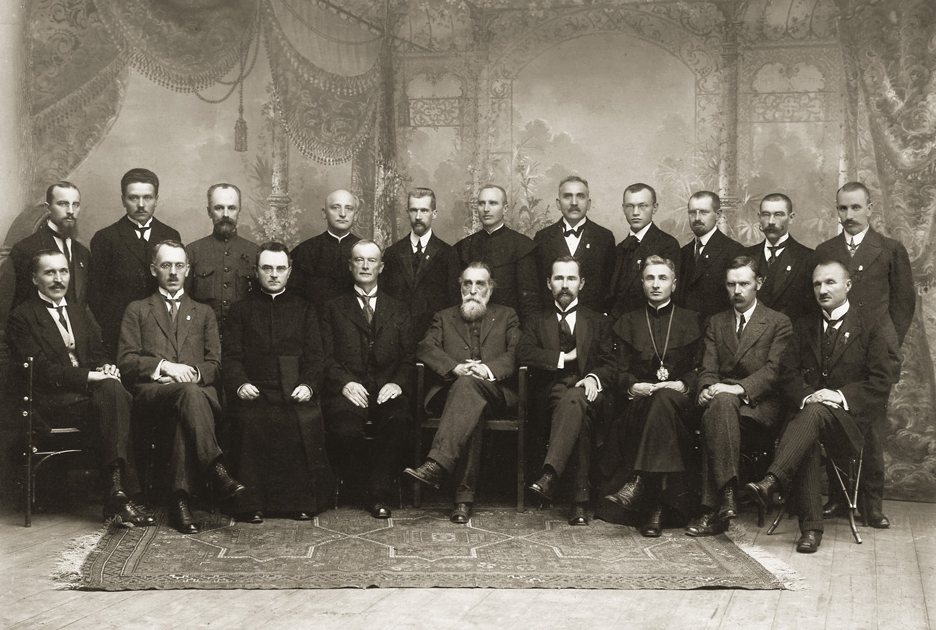
This date commemorates the signing of the Act of Independence of Lithuania on February 16, 1918, in Vilnius. The document, signed by the 20 members of the Council of Lithuania (Lietuvos Taryba) and led by Jonas Basanavičius (the “Patriarch of the Nation”), declared Lithuania an independent, democratic state with Vilnius as its capital. It ended 123 years of foreign rule — first by the Russian Empire (1795–1918) after the partitions of the Polish-Lithuanian Commonwealth, and briefly by German occupation during World War I.
The 1918 Act marked the rebirth of Lithuania as a modern sovereign nation after centuries of loss of statehood. It laid the foundation for the interwar Republic of Lithuania (1918–1940), even though full international recognition and withdrawal of foreign troops took several more years.
February 16 is distinct from March 11 (Restoration of Independence Day in 1990), which marks the re-establishment of independence from the Soviet Union after 50 years of occupation.
Significance in 2026:
- In 2026, Lithuania celebrates the 108th anniversary of the 1918 Act — a powerful symbol of national resilience, self-determination, and the unbroken will to be free.
- The day honors the signatories of the Act (the “Twenty”), the volunteers who fought in the Lithuanian Wars of Independence (1918–1920), and all who defended statehood through the occupations of 1940 (Soviet and Nazi) and 1944–1990 (Soviet).
- It reaffirms Lithuania’s commitment to democracy, freedom, Euro-Atlantic integration (NATO and EU member since 2004), and the defense of sovereignty amid regional security challenges.
Celebrations and Observances:
- Official ceremony in Vilnius: The main event takes place at the Signatories’ House (former building of the Council of Lithuania) or the Seimas (Parliament). The President, Prime Minister, Speaker of the Seimas, military leaders, and foreign dignitaries attend. The national flag is raised, the national anthem (“Tautiška giesmė”) is sung, and speeches highlight the enduring spirit of 1918.
- Wreath-laying: Official delegations lay wreaths at the Monument to the Signatories (near the Signatories’ House), the Tomb of the Unknown Soldier at Antakalnis Cemetery, and other memorials.
- Flag-flying and public events: The Lithuanian tricolor (yellow, green, red) flies everywhere — on government buildings, schools, homes, and cars. Concerts, parades, folk performances, and cultural exhibitions take place in Vilnius, Kaunas, Klaipėda, Šiauliai, and Panevėžys.
- Educational programs: Schools hold special assemblies with readings of the 1918 Act, lessons on the signatories, and student performances of patriotic songs and poetry. Many children wear traditional Lithuanian sashes or ribbons.
- Symbolic acts: In the evening, thousands gather at Cathedral Square in Vilnius for a candle-lighting ceremony, creating a sea of lights in the national colors. Fireworks and bonfires light up many towns.
Restoration of Statehood Day is a public holiday in Lithuania — government offices, schools, banks, and most businesses close — allowing families to attend events, visit historical sites, or simply enjoy a day of national pride.
A line from the national anthem often sung on this day: “Tegu gyvuoja Lietuva!” (“Long live Lithuania!”)
On February 16, Lithuania raises its flag high, remembers the courage of 1918, and celebrates the enduring spirit of a nation that refused to disappear. 🇱🇹