

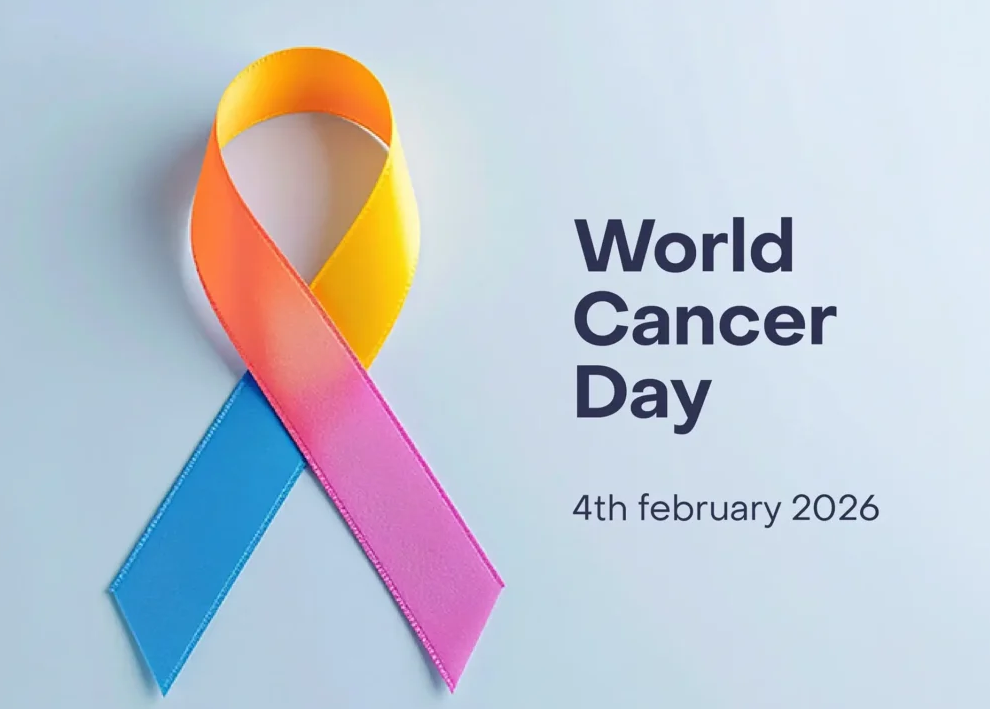
On February 4, 2026, the world observes World Cancer Day, a global awareness day led by the Union for International Cancer Control (UICC) to raise understanding of cancer, promote prevention, early detection, treatment, and palliative care, and mobilize action against one of the leading causes of death worldwide.
Established in 2000 at the World Summit Against Cancer for the New Millennium in Paris, World Cancer Day is held every February 4 under the auspices of the UICC and supported by the World Health Organization (WHO), governments, NGOs, hospitals, patient groups, and millions of individuals. The date was chosen to create a unified, year-round platform for cancer advocacy.
Cancer remains a major global health challenge: in 2022, there were approximately 20 million new cases and 9.7 million cancer deaths worldwide, with numbers projected to rise to 35 million new cases by 2050 due to aging populations, lifestyle factors, and environmental risks. Yet many cancers are preventable, detectable early, and treatable — making awareness and access to care critical.
2023–2025 Campaign Theme (carried forward): “Close the Care Gap” The current multi-year theme, “Close the Care Gap,” focuses on reducing inequalities in cancer care — ensuring that everyone, regardless of income, geography, ethnicity, age, gender, or education, has access to prevention, early diagnosis, quality treatment, and supportive care. In 2026, the emphasis continues on bridging gaps in low- and middle-income countries, where over 70% of cancer deaths occur, often due to late diagnosis and limited resources.
Significance in 2026:
- The day highlights progress (e.g., HPV vaccination reducing cervical cancer, advances in immunotherapy, targeted therapies) while sounding the alarm on persistent disparities and the growing burden in developing nations.
- It calls for increased investment in cancer research, health infrastructure, and universal health coverage, as well as stronger tobacco control, vaccination programs, and healthy lifestyle promotion.
- It unites people, organizations, and governments in a shared commitment: no one should face cancer alone, and no one should die from a preventable or treatable cancer.
Global Observances:
- UICC and WHO events: A global virtual launch, high-level panels, survivor stories, and the release of updated cancer statistics and policy recommendations.
- Country-level activities: Governments, cancer societies, and hospitals organize walks/runs (e.g., “Run for the Cure”), free screening camps, public lectures, survivor meetups, candle-lighting ceremonies, and social media campaigns (#WorldCancerDay, #CloseTheCareGap).
- Landmark illuminations: Iconic buildings and monuments worldwide turn orange (the World Cancer Day color) — examples include the Niagara Falls, Eiffel Tower, Sydney Opera House, and many city halls.
- Educational outreach: Schools and workplaces host talks on risk factors (tobacco, alcohol, obesity, UV exposure, infections); patient advocacy groups share personal stories; media broadcasts documentaries and interviews.
- Symbolic acts: People wear orange ribbons or clothing, share the pledge “I will do something about cancer,” and light candles or post orange heart emojis online.
World Cancer Day is not a public holiday anywhere but a powerful global movement — a day when millions stand together to say: cancer affects us all, and we can fight it together.
The core message for 2026: “Close the care gap — because no one should face cancer alone.”
On February 4, the world lights up orange, remembers those lost, supports those fighting, and commits to a future where cancer is no longer a death sentence.