

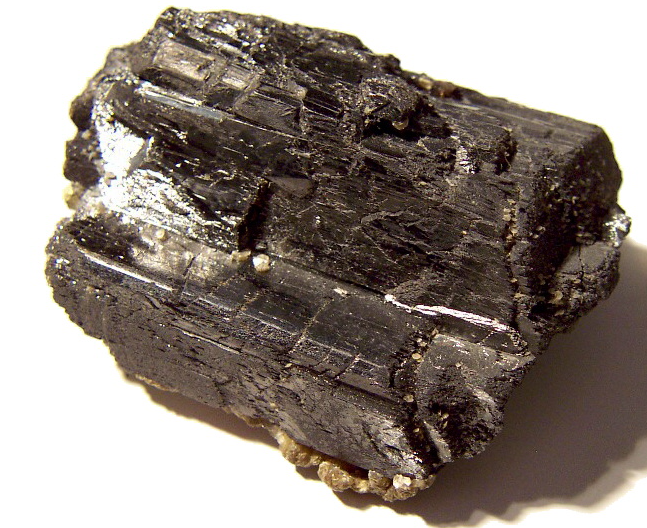
Tungsten (W, atomic number 74), also known as wolfram (from wolframite ore, where “wolf” refers to its tendency to “devour” tin during smelting), is the undisputed king of high-temperature endurance among metals. This dense, steel-gray transition metal in group 6 (below chromium and molybdenum) boasts the highest melting point of any element that can be considered practical for engineering use: 3422 °C (6192 °F). Discovered in 1783 by Juan José and Fausto Elhuyar from wolframite in Spain, tungsten has become the backbone of applications where nothing else survives the heat, pressure, or wear.
1. Hidden Features: Record-Breaking Melting Point, Density, and Relativistic Strength
Tungsten’s [Xe] 4f¹⁴ 5d⁴ 6s² configuration and its position in the third transition series deliver extraordinary properties.
- Highest Melting & Boiling Points Among Metals: Melting at 3422 °C and boiling at 5555–5933 °C (estimates vary slightly due to measurement difficulty), tungsten outlasts every other metal and rivals carbon (sublimes ~3900 °C). Only carbon and a few ceramics exceed it overall. This extreme thermal stability comes from very strong metallic bonding reinforced by half-filled 5d orbitals and relativistic contraction effects that tighten inner electron shells.
- Density Champion: At 19.25–19.30 g/cm³, tungsten is nearly as dense as gold (19.32 g/cm³) and osmium/iridium—about 1.7 times denser than lead. Its high density combined with hardness makes it ideal for mass in small volumes.
- Hardness & Wear Resistance: Pure tungsten is brittle at room temperature (body-centered cubic structure with limited slip systems), but when drawn into fine wire or alloyed, it becomes ductile and extraordinarily hard (Vickers ~3430–4600 MPa in some forms). Tungsten carbide (WC) is one of the hardest materials known (Mohs ~9, second only to diamond).
- Thermal & Electrical Conductivity Balance: Tungsten has relatively high thermal conductivity for a refractory metal and the lowest vapor pressure of all metals at high temperatures—critical for vacuum applications where evaporation must be minimized.
- Radiation & Neutron Absorption: High atomic number and density make tungsten excellent at stopping X-rays, gamma rays, and neutrons (especially when enriched in ¹⁸⁶W). It is less toxic than lead for shielding applications.
- Isotopic Note: Tungsten has five stable isotopes (¹⁸⁰W to ¹⁸⁶W); ¹⁸⁰W is extremely rare and weakly radioactive (half-life ~1.8 × 10¹⁸ years), but stable for all practical purposes.
2. Covert Uses: Filaments, Armor, Fusion, and Hypersonics
Tungsten’s annual production (~70,000–80,000 tonnes) is modest compared to steel, but its strategic importance is immense.
- Incandescent & Halogen Lamp Filaments: Historically dominant (still used in specialty lighting); tungsten filaments operate at ~2500–3000 °C, glowing white-hot while lasting thousands of hours due to low vapor pressure.
- Tungsten Carbide (WC) Tools & Wear Parts: ~60% of tungsten goes into cemented carbides for cutting tools, mining drills, armor-piercing rounds, snowplow blades, and industrial wear surfaces—where hardness and toughness are non-negotiable.
- High-Temperature Alloys & Balance Weights: Tungsten-heavy alloys (e.g., W-Ni-Fe, “heavy alloys”) provide high density for radiation shielding, gyroscope rotors, crankshaft weights in racing engines, and kinetic energy penetrators in anti-tank munitions.
- Fusion & Plasma-Facing Components: In ITER and future tokamaks, tungsten is the leading candidate for divertor plates and first-wall armor—withstanding extreme heat fluxes (>10 MW/m²), neutron bombardment, and plasma erosion better than any other material.
- Aerospace & Hypersonics: Tungsten and W-based composites line rocket nozzles, re-entry vehicle heat shields, and hypersonic missile leading edges—where temperatures exceed 2000 °C in oxidizing environments.
- Electrical Contacts & Electrodes: TIG welding electrodes, spark plugs, and high-voltage circuit-breaker contacts exploit tungsten’s arc resistance and durability.
In summary, tungsten isn’t just another refractory metal—it’s the ultimate high-temperature survivor, the densest workhorse for kinetic energy and shielding, and the material that keeps fusion dreams, jet engines, and cutting tools from melting or wearing out under impossible conditions.
What impresses you most about tungsten—its insane melting point, its role in fusion reactors, or the way it pierces armor like butter? Drop it below!