

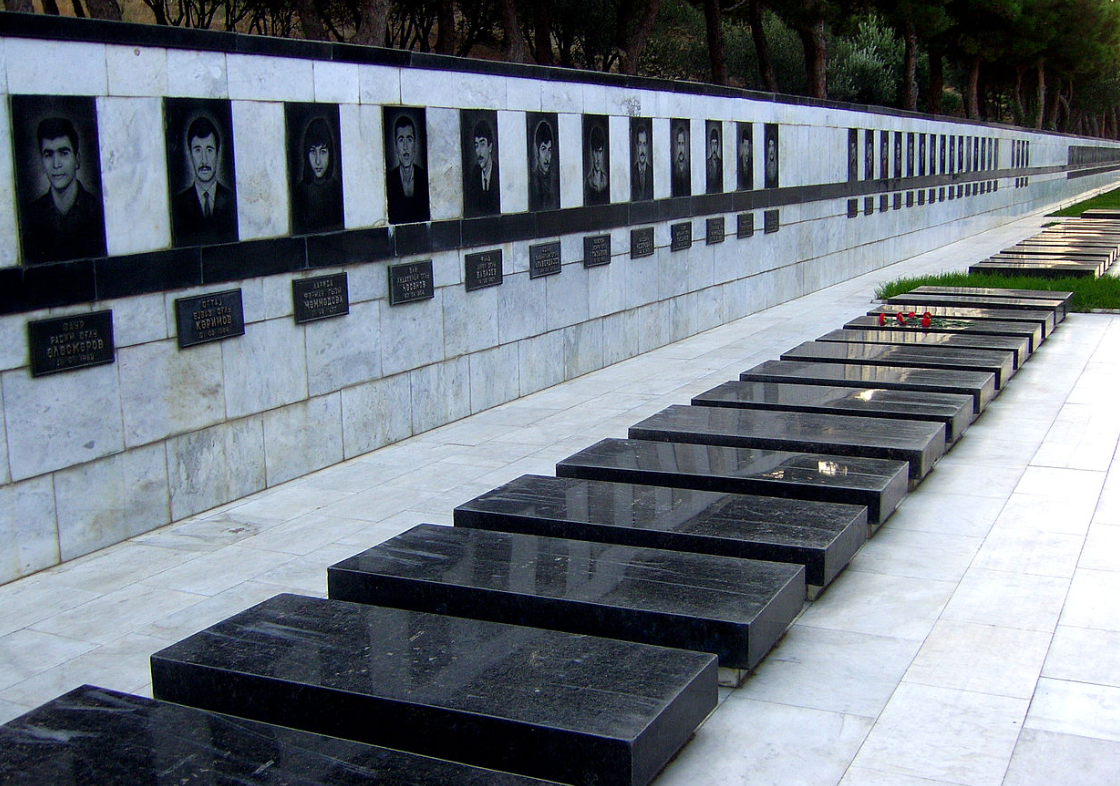
On January 20, 2026, the Republic of Azerbaijan observes Martyrs’ Day (Şəhidlər Günü), also known as Day of Nationwide Sorrow (Ümumxalq Hüzn Günü) or Black January (Qara Yanvar), a national public holiday and day of deep mourning commemorating the victims of the Soviet military crackdown on January 19–20, 1990, in Baku.
Known as Black January or Black Saturday, this tragic event saw Soviet troops — under orders from Moscow amid growing anti-Soviet protests and the push for independence — storm Baku with tanks and armored vehicles. They opened fire on unarmed civilians, killing at least 147 people (including women, children, and elderly), wounding over 800, and arresting thousands. The massacre was intended to suppress the Azerbaijani national liberation movement during the final years of the Soviet Union. Despite a declared state of emergency and media blackout, the brutality galvanized the population: the next day, January 21, nearly 1.5 million residents defied curfews to attend mass funerals and bury the victims in what became Martyrs’ Alley (Şəhidlər Xiyabanı).
The tragedy accelerated Azerbaijan’s drive toward independence, declared on October 18, 1991. In 1999, President Heydar Aliyev decreed that all victims be posthumously awarded the honorary title “20 January Martyr” (20 Yanvar Şəhidi). Martyrs’ Day was established as a national holiday to honor their sacrifice, preserve historical memory, and reflect on the cost of freedom.
Significance in 2026:
- Marking the 36th anniversary of Black January, the day underscores themes of national resilience, sovereignty, and the unbreakable spirit of the Azerbaijani people.
- It highlights the martyrs’ role as catalysts for independence and remains a poignant reminder of the price paid for self-determination, especially in contrast to Azerbaijan’s modern achievements and territorial integrity.
Observances and Celebrations:
- Mass processions and tributes at Martyrs’ Alley: Thousands gather at the Alley of Martyrs (Şəhidlər Xiyabanı) in Baku’s upland district — a hilltop cemetery overlooking the Caspian Sea — to lay red carnations, wreaths, and flags on the graves inscribed with the names of the 147 martyrs (plus others who died later from injuries). The site, with its eternal flame and monuments, is the focal point of national mourning.
- Official ceremonies: The President (Ilham Aliyev), First Vice President, government officials, military leaders, and foreign dignitaries participate in wreath-laying, moments of silence, and speeches. In recent years (including pre-2026 events), the President visits the alley days in advance or on the day to pay respects.
- Nationwide mourning: Flags fly at half-mast; public events, concerts, and entertainment are subdued or canceled. State media (AzTV, etc.) broadcasts documentaries, survivor testimonies, archival footage, and tributes emphasizing heroism and unity.
- Regional and diaspora events: Similar ceremonies occur in other cities (Ganja, Sumgait) and Azerbaijani communities abroad. Schools and universities hold lessons on the events; religious services and prayers are held in mosques.
- Symbolic acts: Red carnations become ubiquitous as a symbol of blood shed for freedom; people visit family graves of martyrs or light candles.
Martyrs’ Day is a solemn public holiday — government offices, schools, and most businesses close — transforming grief into a powerful affirmation of national identity, sacrifice, and the irreversible path to sovereignty.
A common refrain on this day: The blood of the January 20 martyrs watered the tree of Azerbaijan’s independence.
On January 20, 2026, Azerbaijan unites in sorrow and pride to honor those who gave their lives for the nation’s freedom. 🇦🇿🕯️