

On January 15, 2026, the Democratic People’s Republic of Korea (DPRK) observes Chosŏn’gŭl Day (조선글날), a national commemorative day that celebrates the creation of the Korean alphabet, known in North Korea as Chosŏn’gŭl.
This date is chosen to mark the invention of the script in 1443 by King Sejong the Great and his scholars in the Hall of Worthies during the Joseon Dynasty. Unlike South Korea’s Hangeul Day on October 9 — which commemorates the 1446 publication of the Hunminjeongeum (the royal edict promulgating the alphabet) — North Korea emphasizes the moment of its scientific creation, underscoring the alphabet’s role as a revolutionary tool designed for the enlightenment and liberation of the common people from the elitist Chinese character (Hanja) system.
Chosŏn’gŭl consists of 14 basic consonants and 10 basic vowels that form syllable blocks in a highly logical, phonetic structure based on the shapes of human speech organs. North Korean ideology presents it as a supreme achievement of Korean ingenuity, a gift from a wise ruler to the masses, and a symbol of national self-reliance and cultural independence — values that align closely with Juche thought.
In the DPRK, Chosŏn’gŭl is used exclusively in all official, educational, and daily writing (with virtually no Hanja influence), reinforcing linguistic purity and equality. The day serves to instill pride in this “most scientific” writing system and to highlight its contribution to mass literacy, socialist education, and the unification of the Korean nation under the banner of Chosŏn.
Celebrations typically include:
- Official gatherings and ideological lectures in workplaces, schools, and universities.
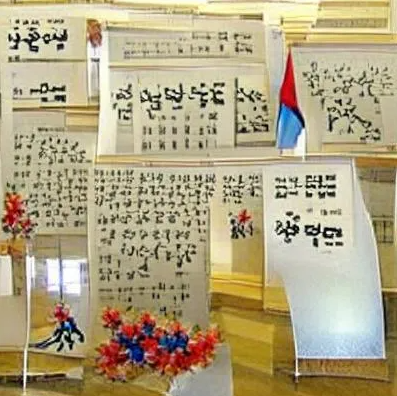
- Exhibitions on the history of Chosŏn’gŭl and King Sejong’s achievements.
- Cultural performances, poetry readings, and calligraphy demonstrations.
- Media features praising the alphabet’s role in empowering the working people and resisting foreign cultural domination.
While not among the DPRK’s most extravagant holidays, Chosŏn’gŭl Day quietly reinforces national identity, historical legitimacy, and the narrative that true progress comes from embracing indigenous Korean genius.
On this day, North Korea pays tribute to a script that broke barriers, democratized knowledge, and remains a cornerstone of the nation’s revolutionary cultural legacy. 📜🇰🇵