

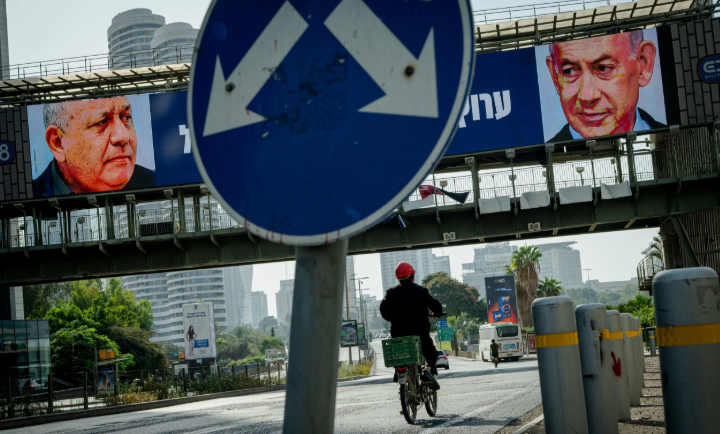
Israel’s parliamentary election on October 27 is being fought over the future of Prime Minister Benjamin Netanyahu, the failures surrounding the Hamas-led attack of October 7, 2023, and the country’s security after years of conflict. Yet one of the most consequential questions facing Israel has received little serious attention during the campaign, namely whether the country has a political path towards peace with the Palestinians. Despite the war in Gaza and the growing international debate over Palestinian statehood, the leading candidates have offered little indication that a change of government would bring a fundamental change in Israel’s approach to the conflict.
The silence is particularly significant because Israel’s Arab citizens, who account for roughly one fifth of the population and electorate, could influence the outcome. Under Israel’s parliamentary system, a party or bloc does not automatically form a government by winning the largest number of seats. It must assemble a coalition capable of commanding a majority in the 120 member Knesset. Arab parties could therefore become important to the formation of a government led by Netanyahu’s principal challenger, former military chief Gadi Eisenkot. Yet the electoral debate has focused less on what such political cooperation might mean for Jewish and Arab relations or a future settlement with the Palestinians than on whether cooperation with Arab representatives should be treated as a security threat.
This omission exposes a central contradiction in the election. The Palestinian question remains a major factor in Israel’s security, diplomacy and international standing, but it has not become a meaningful contest between competing visions of how to resolve the conflict. The war in Gaza is discussed largely through arguments over who failed to prevent the October 7 attack and who should be held responsible for the decisions that followed. Netanyahu’s opponents have challenged his leadership, his handling of the security crisis and his political judgment. However, criticism of the prime minister’s conduct is not the same as proposing a different policy towards the Palestinians.
The distinction matters because the election could change who governs Israel without changing the fundamental assumptions guiding its policy. Analysts of Israeli politics have noted that the leading opposition figures share important positions with Netanyahu on Palestinian statehood and security. Eisenkot himself has rejected the two state solution, arguing that the principle of two states for two peoples is a mistake. Other prominent opposition leaders have also opposed Palestinian statehood in the foreseeable future. Their differences with Netanyahu are real, including over political leadership, the management of military campaigns and aspects of settlement policy, but they do not amount to a common commitment to a negotiated Palestinian state.
This helps explain why peace has remained largely outside the campaign. A serious debate about a political settlement would require candidates to explain what they believe the final status of the Palestinians should be, how Israel’s security concerns could be reconciled with Palestinian political rights, and whether the occupation can continue indefinitely without further damaging Israel’s long term interests. These are difficult questions in a society deeply affected by the October 7 attacks and subsequent wars. They are also precisely the questions that a national election should help voters confront.
The political consequences of October 7 are central to understanding this reluctance. The attack shattered Israel’s sense of security and intensified public fears about the intentions and capabilities of armed Palestinian groups. For many Israelis, the immediate priority became preventing another such attack, recovering hostages, confronting Hamas and ensuring that neighbouring territories could not be used to launch further assaults. This shift in public mood has strengthened the political appeal of security centred arguments and made proposals associated with territorial concessions or Palestinian statehood easier for opponents to portray as dangerous.
Former Israeli prime minister Ehud Olmert has observed that the political centre of gravity in Israel tends to move to the right after a national trauma. That tendency helps explain why political leaders may avoid advocating concessions even when they criticise the government’s performance. The electorate can be dissatisfied with Netanyahu while remaining sceptical of the very policies that a peace process would require. A desire for new leadership does not necessarily indicate a desire for a new approach to the Palestinians.
Netanyahu has sought to turn this political climate to his advantage. His campaign portrays Eisenkot as vulnerable to pressure from Arab parties and suggests that cooperation with their leaders could compromise Israel’s security or open the way to a Palestinian state. By framing the choice in such terms, Netanyahu shifts attention from the substance of his own record to the perceived dangers of an alternative government. The strategy also places Arab political participation at the centre of a debate in which Arab citizens’ own concerns, including public safety, crime and equal treatment, receive far less attention.
Arab parties face a difficult political calculation. Their voters have direct interests in the conduct of the Israeli state, the allocation of public resources, protection from violence and discrimination, and the broader conflict between Israelis and Palestinians. Participation in parliamentary politics offers a means of pressing for these concerns to be addressed. But cooperation with Jewish parties can also expose Arab politicians to accusations that they are legitimising policies they oppose, while their potential coalition partners may be unwilling to make meaningful commitments on Palestinian rights.
The electoral arithmetic consequently gives Arab parties potential influence without guaranteeing that their priorities will shape government policy. Even if their support helps bring Netanyahu’s opponents to power, that support would not itself establish a new consensus on peace. The leading opposition figures remain divided over the role Arab parties should play, and Eisenkot has publicly ruled out including the Ra’am party in a government he leads under its present political position. Netanyahu’s portrayal of his rival as dependent on Arab politicians therefore needs to be understood alongside the limits that the opposition itself places on such cooperation.
The same gap between political change and policy change is visible in the opposition’s treatment of the war in Gaza. Its criticism has concentrated on the government’s failure to anticipate the October 7 attack, its handling of the war and the absence of a convincing strategic outcome. These are consequential questions. Yet criticism of how a war is conducted does not necessarily challenge the objectives behind it, the treatment of the Palestinian population or the absence of a political horizon beyond military operations. The opposition’s differences with Netanyahu often concern the management of policy rather than a fundamental rejection of the direction taken in Gaza, the West Bank or southern Lebanon.
The West Bank makes the limitations of the debate especially clear. Settlement expansion and the treatment of Palestinians in the occupied territory affect the practical possibility of establishing a viable Palestinian state. A political settlement cannot be assessed only through declarations of goodwill or promises of improved security. It also depends on whether the territory available for a future Palestinian state remains geographically and politically viable. Although opposition figures have criticised specific settlement decisions and settler violence, such criticism does not necessarily translate into support for Palestinian self determination. Eisenkot’s rejection of the two state formula illustrates the distance between opposing particular government policies and accepting the principle of Palestinian statehood.
This distinction is important for Israel’s international relationships. Many of its traditional partners, particularly in Europe, continue to regard a negotiated two state settlement as the most credible framework for resolving the Israeli Palestinian conflict. Their concerns extend beyond the immediate conduct of the war in Gaza to the future of the occupied West Bank, the protection of Palestinian civilians and the absence of a credible political process. When Israeli leaders reject Palestinian statehood while offering no alternative capable of securing equal political rights and lasting stability, disagreements with allies become more difficult to resolve. The risk is not simply diplomatic criticism of a particular prime minister. It is a deeper divergence between Israel’s political direction and the expectations of partners whose support has long been strategically important.
The international consequences could become more serious if the political deadlock continues. European governments have debated stronger measures in response to Israeli policies, while pressure has grown in parts of the international community for conditions on military cooperation and other forms of support. Such measures are neither inevitable nor uniform across countries, but the possibility of further diplomatic and economic friction demonstrates that the Palestinian question cannot be insulated from Israel’s wider foreign relations. A government that treats the absence of a peace process as an acceptable permanent condition may find that the costs accumulate even when its immediate security objectives remain the principal focus of domestic politics.
The United States also matters to this calculation. President Donald Trump has promoted a framework intended to connect peace with economic development and wider regional cooperation. But economic incentives alone cannot settle a conflict rooted in competing national claims, territorial control, security fears and the Palestinians’ demand for political self determination. Any framework for lasting peace requires a credible political process, not simply a promise of prosperity. If Israel’s election campaign avoids discussing the conditions under which Palestinians could exercise meaningful political rights, it becomes difficult to see how an ambitious international framework could overcome the domestic political obstacles to implementation.
There remains a possibility that a change of government could alter the tone of Israeli politics. A new prime minister might seek to repair relations with European partners, reduce diplomatic isolation or reopen communication with Palestinian leaders. Olmert has expressed hope that Eisenkot might make conciliatory moves, including meeting Palestinian Authority President Mahmoud Abbas. Such steps could matter, particularly if they signalled a willingness to engage politically rather than treat the conflict solely as a security problem. But meetings and improved diplomatic language would be only an initial step. Without a substantive change in policy, they would not resolve the underlying dispute.
Nor should the election be treated as a simple choice between Netanyahu and peace. The opposition is not united around Palestinian statehood, and its principal figures have their own political constraints. The election may produce a different coalition, a weakened Netanyahu or continued uncertainty over who can command a parliamentary majority. None of those outcomes automatically creates the conditions for a negotiated settlement. The decisive question is whether any resulting government will be prepared to address the Palestinian issue as a political conflict requiring a political answer, rather than as a problem to be managed indefinitely through security measures.
Ultimately, the most striking feature of Israel’s election is not merely that peace has been neglected in the campaign. It is that a country facing the long term consequences of an unresolved conflict is debating leadership and responsibility without seriously debating the destination of its policy. The failures surrounding October 7, the conduct of the war in Gaza, the future of settlements and the role of Arab citizens are all legitimate electoral issues. Yet they remain connected to a larger question that cannot be postponed indefinitely, namely what political future Israel envisages for the Palestinians living under its control or alongside its borders.
A government change may alter the personalities, priorities and methods of Israeli leadership. It may also influence relations with Washington, Europe and Arab states. But unless the political debate expands to include a credible answer to the Palestinian question, the central obstacle will remain. Peace does not require Israelis to disregard their security concerns, nor does it require Palestinians to abandon their demand for self determination. It requires political leaders to confront both realities and explain how they can be reconciled.
That is what is missing from the ballot. Israelis are being asked to choose who should lead the country, but they have not been offered a clear, credible debate about how the conflict that shapes so much of its future might finally be resolved. The result may determine who occupies the prime minister’s office. Whether it changes Israel’s relationship with the Palestinians is a much more uncertain question.