

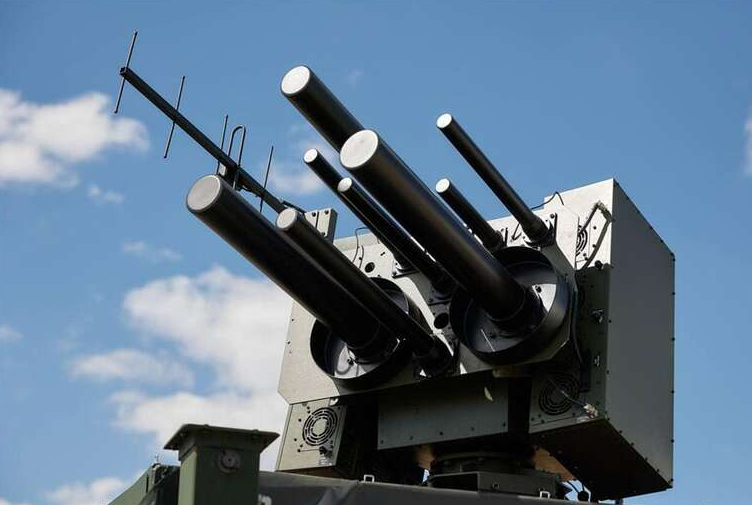
The war over Ukraine’s skies is no longer being decided only by missiles, fighter aircraft, or billion-dollar air defense systems. Increasingly, it is becoming a battle of algorithms, satellite signals, electronic deception, and rapid technological adaptation. Ukraine’s growing reliance on its domestically developed Lima electronic warfare system reflects a deeper transformation in modern warfare, where forcing a missile to miss may sometimes matter more than shooting it down.
For much of the war, Ukraine’s air defense strategy depended heavily on Western supplied kinetic interceptors such as the Patriot system, NASAMS, IRIS-T, and Soviet-era surface-to-air platforms. Those systems remain indispensable against high-speed threats, particularly ballistic missiles. But they are expensive, finite, and increasingly difficult to replenish at the pace Russia is launching drones and missiles. Moscow’s strategy has gradually evolved into one of saturation. Massive waves of Shahed drones, cruise missiles, glide bombs, and ballistic strikes are designed not only to damage infrastructure but also to exhaust Ukraine’s interceptor stockpiles and stretch its air defense network beyond sustainable limits.
That pressure forced Ukraine to search for asymmetric alternatives. The Lima system emerged from that necessity.
Unlike conventional air defenses that physically destroy incoming targets, Lima attacks the guidance architecture itself. Developed by the Ukrainian company Cascade Systems, the platform uses electronic warfare techniques such as jamming, spoofing, and coordinate manipulation to interfere with satellite navigation systems used by Russian drones and missiles. Instead of exploding a missile in the air, Lima attempts to convince it that it is somewhere else entirely.
The logic is simple but strategically significant. Modern precision weapons depend heavily on satellite navigation systems such as Russia’s GLONASS. Once those signals are disrupted or manipulated, missiles increasingly rely on inertial navigation, which gradually accumulates targeting error over distance. Developers behind Lima claim the system goes further by actively feeding false coordinates to incoming weapons, causing them to drift away from intended targets and fall harmlessly into open terrain instead of striking cities or critical infrastructure.
According to Ukrainian officials and company statements published this year, the system has already been credited with diverting thousands of Shahed drones and dozens of cruise and ballistic missiles. Ukrainian sources have even claimed Lima contributed to neutralizing multiple Russian Kinzhal aeroballistic missiles during the first months of 2026. While such battlefield claims are difficult to independently verify in wartime conditions, the broader trend is unmistakable. Electronic warfare has become one of the central pillars of Ukraine’s layered defense strategy.
The economics behind the system are equally important. Each Lima unit reportedly costs roughly €58,000 depending on configuration, and a network capable of protecting a major city may cost roughly the equivalent of a single Patriot interceptor missile. In an era where one side can manufacture cheap drones in enormous quantities while the other expends million-dollar missiles to stop them, cost asymmetry is becoming one of the defining realities of war. Ukraine’s response increasingly reflects a shift toward scalable, adaptive, lower-cost defensive technologies.
This transformation is reshaping military thinking well beyond Ukraine. Western militaries are closely studying the conflict because it has exposed the vulnerability of traditional air defense doctrines against mass drone warfare and precision-guided saturation attacks. Reports in recent weeks indicate growing American interest in testing and potentially acquiring certain Ukrainian drone and electronic warfare technologies that have proven effective under combat conditions.
Yet Lima also illustrates the brutal reality that technological advantage in modern warfare rarely lasts long. Electronic warfare is fundamentally an endless cycle of adaptation and counter-adaptation. Every successful jamming method eventually triggers new defensive measures. Russia responded to earlier Ukrainian systems by upgrading anti-jamming antennas and navigation resilience packages, including newer Kometa systems designed to maintain satellite connectivity under electronic attack. Ukrainian engineers then reportedly developed updated Lima variants capable of targeting those defenses with new spoofing methods and high-frequency signal manipulation.
The conflict has become an accelerated laboratory of military innovation. Engineers, coders, drone operators, mathematicians, and signal specialists now occupy roles once dominated almost exclusively by artillery officers and tank commanders. The battlefield increasingly rewards speed of adaptation rather than industrial mass alone.
At the same time, electronic warfare is not a perfect substitute for conventional interception. A diverted missile still lands somewhere. A jammed drone can still strike civilian areas unintentionally. Kinetic interception remains essential for certain threats, especially high-speed ballistic missiles approaching dense urban areas. Ukraine’s strategy therefore is not replacing traditional air defense but layering electronic warfare on top of it to preserve scarce interceptor inventories and improve overall survivability.
What makes the Lima story particularly important is that it demonstrates how smaller powers under intense military pressure can innovate faster than many established defense industries. Much of Ukraine’s wartime innovation ecosystem operates with startup logic rather than bureaucratic procurement timelines. Systems are modified directly from battlefield feedback. Failures are corrected in weeks, not years. Frontline necessity has compressed the innovation cycle dramatically.
This may ultimately become one of the war’s lasting legacies. Ukraine is proving that future wars may not always be won by the side possessing the largest arsenal, but by the side capable of adapting faster across software, drones, artificial intelligence, electronic warfare, and distributed production networks.
The deeper lesson extends beyond Ukraine and Russia. The age of uncontested precision weapon dominance is ending. Missiles worth millions can now be disrupted by systems costing a fraction of their price. Air superiority itself is becoming contested not only in physical space but across the electromagnetic spectrum.
Modern warfare is no longer solely about firepower. It is increasingly about information dominance, signal manipulation, computational speed, and technological resilience. Ukraine’s Lima system reflects that shift with unusual clarity. The battlefield of the future may not always be decided by who launches more missiles, but by who can quietly convince them to lose their way.
Ukraine’s Lima electronic warfare system has emerged as one of the most controversial and potentially important battlefield technologies of the war. Developed by Cascade Systems and operated by the Night Watch unit, Lima was originally designed to counter Russia’s UMPK-guided glide bombs by disrupting their satellite navigation through jamming, spoofing, and direct corruption of guidance data. By 2025, Ukrainian officials claimed the system had significantly reduced the effectiveness of Russian glide bomb attacks. What drew global attention, however, was Lima’s reported success against Russia’s Kh-47M2 Kinzhal hypersonic missile. Ukrainian sources claim the system neutralized dozens of Kinzhals without firing interceptors, instead forcing the missiles off course through advanced electronic warfare techniques. Russia denies the claims, while analysts remain divided over whether such disruption is technically feasible at hypersonic speeds. Regardless, Lima highlights a growing shift in modern warfare where electronic attack may become just as important as traditional missile defense.
: DEFENCE CENTRAL