

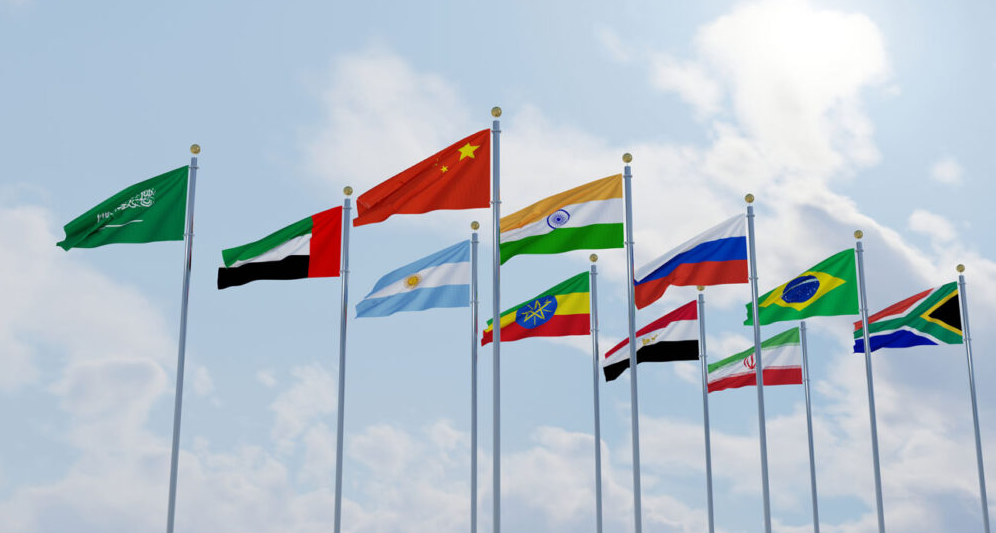
The global architecture is undergoing a profound transformation as the lines between economic statecraft and hard geopolitical strategy become permanently blurred. For nearly two decades, critics and champions alike viewed the BRICS bloc primarily through a financial lens, categorizing it as a loose coalition of ambitious emerging powers eager to challenge Western dominance in international trade and currency markets. The acronym was once dismissed by skeptics as a clever marketing device for emerging equity markets. However, that narrow economic classification has become entirely obsolete. As localized conflicts threaten to expand into broader regional conflagrations, supply chains splinter under the pressure of strategic competition, and breakthrough technologies introduce unprecedented vulnerabilities, the alliance is explicitly widening its systemic mandate. What began as a transactional partnership focused on reforming global financial architecture is steadily evolving into a sophisticated platform where the global majority can debate, coordinate, and enact cross border security architectures.
This historic evolution was unmistakably apparent during the high level diplomatic proceedings held in New Delhi during late June of 2026. As the current chair of the expanded grouping, India hosted the sixteenth BRICS National Security Advisers Meeting, establishing a cornerstone event for its 2026 presidency. This critical two day conclave went far beyond the perfunctory declarations and choreographed handshakes typical of multi state summits. Instead, it offered an early, substantive blueprint of a highly structured security apparatus developing within the newly expanded eleven nation framework. By gathering the principal defense and intelligence strategists of these nations under one roof, the New Delhi meeting successfully set a complex, multipolar stage for the upcoming BRICS Leaders Summit scheduled for September, where institutionalized security cooperation is poised to take center stage.
The structural timing of this gathering carries immense geopolitical weight, occurring as it did in the immediate wake of major military escalations in West Asia. The summit convened an extraordinarily diverse array of sovereign entities whose regional priorities frequently diverge and whose historical bilateral relationships remain deeply intricate. Despite these underlying frictions, the overriding signal emanating from the Indian capital was unequivocal. In a highly fragmented international system where unilateral actions frequently paralyze established international organizations like the United Nations Security Council, complex security challenges can no longer be resolved through narrow, exclusive alliances. Instead, they demand much broader, non ideological channels of systemic consultation and ongoing practical coordination.
To achieve consensus among such an ideologically diverse membership, the official agenda was strategically framed around non traditional security challenges confronting the modern world. This calculated focus extended the traditional definition of defense far beyond conventional infantry deployment, territorial disputes, and naval postures. The state representatives instead dedicated their sessions to dissecting the critical vulnerabilities inherent in contemporary global networks, specifically targetting energy security, global food distribution systems, maritime supply chain resilience, cybersecurity networks, transnational terrorism, and the weaponization of emerging technologies by non state actor networks. The inclusion of climate induced instability as a core defense consideration further highlighted how comprehensively the concept of national survival is being reevaluated across the global south.
This holistic redefinition reveals a growing consensus among emerging economies that economic resilience and technological sovereignty are now completely inseparable from kinetic defense capabilities. For developing nations, the blockading of a critical maritime chokepoint, a systemic ransomware attack on electrical grids, or a sudden embargo on essential agricultural fertilizers can induce domestic crises just as catastrophic as a physical military invasion. By framing these systemic economic choke points as core national security issues, the alliance has created a shared vocabulary that allows nations with vastly different political systems to find immediate, operational common ground.
India used its platform as the host nation to champion several specific pragmatic priorities that reflect its own strategic vulnerabilities and foreign policy ambitions. The Indian delegation placed strong emphasis on the absolute necessity of insulating global maritime supply routes during periods of intense regional warfare, realizing that trade disruptions directly feed domestic inflation. Furthermore, New Delhi urged the implementation of a more aggressive, unified counterterrorism framework, alongside enhanced intelligence sharing to mitigate sophisticated cyber threats and the alarming rise of low cost drone warfare by extremist organizations. These are highly practical, operational concerns that affect the daily stability of any major industrial economy, irrespective of whether a country tilts toward Washington, Beijing, or Moscow.
The operational success of the New Delhi conclave was reflected in its final resolutions, which moved past rhetoric into concrete institutional commitments. The attending delegations finalized binding agreements designed to significantly deepen real time intelligence sharing, expand multi lateral capacity building exercises, and build structured networks of communication between the respective law enforcement and domestic security agencies of the member states. By focusing heavily on the technical aspects of cyber defense and anti terrorist monitoring, the grouping demonstrated an ability to build functional security architectures despite the overarching geopolitical rivalries that exist outside the conference rooms.
Naturally, the intense geopolitical fallout from recent conflicts in West Asia hovered over every session, acting as an unspoken test of the expanded blocs diplomatic cohesion. The newly expanded membership, which now includes foundational regional actors like Iran, Saudi Arabia, and the United Arab Emirates, naturally brought contrasting perspectives to the table. The traditional strategic axis of Russia and China, joined closely by Iran, utilized the forum to issue sharp critiques against external Western interventions, emphasizing the absolute sanctity of state sovereignty and the need to overturn Western monocentric security architectures. They argued that historical interventions have systematically destabilized regional balances, creating power vacuums that inevitably explode into open warfare.
In contrast, India maintained a meticulously balanced and cautious diplomatic posture throughout the proceedings. The host nation repeatedly steer the conversation toward the virtues of absolute diplomacy, immediate de escalation, and the severe economic damage that prolonged shipping disruptions inflict upon developing economies. This careful tightrope walk is highly representative of contemporary Indian grand strategy. For New Delhi, maintaining vital, profitable relationships with Gulf Arab monarchies, Israel, Iran, Western trading partners, and fellow Eurasian powers requires an dynamic diplomacy entirely free from rigid ideological shackles. This calculated flexibility has become the very hallmark of India’s contemporary global engagements.
Remarkably, these deep differences in geopolitical worldview did not cause the collapse of the New Delhi meetings, illustrating a unique institutional feature of the bloc. Unlike traditional military alliances like the North Atlantic Treaty Organization, which demand strict adherence to a singular, collective political line dictated by a primary superpower, this expanded group operates almost exclusively through consensus building among fiercely independent sovereign states. The resulting strategic agreements may occasionally appear narrower in scope compared to Western defense pacts, but they are inherently more stable over the long term. Because these agreements are meticulously negotiated among equals rather than imposed through rigid bloc discipline, member states are far more likely to honor them when crises erupt.
Beyond the formal multilateral sessions, the New Delhi summit provided an invaluable neutral ground for high stakes bilateral diplomacy on its margins. In one of the most closely watched encounters of the summit, the Indian National Security Adviser held extensive private discussions with the Chinese Foreign Minister, allowing both nuclear armed neighbors to review volatile border dynamics and chart a gradual, practical path toward normalized relations. Simultaneously, the Chinese delegation engaged in deep consultations with senior Iranian security officials, focusing on the urgent need to preserve fragile regional ceasefires and support inclusive regional dialogues to prevent the conflict from swallowing the wider geography. These side line consultations prove that the grouping serves a vital function as a geopolitical shock absorber.
The opening addresses delivered by the various security chiefs further crystallized the underlying philosophical motivations driving this strategic shift. The Indian National Security Adviser set a sober tone by describing a fragmented global landscape defined by chronic military conflict, deep geopolitical unpredictability, systemic economic weaponization, and the terrifyingly rapid evolution of dual use technologies. He delivered a stinging critique of the existing post war international institutions, noting that legacy organizations are finding it virtually impossible to respond to modern, interconnected threats because multilateral trust has completely eroded.
Echoing these systemic concerns, the Chinese Foreign Minister argued passionately that territorial integrity and the principle of absolute non interference must remain the unshakeable bedrock of modern international relations. He rejected the concept of exclusive, bloc based military configurations, calling instead for a fresh vision of common, comprehensive, and collaborative global security. From the perspective of Beijing, true global stability cannot be achieved through the containment of rivals; it requires addressing the root structural causes of regional conflicts while legitimately accounting for the security anxieties of every involved party.
The Russian contribution to the debate focused heavily on the immediate need to construct independent institutional mechanisms within the bloc that can respond collectively to sudden global crises. The Russian Security Council Secretary advocated for a sweeping reassessment of legacy international institutions to accurately reflect the multipolar realities of 2026. He strongly emphasized the need for technological and information independence among member states, identifying biological security and information resilience as two areas requiring immediate, deeply integrated cooperation to counter foreign covert influence operations and strategic psychological manipulation.
While these national perspectives differ in their immediate strategic focus and regional applications, they converge on a single, powerful thesis. There is a universal belief across these capitals that contemporary global governance must be radically reengineered to match an increasingly multipolar world. The old paradigm, where a small consortium of Western nations could dictate global security terms, has broken down under the weight of its own structural failures, creating an urgent demand for alternative security forums.
The true historical test for this evolving configuration lies immediately ahead. The alliance now features an unprecedented mix of nations whose bilateral relations are occasionally fraught with tension and whose long term foreign policy objectives are sometimes openly contradictory. Some prominent members continue to cultivate deep, essential economic and security partnerships with the United States and Europe, while others explicitly define their international identity in direct opposition to Western global hegemony. Furthermore, several members are locked in intense, long standing competitions for regional dominance. The fact that these states still gather, negotiate, and systematically identify areas of practical security cooperation is a testament to the changing dynamics of global power.
Ultimately, this grouping is highly unlikely to mirror the trajectory of traditional Western military organizations, nor will it transform into a formal collective defense pact anytime soon. Complete consensus on every burning geopolitical crisis remains an impossible standard. Nevertheless, the steady expansion of its security dialogue represents a major milestone in modern international politics. In an era where economics, technology, environment, and military power are completely intertwined, nations are actively building new consultative channels to manage the transition into a truly multipolar global order.