

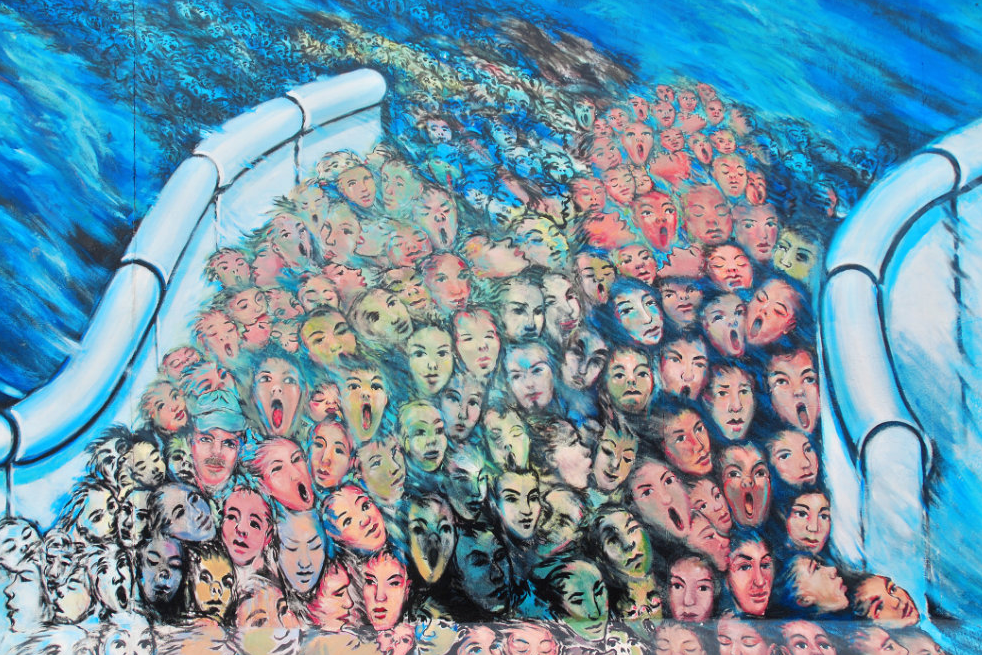
There are moments in history when societies collapse not because laws disappear, but because language loses its humanity first.
Long before violence begins, words prepare the ground. Human beings stop being citizens, neighbours, workers, journalists, minorities, dissidents, or opponents. They are reduced into insects, vermin, parasites, viruses, snakes, rats, or cockroaches. Once a community is linguistically transformed into something “less than human”, cruelty becomes easier to justify. History has shown this pattern repeatedly, from Nazi Germany to Rwanda, from Cambodia to Bosnia.
The term “cockroach” is not an ordinary insult in international legal history. It is one of the most infamous words associated with genocidal propaganda. During the Rwandan genocide, extremist broadcasts repeatedly described Tutsis as “cockroaches” before mass killings began. International legal scholars and tribunals later examined how dehumanising language functioned as psychological preparation for extermination.
Under modern international law, dehumanisation is not merely a moral concern. It exists within a legal framework connected to hate speech, discrimination, incitement, persecution, crimes against humanity, and genocide jurisprudence.
The United Nations Universal Declaration of Human Rights established the foundational principle that all human beings are born free and equal in dignity and rights. That principle of dignity sits at the heart of virtually every modern human rights treaty. The United Nations International Covenant on Civil and Political Rights, to which India is a signatory, guarantees equality before law under Article 26 and prohibits advocacy of hatred that incites discrimination, hostility, or violence under Article 20(2).
The 1948 Convention on the Prevention and Punishment of the Crime of Genocide criminalised direct and public incitement to genocide. International courts later recognised that genocidal intent is often preceded by systematic dehumanisation. Legal scholarship surrounding the International Criminal Tribunal for Rwanda repeatedly documented how language portraying communities as insects, parasites, or disease carrying organisms was used to psychologically normalise extermination.
The International Court of Justice has also examined the relationship between dehumanising rhetoric and genocidal violence. Legal submissions before the court noted that perpetrators of mass atrocities consistently described victims as vermin, cockroaches, microbes, or infections requiring elimination.
International humanitarian organisations have repeatedly warned about the dangers of such rhetoric. The International Committee of the Red Cross observed that dehumanising language strips groups of human worth and historically functions as a warning signal preceding mass violence.
Indian constitutional law, although different in structure from international criminal law, is also deeply rooted in the concept of dignity.
The Constitution of India does not explicitly use the word “dehumanisation”, yet the entire constitutional architecture rejects it.
Article 14 guarantees equality before law.
Article 19(1)(a) protects freedom of speech and expression, including press freedom.
Article 21 guarantees protection of life and personal liberty, which the Supreme Court of India itself has repeatedly interpreted as including human dignity, reputation, and dignified treatment.
Indian courts have consistently held that dignity is inseparable from constitutional morality. A citizen cannot be reduced to an object beneath constitutional protection merely because they are poor, unemployed, politically opposed, critical of authority, or outside institutional power structures.
Indian criminal law also contains provisions related to hate speech, incitement, public mischief, and promotion of hostility between groups. While not every offensive remark becomes criminal, language that encourages discrimination, hostility, or public hatred may enter the domain of legal scrutiny depending on context, intent, and consequences.
There is also a deeper democratic issue beyond strict legality.
When ordinary citizens use abusive language, society condemns it socially. But when individuals occupying powerful constitutional offices use language associated historically with exterminatory propaganda, the consequences become institutionally dangerous. Public office carries constitutional restraint. Authority amplifies words.
History demonstrates that dehumanisation rarely begins with mass violence. It begins with vocabulary. The victim is first mocked, then isolated, then stripped of dignity, then portrayed as a burden, disease, parasite, infestation, or internal enemy. Once society accepts that language, extraordinary cruelty starts appearing reasonable.
Nazi propaganda described Jews as parasites and rats.
Khmer Rouge propaganda described opponents as microbes and worms.
Rwandan extremist broadcasts described Tutsis as cockroaches.
In each case, language acted as preparation for moral collapse.
Democracy cannot survive if disagreement becomes dehumanisation.
A republic governed by constitutional morality must defend the principle that every citizen, whether journalist, activist, unemployed youth, dissenter, labourer, or political opponent, remains fully human under law and dignity. Once institutions begin treating sections of society as parasites rather than citizens, the crisis stops being merely political. It becomes civilisational.