

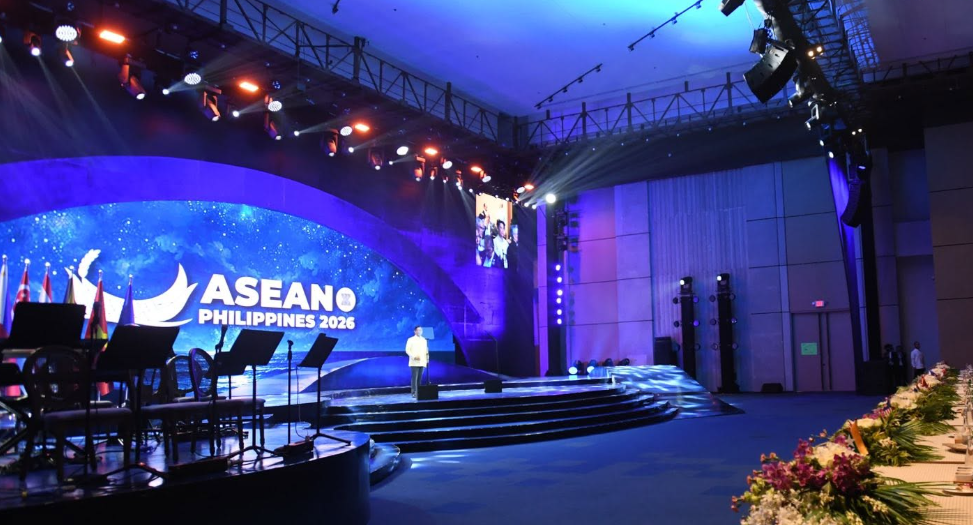
As foreign ministers and senior diplomats from across the Indo Pacific converge on Manila for the 59th annual meetings of the Association of Southeast Asian Nations, the Philippine capital has firmly established itself as the epicenter of a complex and hazardous geopolitical realignment. The regional bloc finds itself confronting an unprecedented confluence of overlapping crises that threaten to shatter its traditional posture of diplomatic neutrality and consensus based comfort. From the contested maritime geography of the South China Sea to the choking energy transport corridors of West Asia, and from the intractable civil conflict tearing apart Myanmar to the escalating strategic rivalry between Washington and Beijing, Southeast Asia is being forced to navigate a profoundly volatile global landscape. Rather than serving as a quiet venue for routine administrative diplomacy and cooperative communiques, the Manila summit has exposed the raw fault lines of contemporary international politics, testing whether a decentralized and consensus driven organization can withstand the immense pressure of great power competition and regional instability without fracturing entirely.
The stark urgency of these diplomatic deliberations was demonstrated with brutal clarity just as international delegates arrived in the Philippines, when a violent confrontation erupted between Philippine and Chinese personnel at the Second Thomas Shoal. The clash, which left a Philippine Navy officer seriously injured after aggressive physical altercations involving the China Coast Guard, served as a grim reminder of the volatile operational realities persisting beneath the polished veneer of summit diplomacy. For months, relentless gray zone tactics, aggressive maritime blockades, and dangerous close range maneuvers have steadily escalated tensions in the West Philippine Sea, transforming routine resupply missions into high risk military standoffs. This latest kinetic friction highlights the profound inadequacy of ongoing negotiations for a regional Code of Conduct between ASEAN and Beijing. Decades of protracted diplomatic dialogue have produced little more than procedural delays and hollow commitments, leaving a dangerous tactical vacuum where aggressive maritime brinkmanship on the water regularly outpaces diplomatic restraint and institutional conflict resolution mechanisms.
Into this deeply charged environment stepped United States Secretary of State Marco Rubio, whose arrival in Manila immediately injected a sharp edge of superpower competition into the proceedings. Prior to touching down in the Philippines, Rubio released a strongly worded policy statement emphasizing Washington unwavering commitment to freedom of navigation and the defense of regional partners against economic and geopolitical coercion. Alluding directly to Beijing expansive territorial claims and its unilateral assertion of historical sovereignty over nearly the entire South China Sea, Rubio framed the regional maritime security architecture not merely as a local territorial dispute between rival claimants but as an indispensable pillar of global economic stability and international law. By linking freedom of navigation directly to the prevention of trade weaponization, Washington is actively attempting to solidify a united coalition among regional allies, leveraging the 10th anniversary of the landmark 2016 arbitral tribunal ruling which formally invalidated China sweeping historical claims under the United Nations Convention on the Law of the Sea.
The diplomatic theater unfolding in Manila is further complicated by the simultaneous presence of Chinese top diplomat Wang Yi and Russian Foreign Minister Sergei Lavrov. The overlapping schedules of senior officials from rival global capitals have turned the ASEAN meetings into a high stakes diplomatic chess match where bilateral sideline conversations carry immense strategic weight. While Secretary Rubio indicated potential openness to discussions with his Chinese counterpart, the fundamental structural antagonism between Washington and Beijing ensures that every regional issue becomes an arena for competitive posturing and zero sum maneuvering. For ASEAN member states, this dynamic creates an acute structural dilemma. While nations like the Philippines increasingly lean into bilateral security partnerships and minilateral defense frameworks with external allies to check maritime encroachment, other members remain intensely protective of regional autonomy and wary of being conscripted into an explicit American containment strategy against their largest economic trading partner and neighbor.
Beyond immediate maritime territorial disputes, the summit is grappling with severe geoeconomic shocks cascading outward from renewed hostilities in the Strait of Hormuz. The ongoing conflict involving Iran has severely disrupted global energy transport networks, placing extreme economic strain on import dependent economies across Southeast Asia. The Philippines, facing acute supply vulnerabilities and soaring fuel costs, declared a national energy emergency earlier in the year, compelling Manila and its neighbors to cast an exceptionally wide net in search of reliable energy supplies and alternative trade partners. This desperate search for domestic fuel security has created bizarre diplomatic optics, exemplified by the arrival of Russian Foreign Minister Lavrov in Manila as regional states accelerate efforts to ratify internal frameworks like the ASEAN Petroleum Security agreement. The convergence of Western diplomats, Chinese representatives, and Russian officials under a single regional roof demonstrates how immediate economic survival can force pragmatic realignments that defy clean ideological boundaries and complicate traditional alliance postures.
Internal regional cohesion is facing an equally severe test over the ongoing political crisis and civil war in Myanmar. Excluded from formal leadership summits since the military junta seized power in twenty twenty one, Myanmar remains the most deeply divisive issue threatening ASEAN internal consensus and institutional credibility. A sharp strategic schism has emerged within the bloc between frontline states like Thailand, which shares an extensive land border and bears the heaviest humanitarian burden of millions of displaced refugees, and maritime member states like Malaysia that demand strict adherence to human rights standards and oppose any steps that might legitimize military rule. While Thai officials have pushed aggressively to bring Naypyidaw back into active diplomatic engagement and facilitate high level visits, other governments argue that abandoning the long stalled five point peace consensus would permanently erode the moral authority and institutional integrity of the entire regional organization.
This profound internal division over Myanmar encapsulates the broader institutional crisis confronting ASEAN as an international actor. Founded on foundational principles of strict non interference and consensus decision making, the organization was engineered for an era of regional deescalation and economic cooperation rather than an era of fierce great power competition and transnational shocks. When individual member states pursue divergent foreign policies in response to external pressures, the collective voice of the bloc becomes muted and reactive. The Philippines pursues an assertive posture of transparency and international legalism in the South China Sea, while other nations maintain deliberate ambiguity to preserve lucrative economic ties with Beijing. Similarly, responses to energy vulnerabilities and security partnerships vary wildly across the membership, preventing the formation of a unified regional strategy to insulate Southeast Asia from external shocks.
Furthermore, the emergence of minilateral security architectures outside the formal ASEAN institutional machinery poses an additional challenge to regional centrality. The deepening cooperation among members of the Quad, alongside specialized minilateral defense arrangements involving Manila, Tokyo, Washington, and other external partners, reflects a growing recognition that consensus based diplomacy is too slow to address rapid military realignments. While these flexible coalitions provide vital deterrent capabilities for frontline states facing direct maritime pressure, they simultaneously risk bypassing ASEAN institutions and marginalizing member states that prefer strict non alignment. Balancing the necessity of robust minilateral deterrence with the preservation of inclusive regional dialogue remains one of the most delicate balancing acts facing Southeast Asian statesmen in Manila.
The economic dimension of the summit further complicates these strategic calculations, as regional integration is tested by external trade frictions and technological decoupling. The digital economy and supply chain resilience have become battlegrounds for technological dominance between the United States and China. ASEAN states are acutely aware that picking sides in the emerging technological cold war would devastate integrated manufacturing networks that rely on inputs from both superpowers. Consequently, member states strive to maintain open commercial channels while simultaneously insulating their critical infrastructure from foreign security risks. This balancing act requires extraordinary diplomatic dexterity, particularly as external powers dangle economic incentives, infrastructure investments, and digital partnerships that carry hidden geopolitical strings.
The high level gatherings in Manila serve as a sobering barometer for the future of regional order in the broader Indo Pacific. The simultaneous convergence of maritime skirmishes, great power rivalry, energy emergencies, and internal human rights dilemmas demonstrates that Southeast Asia can no longer insulate itself from the turbulence of a changing global order. Whether ASEAN can evolve beyond a mere talking shop into an effective strategic actor depends entirely on its capacity to reconcile divergent national interests with the imperative for collective resilience. As foreign ministers conclude their sessions and draft their final communiques, the fundamental question remains whether the region can forge a cohesive path forward or whether it will fracture under the immense weight of competing external pressures and internal contradictions.