

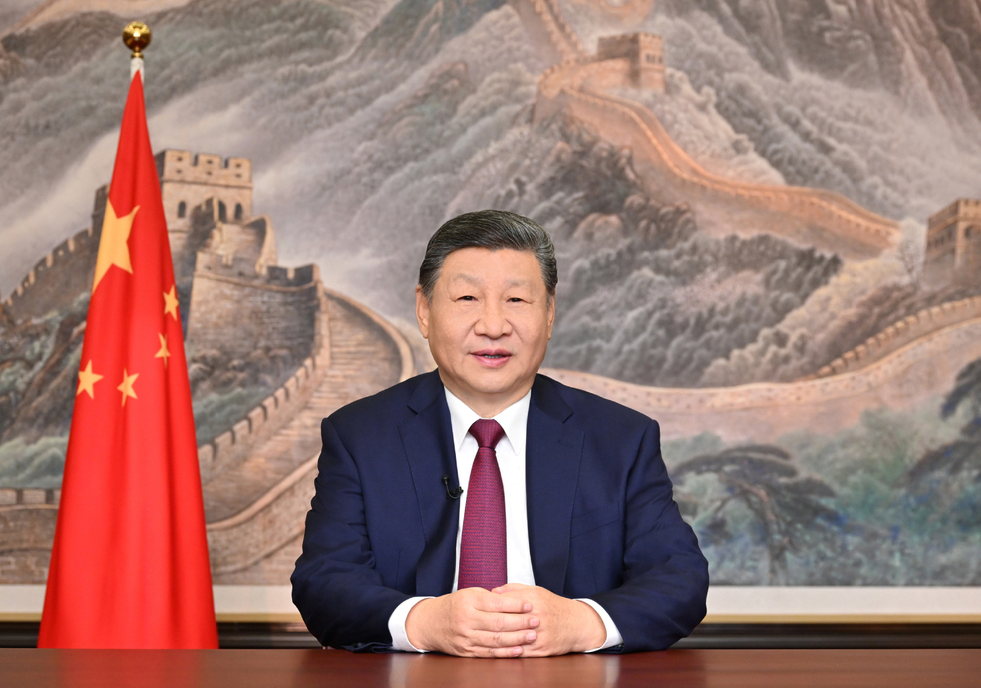
In May 2026, Xi Jinping strengthened China’s position at the centre of the evolving multipolar order by turning Beijing into a key arena where competing global powers were compelled to engage. While much of the international system remained consumed by military confrontations, sanctions pressure and economic fragmentation, Xi focused on consolidating long term strategic influence. His diplomacy throughout the month reflected a clear objective: prevent China from being drawn into direct confrontation while steadily expanding its leverage across Eurasia, the Global South and critical trade corridors. Beijing used its political weight to maintain communication channels between rival blocs, particularly around tensions linked to Iran, Gulf maritime security and broader US-China competition. At the same time, Xi continued to promote a vision of a “multipolar world” and a “more just and reasonable” global governance system, presenting China as both a stabilising force and an alternative centre of influence in an increasingly divided international landscape.
Xi also accelerated the construction of a geopolitical architecture less dependent on Western centred systems. His engagements with Vladimir Putin reinforced the strategic depth of the China-Russia partnership in energy, logistics, technology and financial coordination, ensuring that Moscow remained economically connected despite sustained Western pressure. During their May summit, Xi argued that China and Russia should maintain a “strategic and long term perspective” while resisting what he described as “unilateral and hegemonic countercurrents”. Simultaneously, Beijing expanded diplomatic coordination across West Asia, Central Asia and the Global South, particularly around trade connectivity, industrial supply chains and energy stability. Rather than relying on headline driven diplomacy, Xi continued building layered influence through manufacturing dominance, rare earth supply chains, digital infrastructure projects, transport corridors and regional mediation efforts. The strategy was not based on rapid confrontation but on gradually positioning China as the indispensable state within multiple overlapping systems.
The impact of these moves became increasingly visible throughout May. Governments, corporations and regional blocs found themselves recalibrating policies around Chinese economic capacity, industrial control and diplomatic reach. Beijing emerged not merely as a participant in global affairs but as one of the few powers capable of simultaneously engaging Washington, Moscow, Tehran, Gulf monarchies and developing economies without fully aligning with any single camp. Xi repeatedly emphasised strategic coordination, international stability and the construction of a “community with a shared future for humanity”, reinforcing China’s image as a long term architect of emerging global structures. The defining feature of his leadership in May 2026 was therefore not aggressive expansionism but disciplined strategic positioning. By strengthening alternative power networks, protecting economic corridors and steadily increasing China’s role in global crisis management, Xi Jinping positioned himself as the apex geopolitical leader of May 2026 through calculated influence rather than spectacle.